Gym Flooring in Dubai: Performance Flooring That Lasts
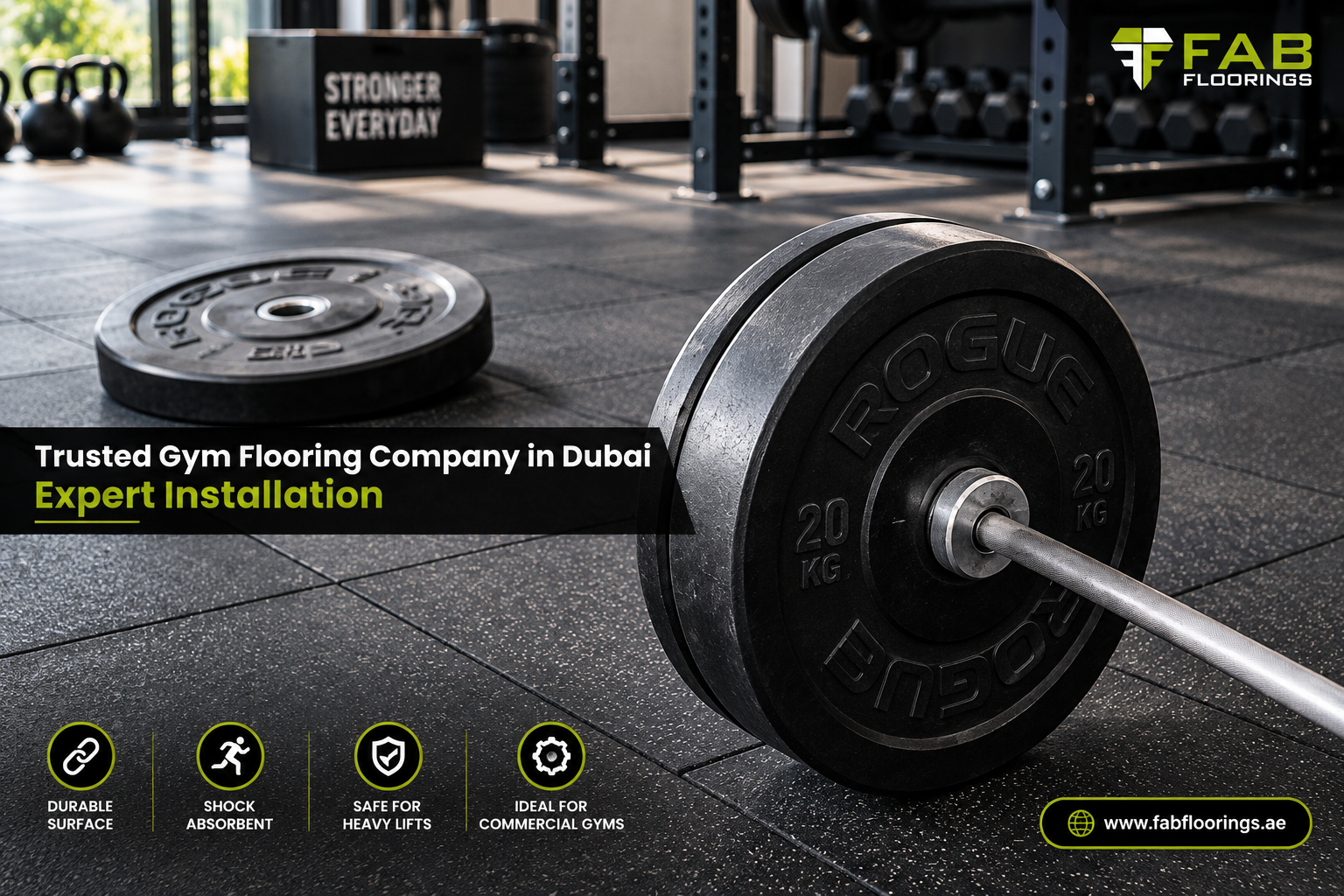
Dubai's fitness industry continues to grow, with commercial gyms, boutique fitness studios, CrossFit facilities, hotel gyms, home gyms and wellness centres demanding flooring that can handle intensive daily use. For these environments, gym flooring is not simply a design element—it plays an important role in safety, impact protection, equipment stability, noise control and long-term floor performance.
Choosing the right gym flooring in Dubai requires considering the type of workouts, equipment loads, traffic levels, available space, maintenance requirements and the conditions of the UAE environment. From heavy-duty rubber tiles to continuous rubber rolls and premium EPDM surfaces, the right solution depends on how each area of the gym will be used.
Why Is Gym Flooring Important?
A gym floor has to deal with much more stress than an ordinary commercial floor. Dumbbells are dropped, treadmills operate continuously, athletes jump and move rapidly, and hundreds of people may walk across the same area every day.
The right flooring can help provide:
- Impact and shock absorption
- Better traction during workouts
- Protection for the subfloor
- Reduced noise and vibration
- Greater comfort during exercise
- Improved equipment stability
- Easier cleaning and maintenance
- A professional appearance
Rubber flooring is particularly popular in fitness environments because it combines durability, impact absorption, slip resistance and practical maintenance.
Types of Gym Flooring in Dubai
There is no single flooring solution that is ideal for every gym zone. Different areas can require different flooring formats and performance characteristics.
1. Rubber Flooring Rolls
Rubber rolls are an excellent option for covering large gym areas with fewer seams and a consistent appearance.
They are commonly suitable for:
- Cardio areas
- Treadmill zones
- Fitness machine areas
- General workout spaces
- Large commercial gyms
- Functional training areas
Their continuous layout can create a clean, professional appearance while making routine cleaning easier.
2. Interlocking Rubber Tiles
Interlocking rubber tiles are designed as modular flooring pieces that can be fitted together without creating a permanently fixed layout in some applications.
They can be useful for:
- Functional training zones
- CrossFit areas
- Boutique gyms
- Home gyms
- Strength-training areas
- Areas where individual tile replacement may be useful
One major advantage is that a damaged section can potentially be replaced without removing the entire floor.
3. Heavy-Duty Rubber Mats
Heavy-duty rubber mats are particularly useful where gym equipment creates concentrated loads or where weights may be dropped.
They are commonly used around:
- Squat racks
- Deadlift platforms
- Dumbbell areas
- Olympic lifting zones
- Weight machines
For heavy lifting areas, flooring should be selected according to the equipment, impact level, subfloor and expected usage rather than simply choosing the thickest available product.
4. EPDM Rubber Flooring
EPDM rubber flooring provides an opportunity to combine performance with a more decorative appearance. It is available in different colour combinations and can be used to create branded or visually distinctive gym zones.
EPDM rubber is also known for resistance to weathering, UV exposure and moisture, making certain EPDM systems suitable for selected indoor and outdoor applications.
Choosing Flooring for Different Gym Areas
A well-designed gym does not necessarily need the same flooring throughout the entire facility.
Cardio Area
Treadmills, cross-trainers, bikes and other cardio equipment benefit from flooring that provides stability, impact absorption and vibration control.
Strength Training Area
Strength zones require flooring that can handle heavy equipment and repeated movement. Rubber tiles, rolls or heavy-duty mats can be considered depending on the equipment and workout intensity.
Free-Weight Area
This is one of the most demanding gym zones because weights may be dropped or placed heavily on the floor. A more impact-resistant rubber solution is generally appropriate.
Functional Training Area
HIIT, circuit training, sled work and dynamic movements require a surface that provides good grip and durability while remaining comfortable for active movement.
Yoga & Stretching Area
A softer and more comfortable surface may be preferred for stretching, mobility and low-impact activities. The flooring should be selected according to the specific exercise programme.
How Thick Should Gym Flooring Be?
The ideal thickness depends on the activity rather than the size of the gym alone.
As a general planning guide:
| Gym Application | Typical Thickness Range |
|---|---|
| Yoga / Stretching | 4–6 mm |
| Cardio / Machines | 6–8 mm |
| General Strength Training | 8–12 mm |
| HIIT / Functional Training | 10–15 mm |
| Heavy Weightlifting | 15–25 mm |
These ranges are general guidelines. The final specification should consider equipment weight, impact level, subfloor condition and expected usage. Fab Floorings' existing Dubai gym-flooring guidance similarly recommends different thickness levels according to workout type.
Rubber Flooring vs Other Gym Flooring Options
Rubber flooring is widely used in gyms because it offers a combination of durability, grip, impact protection and noise reduction.
However, other flooring systems may also be appropriate depending on the application.
Rubber Flooring
Best suited for:
- Weightlifting
- Strength training
- CrossFit
- Cardio
- Functional fitness
- Commercial gyms
PU Sports Flooring
Can be considered for sports and multipurpose facilities where a seamless sports surface and specific performance characteristics are required.
Vinyl Flooring
Can be suitable for selected fitness, studio and multipurpose areas where design flexibility and easy cleaning are important.
EVA Foam Mats
These can work well for lighter activities, stretching, children's areas and certain low-impact applications, but they should not automatically be treated as a replacement for heavy-duty rubber flooring under substantial weights.
Gym Flooring for Dubai's Climate
Dubai's environment creates additional considerations when selecting flooring materials.
High temperatures, humidity, dust and intense sunlight can affect flooring products differently. For indoor gyms, the main focus is usually on heavy usage, cleaning, ventilation and equipment loads. Outdoor or semi-outdoor fitness areas require additional consideration of weather and UV exposure.
The flooring specification should therefore be selected according to the actual installation environment rather than using the same material for every application.
Noise and Vibration Control
Noise can become a significant concern in gyms located inside residential towers, hotels, offices and mixed-use buildings.
Activities such as:
- Dropping weights
- Jumping
- Running
- Treadmill operation
- Functional training
can create impact noise and vibration.
Rubber flooring can help absorb some of this impact and reduce the transmission of noise and vibration compared with hard surfaces. This makes it particularly useful for multi-storey or shared buildings.
Protecting the Subfloor
Gym flooring acts as an important protective layer between exercise equipment and the underlying floor.
A suitable rubber system can help reduce the effect of:
- Dropped weights
- Heavy equipment
- Repeated impact
- Equipment movement
- High foot traffic
However, flooring selection alone cannot compensate for an unsuitable or damaged subfloor. Before installation, the surface should be checked for cleanliness, levelness, cracks, moisture and structural condition.
Professional Gym Flooring Installation
Even high-quality flooring can perform poorly if it is installed incorrectly.
A professional installation process may include:
- Site inspection and measurement
- Flooring selection according to each gym zone
- Subfloor preparation
- Cleaning and levelling
- Cutting and layout planning
- Adhesive installation or interlocking installation
- Seam and edge finishing
- Final inspection
Proper installation can improve the appearance, stability and long-term performance of the finished gym floor. Fab Floorings provides consultation and installation support for gym flooring projects in Dubai and across the UAE.
How to Maintain Gym Flooring
Gym flooring is relatively easy to maintain when a suitable cleaning routine is followed.
Daily
- Remove dust and loose dirt.
- Clean sweat and liquid spills promptly.
- Check high-traffic areas.
Weekly
- Mop with an appropriate mild cleaning solution.
- Clean around machines and equipment.
- Inspect frequently used zones.
Periodically
- Check seams and edges.
- Inspect areas beneath heavy equipment.
- Replace damaged modular tiles where required.
Avoid aggressive chemicals or cleaning methods that are unsuitable for the specific rubber flooring system.
Common Mistakes When Choosing Gym Flooring
Choosing Flooring Only by Price
The cheapest flooring may not provide the required impact protection or durability for heavy-use areas.
Using the Same Thickness Everywhere
A cardio zone and a deadlift area do not necessarily require the same flooring specification.
Ignoring the Subfloor
An uneven or damaged subfloor can affect the final installation regardless of the quality of the flooring.
Forgetting Noise Control
This is particularly important for gyms located in apartments, hotels, offices or other shared buildings.
Choosing Appearance Over Performance
A premium-looking floor still needs to provide the right grip, durability and impact protection for the intended workout.
Gym Flooring for Commercial & Home Gyms
Fab Floorings provides gym flooring solutions for a wide range of facilities, including:
- Commercial fitness centres
- CrossFit studios
- Boutique gyms
- Personal training studios
- Hotel gyms
- Corporate fitness centres
- School and university gyms
- Residential community gyms
- Villa and apartment home gyms
The flooring can be selected according to the size of the space, training activities, equipment and project requirements.
Why Choose Fab Floorings for Gym Flooring in Dubai?
Fab Floorings offers a range of gym flooring solutions including rubber rolls, interlocking tiles, heavy-duty mats and EPDM flooring for different fitness applications.
The team can assist with:
- Flooring selection
- Site requirements
- Gym-zone planning
- Material recommendations
- Flooring supply
- Installation support
- Custom colour and design requirements
- Commercial and residential projects
Whether you are opening a new fitness centre or upgrading an existing gym, selecting flooring according to actual usage can help create a safer, more durable and professional training environment.
Final Thoughts
The right gym flooring is an investment in safety, performance, comfort and long-term durability.
From rubber rolls for large cardio areas to heavy-duty mats for weightlifting and EPDM surfaces for premium designs, every gym zone can be planned according to its specific requirements.
If you are looking for gym flooring in Dubai, start by evaluating your workout types, equipment, traffic levels, subfloor and maintenance requirements. Fab Floorings can help you select and install a flooring solution designed around your gym.
Build a gym floor that is ready for today's workouts—and designed to perform for years to come.