What Thickness Gym Flooring is Best for Fitness Centers in Dubai?
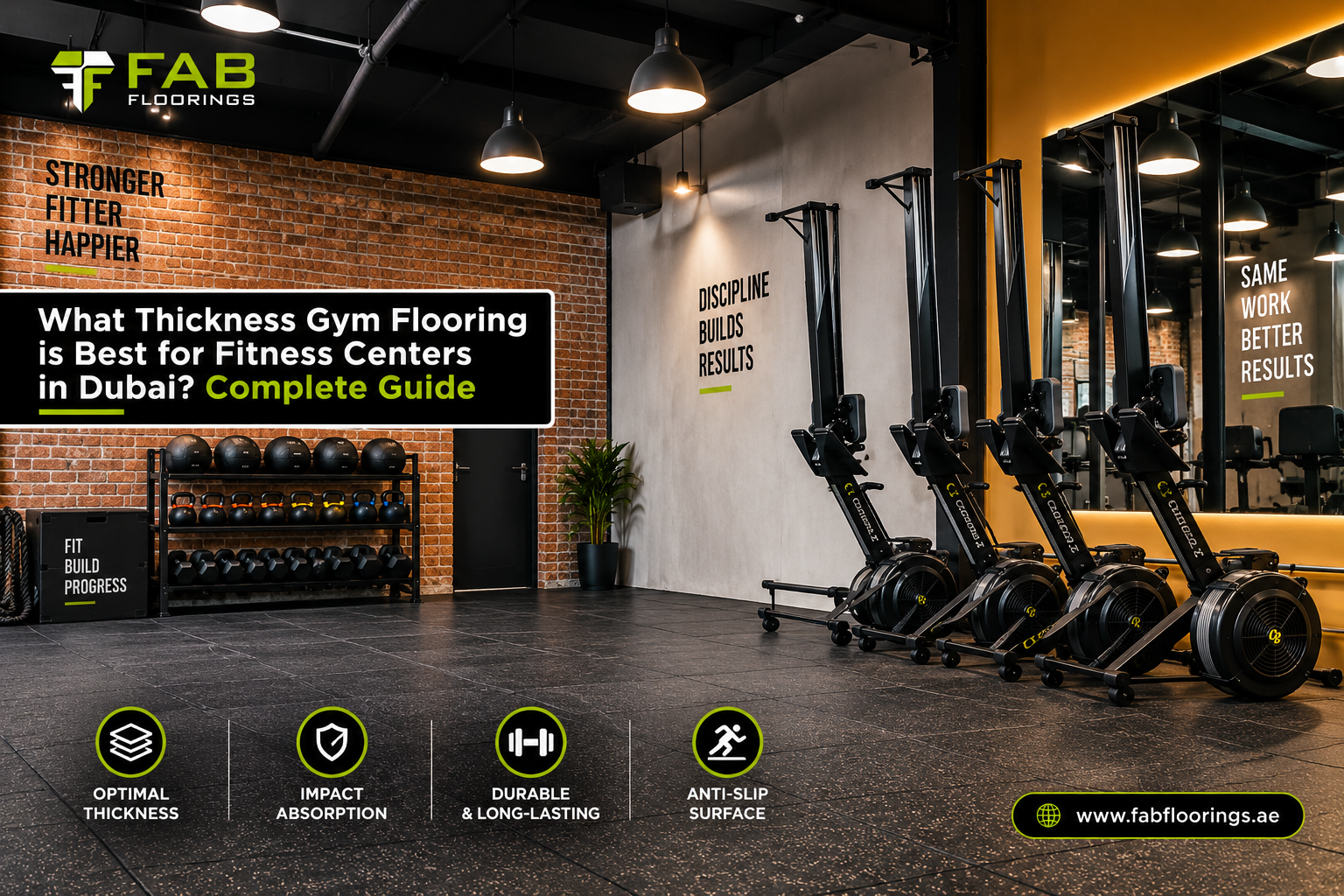
Choosing the right gym flooring thickness in Dubai is important for protecting the subfloor, reducing impact, improving user comfort, and maintaining long-term performance. A cardio area does not experience the same impact as a free-weight or CrossFit zone, so using one thickness throughout an entire fitness center is not always the most efficient approach.
For most commercial fitness centers, 10–15 mm rubber flooring is a practical starting point for general workout areas, while 15–20 mm or thicker flooring is better suited to areas where heavy weights are regularly dropped. The final specification should consider the workout type, equipment, traffic, subfloor, and installation conditions.
Why Does Gym Flooring Thickness Matter?
Thickness directly affects how much protection the flooring can provide against impact and repeated equipment loads.
The right thickness can help with:
- Absorbing workout and equipment impact
- Protecting the underlying floor
- Reducing vibration and workout noise
- Improving underfoot comfort
- Supporting high-traffic commercial use
- Increasing the service life of the flooring
However, thicker does not automatically mean better. A 20 mm floor may be unnecessary under treadmills or in a stretching area, while a thin 6 mm floor may not provide enough protection for repeated heavy weight drops.
Gym Flooring Thickness Guide for Dubai Fitness Centers
| Gym Area | Recommended Thickness | Typical Use |
|---|---|---|
| Yoga & Stretching | 6–8 mm | Low-impact activities |
| Cardio Area | 8–10 mm | Treadmills, bikes, ellipticals |
| General Workout Area | 10–12 mm | Multipurpose training |
| Commercial Strength Area | 12–15 mm | Machines, dumbbells, strength training |
| Free Weight Area | 15–20 mm | Barbells and heavier equipment |
| CrossFit / Heavy Training | 20 mm+ | High-impact workouts and weight drops |
These are practical starting ranges rather than universal specifications. The required thickness should be finalized according to the actual equipment and training activities.
6–8 mm Gym Flooring for Light Workout Areas
6–8 mm rubber flooring can be suitable for areas where impact levels are relatively low.
It can work well for:
- Yoga
- Stretching
- Pilates
- Light fitness activities
- Low-impact training
This option can help control flooring costs when heavy equipment and weight drops are not part of the area.
8–10 mm Flooring for Cardio Areas
Cardio zones typically contain treadmills, exercise bikes, cross trainers, and similar equipment. These areas need a stable surface that can handle regular foot traffic and equipment vibration.
8–10 mm rubber flooring can be suitable for many cardio applications, provided the product's density and construction are appropriate.
10–15 mm for General Commercial Gyms
For a multipurpose fitness center, 10–15 mm rubber flooring offers a useful balance between durability, impact protection, comfort, and cost.
This range can be considered for:
- Commercial fitness centers
- Machine training areas
- General strength training
- Functional fitness
- Personal training studios
Many commercial gym projects benefit from using different thicknesses according to the individual training zones rather than installing the thickest option everywhere.
15–20 mm for Free Weight Areas
Free-weight zones experience greater impact than cardio areas. Dumbbells, barbells, benches, racks, and other equipment can place significant stress on the floor.
15–20 mm rubber flooring provides additional cushioning and impact protection for these applications.
For areas where weights are regularly dropped, the flooring specification should also consider rubber density and product construction—not thickness alone.
20 mm+ for CrossFit and Heavy Weightlifting
CrossFit, powerlifting, Olympic lifting, and other high-impact activities require more substantial floor protection.
For these areas, 20 mm or thicker rubber flooring can be appropriate, particularly when heavy weights are repeatedly dropped.
In some professional lifting environments, dedicated lifting platforms or additional impact protection may be used instead of simply increasing the thickness across the entire gym.
Should the Entire Gym Have the Same Flooring Thickness?
Not necessarily.
A better approach is to divide the fitness center into zones and select flooring based on the activity in each area.
For example:
Cardio → 8–10 mm
General workout → 10–12 mm
Strength training → 12–15 mm
Free weights → 15–20 mm
Heavy lifting → 20 mm+
This zone-based approach can provide appropriate protection without unnecessarily increasing flooring costs.
Thickness vs Density: Which Matters More?
Thickness is important, but it should not be considered in isolation.
Two rubber floors with the same thickness can perform differently if their density, composition, hardness, backing, or manufacturing quality differs.
For heavy training areas, ask about:
- Flooring thickness
- Rubber density
- Surface hardness
- Impact resistance
- Product composition
- Subfloor requirements
- Installation method
For example, current Fab Floorings guidance notes that thickness provides cushioning while density contributes to strength, making both specifications relevant when selecting heavy-duty gym flooring.
How Dubai's Climate Affects Gym Flooring Selection
Dubai's heat and indoor air-conditioning cycles are another consideration during flooring selection and installation.
A suitable gym floor should be installed on a properly prepared subfloor and according to the manufacturer's requirements. Indoor environmental conditions, moisture, adhesives, and thermal movement should be considered before installation.
For this reason, gym owners should evaluate the complete flooring system rather than choosing a product based solely on thickness.
What Is the Best Gym Flooring Thickness for a Dubai Fitness Center?
There is no single thickness that works for every fitness center.
For most commercial gyms, 10–15 mm rubber flooring is a practical choice for general workout and strength-training areas. Areas exposed to heavier impacts, such as free-weight, CrossFit, and lifting zones, may require 15–20 mm or thicker flooring.
The best solution is usually a zone-based flooring plan that matches thickness and product specifications to the activity.
Final Takeaway
The right gym flooring thickness depends on what happens on the floor.
Use thinner rubber flooring for low-impact areas such as yoga and cardio, medium thickness for general commercial training, and thicker flooring for free weights and high-impact training. Selecting the appropriate thickness, density, and installation method can help protect the subfloor and create a safer, more durable fitness environment in Dubai.