Padel Courts in Dubai, UAE – Complete Guide to Construction, Flooring & Installation
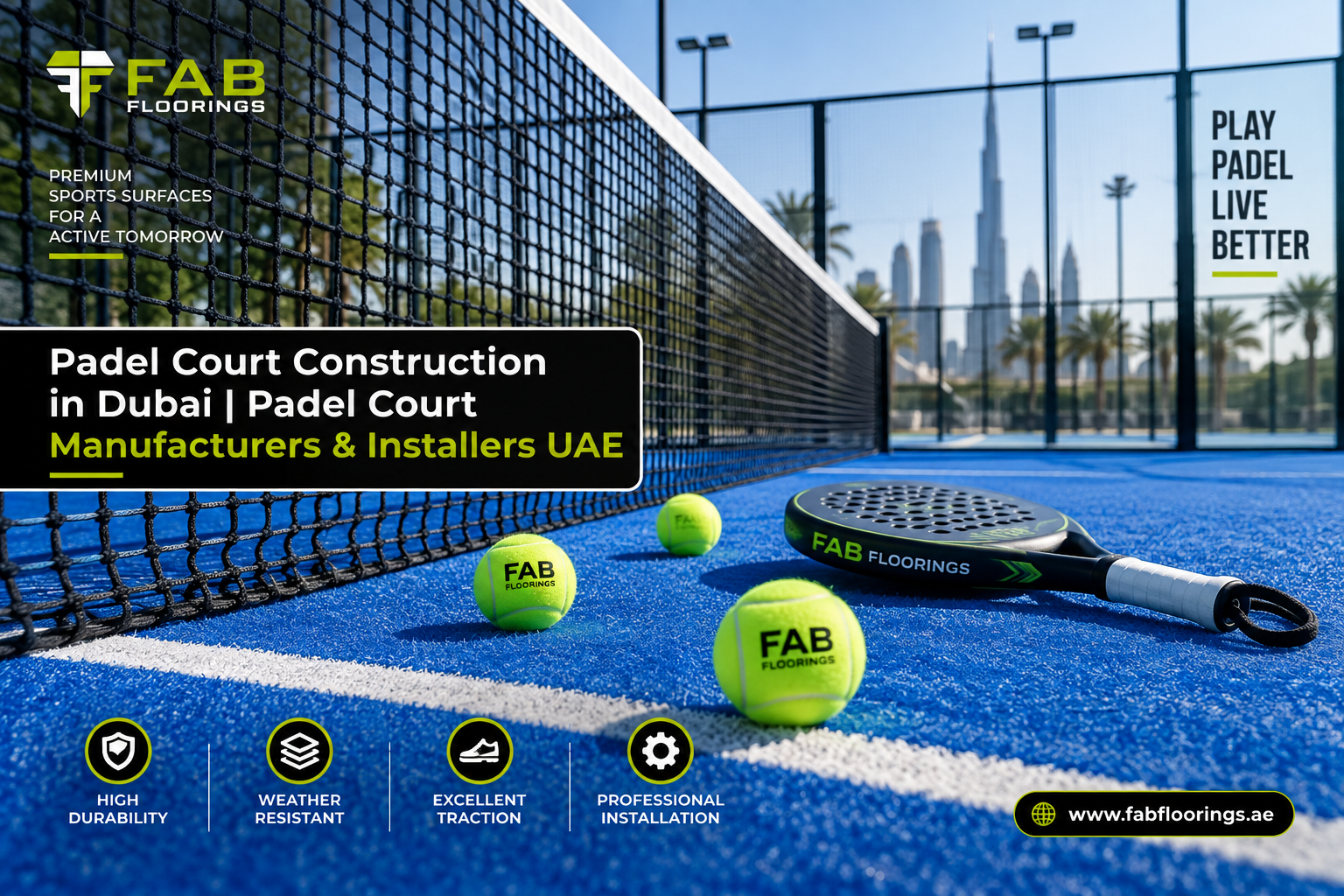
Padel courts in Dubai require more than a playing surface. A professional court combines a properly prepared foundation, artificial turf or suitable sports surface, tempered glass, corrosion-resistant steel, fencing, drainage and sports lighting. For Dubai's climate, materials should be selected for heat, UV exposure, humidity and frequent use.
Padel has become increasingly popular across Dubai, making it an attractive option for sports clubs, hotels, residential communities, gyms, schools, resorts and private villas. A well-designed court can provide a professional playing experience while making better use of available recreational space.
What Is a Padel Court?
A padel court is an enclosed racket-sports court that combines features of tennis and squash. A standard court is generally 20 metres long and 10 metres wide, with walls and fencing forming the enclosure.
The court typically includes a playing surface, steel structure, glass panels, mesh fencing, net system and sports lighting. Every component needs to work together to provide consistent ball bounce, player traction, safety and durability.
Why Padel Courts Are Popular in Dubai
Dubai's sports and leisure market makes padel suitable for both commercial and private developments.
Padel courts can be installed in:
- Sports clubs
- Fitness centres
- Hotels and resorts
- Schools and academies
- Residential communities
- Private villas
- Recreational facilities
- Commercial sports complexes
The compact court footprint compared with a traditional tennis facility also makes padel attractive for properties with limited available space.
Main Components of a Padel Court
A professionally constructed padel court consists of several important components.
1. Padel Court Flooring
The playing surface directly affects player movement, traction and ball behaviour. Artificial turf is commonly used for padel courts, with suitable infill and a properly prepared base.
For Dubai installations, flooring should be selected according to whether the court is indoor or outdoor, expected playing frequency and exposure to heat and UV radiation.
2. Tempered Glass Walls
Glass walls provide visibility while allowing the ball to rebound from the enclosure. High-quality tempered safety glass is commonly used as part of the court structure.
The glass must be properly supported and installed to maintain stability and player safety.
3. Steel Structure and Mesh
The structural frame supports the glass and fencing system. For outdoor courts in Dubai, corrosion-resistant and appropriately treated steel is particularly important because the structure is exposed to heat, humidity and environmental conditions.
4. Net System
The net divides the playing area and must be installed at the correct position and height. A properly tensioned net contributes to consistent gameplay.
5. Sports Lighting
Lighting is essential for courts that operate during evening hours. LED sports lighting can provide better visibility while helping reduce energy consumption.
Lighting placement should minimize glare and shadows across the playing surface.
Padel Court Construction Process in Dubai
A successful installation starts with proper site planning rather than simply assembling the court structure.
Step 1: Site Inspection
The site is assessed for:
- Available space
- Ground condition
- Access for materials
- Drainage
- Existing surfaces
- Electrical requirements
- Indoor or outdoor installation
Step 2: Ground Preparation
The foundation must provide a stable and level base. Depending on the project, this can involve excavation, leveling, compaction, concrete work and drainage preparation.
A properly prepared base helps maintain the court's alignment and surface performance.
Step 3: Foundation and Drainage
Outdoor courts need effective water management to reduce the risk of standing water. Drainage requirements depend on the existing site conditions and court design.
Step 4: Steel Structure Installation
The structural frame is positioned and securely anchored to the prepared foundation.
For Dubai's outdoor environment, suitable corrosion protection and weather-resistant finishes should be considered.
Step 5: Glass and Mesh Installation
Tempered glass panels and metal mesh sections are installed around the playing area. Correct alignment is essential for structural stability and consistent ball rebound.
Step 6: Turf Installation
The selected artificial turf is laid over the prepared base. Seams, perimeter edges and infill are carefully finished to create an even playing surface.
Step 7: Lighting and Accessories
Lighting, net systems, entry gates and other accessories are installed according to the project design.
Step 8: Final Inspection
The completed court should be checked for structural stability, surface condition, drainage, lighting, net alignment and overall safety before handover.
Indoor vs Outdoor Padel Courts in Dubai
| Feature | Indoor Padel Court | Outdoor Padel Court |
|---|---|---|
| Weather exposure | Low | High |
| UV exposure | Lower | Higher |
| Temperature control | Available | Not usually available |
| Drainage requirement | Lower | Important |
| Steel protection | Important | Highly important |
| Turf specification | Indoor suitable | UV/weather-resistant |
| Lighting | Essential | Essential for night play |
Outdoor courts need additional consideration for Dubai's heat, UV exposure, humidity, wind and rain. Indoor courts provide greater environmental control but may involve additional building and ventilation requirements.
What Flooring Is Best for Padel Courts in Dubai?
For many padel installations, high-quality artificial turf is a practical choice because it provides the traction and playing characteristics expected from a padel court. The turf specification, backing, infill, installation method and base beneath it all influence performance.
The best surface depends on:
- Indoor or outdoor location
- Player frequency
- Court design
- Maintenance requirements
- Climate exposure
- Budget
- Required playing characteristics
It is better to select the complete flooring system rather than choosing turf based only on pile height or appearance.
How Dubai's Climate Affects Padel Courts
Dubai's environmental conditions make material selection especially important.
Extreme Heat
High temperatures can place additional stress on flooring, adhesives, coatings and structural components. Outdoor courts should therefore use materials appropriate for hot climates.
UV Exposure
Continuous sunlight can affect synthetic turf and other polymer-based materials. UV-resistant products can help maintain performance and appearance for longer.
Humidity and Moisture
Humidity and occasional rainfall make drainage important for outdoor courts. Water should be directed away from the playing surface rather than allowed to accumulate around the foundation.
Corrosion
Metal structures require suitable protective treatment, especially for outdoor installations. Galvanized or appropriately coated components can provide additional protection against environmental exposure.
Padel Court Maintenance
Regular maintenance helps protect the playing surface and structural components.
Recommended maintenance includes:
- Brush the artificial turf regularly.
- Maintain the recommended sand infill level.
- Remove leaves, dirt and debris.
- Clean glass panels periodically.
- Inspect fencing and structural connections.
- Check the net for correct tension.
- Inspect drainage after rainfall.
- Check sports lighting regularly.
- Repair damaged turf or structural components promptly.
The maintenance schedule should be adjusted according to court usage and whether the installation is indoor or outdoor.
How Much Does a Padel Court Cost in Dubai?
The cost of a padel court varies considerably depending on the project specification. Factors include the court model, foundation work, flooring, steel structure, glass, lighting, drainage, installation requirements and whether the court is indoor or outdoor.
For this reason, a site assessment and project-specific quotation are more reliable than using a single fixed price. Current Fab Floorings UAE material indicates that UAE project costs can vary substantially by court type and specification.
Why Choose Professional Padel Court Installation?
A padel court is a complete sports structure rather than simply a flooring project.
Professional installation helps coordinate:
- Site preparation
- Foundation
- Drainage
- Steel structure
- Glass installation
- Turf installation
- Lighting
- Net installation
- Safety checks
- Final handover
This integrated approach can help reduce installation issues and ensure that the different components work together correctly.
Padel Court Solutions by Fab Floorings UAE
Fab Floorings UAE provides padel court construction and installation solutions for commercial and residential projects. The company's existing service information covers complete court packages including structural systems, glass walls, flooring, foundation work, lighting and installation.
For the new website, internally link this article to:
- Padel Court Manufacturers Dubai UAE
- Padel Court Construction Dubai
- Padel Court Flooring
- Artificial Grass
- Premium Flooring
- Gym Flooring Dubai
This creates a stronger topical cluster around Padel Courts in Dubai.
Conclusion
Building a padel court in Dubai requires careful planning across flooring, foundation, drainage, structure, glass, fencing and lighting. Outdoor courts also need materials capable of handling the region's heat, UV exposure and changing weather conditions.
Whether the project is for a sports club, hotel, residential community, school, gym or private villa, selecting the right construction system and installation team can make a significant difference to long-term performance.
Fab Floorings UAE provides complete padel court construction and installation solutions tailored to different project requirements across Dubai and the UAE.