Building Your Own Padel Court: Guide
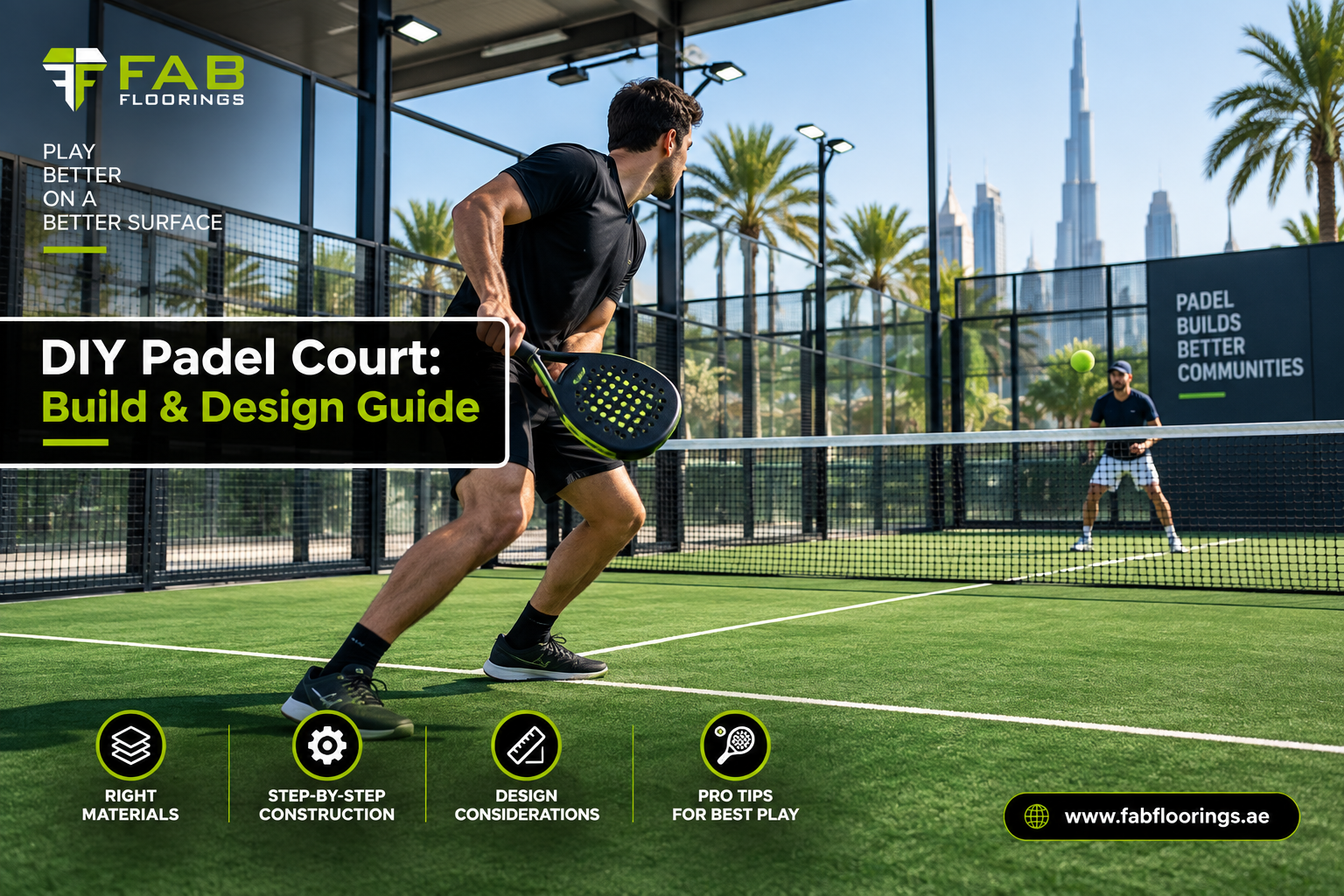
Building your own padel court is a major project that requires careful planning, suitable materials, accurate dimensions, and professional installation. Whether you are planning a private court, hotel facility, sports club, residential project, or commercial padel centre, every stage can affect the court's safety, performance, and lifespan.
A standard padel court measures 20 metres long and 10 metres wide, with a fully enclosed playing area. These dimensions are defined by the International Padel Federation (FIP), so accurate planning is essential when constructing a regulation-style court.
What Do You Need to Build a Padel Court?
A complete padel court generally includes:
- Playing surface
- Concrete or suitable structural base
- Glass walls
- Metal mesh fencing
- Padel net and posts
- Lighting system
- Drainage
- Court markings
- Safety areas and access points
The exact specification can vary depending on whether the court is designed for residential recreation, commercial use, or competitive play.
1. Choose the Right Location
The first step is selecting a suitable site. The area should provide enough space for the court itself as well as safe access around the playing enclosure.
Before construction, check:
- Available land area
- Ground conditions
- Accessibility
- Drainage
- Nearby buildings
- Electrical access
- Sun exposure
- Wind conditions
- Local planning or building requirements
For outdoor courts, orientation should also be considered carefully. FIP competition guidance generally recommends a north-south longitudinal orientation, although geographic conditions may justify adjustments to reduce the effect of sunlight on players.
2. Plan the Court Dimensions
A regulation padel court has an internal playing area of 20 m × 10 m. The court is enclosed by walls and fencing that form an integral part of gameplay.
The surrounding structure must be accurately positioned because even small dimensional errors can affect gameplay, glass alignment, fencing installation, and net positioning.
If the project is intended for official or competitive use, the design should be checked against the latest applicable FIP requirements.
3. Prepare the Foundation
A strong and level foundation is essential for a long-lasting padel court.
The construction process may involve:
- Clearing and preparing the site
- Levelling the ground
- Preparing the sub-base
- Installing appropriate drainage
- Constructing the concrete foundation
- Checking levels and dimensions
- Allowing the foundation to cure correctly
The foundation must provide adequate stability for the glass panels, metal structure, flooring system, and other court components.
4. Install Proper Drainage
Drainage should be considered before the court surface is installed.
Poor drainage can result in standing water, moisture-related problems, surface deterioration, and unnecessary maintenance. A properly designed drainage system helps direct water away from the playing area and protects the foundation.
This is particularly important for outdoor padel courts exposed to rain and changing weather conditions.
5. Choose the Padel Court Surface
The playing surface has a direct effect on ball behaviour, player movement, traction, and maintenance.
Artificial turf is widely used for padel courts because it provides a consistent playing surface when correctly installed and maintained.
When selecting a surface, consider:
- Playing characteristics
- Durability
- Drainage
- UV exposure
- Maintenance requirements
- Frequency of use
- Climate
- Installation quality
For a commercial court, choosing a surface designed specifically for padel is preferable to using a general-purpose artificial grass product.
6. Install Glass Walls and Metal Fencing
Glass and metal fencing form the enclosure around the court.
The FIP rules specify requirements for court enclosure dimensions and materials. The official rules state that the walls may use transparent or opaque materials that provide the required consistency and a uniform ball rebound, while glass courts must meet the applicable requirements for tempered/plate glass.
Metal fencing also needs to be properly tensioned, aligned, and securely fixed.
Because glass and structural components are safety-critical, professional installation is strongly recommended.
7. Install the Padel Net
The net divides the court into two playing areas.
It needs to be correctly positioned, securely supported, and tensioned according to the applicable rules. Incorrect net positioning can affect gameplay and may prevent the court from meeting regulation requirements.
The net should also be inspected periodically for wear and damage.
8. Plan the Lighting System
If the court will be used during evenings, lighting should be included in the initial design rather than added as an afterthought.
A good lighting system should provide:
- Even illumination
- Minimal glare
- Good visibility
- Reliable performance
- Suitable coverage of the entire court
LED lighting is commonly considered for sports facilities because it can provide efficient and controllable illumination.
Lighting placement should be designed so that fixtures do not interfere with gameplay or create distracting shadows.
9. Consider Safety and Access
Safety should be incorporated throughout the construction process.
Pay attention to:
- Court entrances
- Glass panel installation
- Net posts
- Metal fencing
- Electrical wiring
- Lighting fixtures
- Surrounding walkways
- Drainage covers
- Emergency access
The area around the court should remain clear of unnecessary obstacles. FIP competition guidance also emphasizes keeping safety areas free from objects and using suitable non-slip materials in designated areas.
10. Set a Realistic Budget
The total cost of a padel court depends on several factors rather than one fixed price.
Your budget may include:
- Site preparation
- Foundation
- Drainage
- Artificial turf
- Glass panels
- Metal structure
- Fencing
- Net
- Lighting
- Electrical work
- Installation
- Transportation
- Maintenance
A detailed quotation should clearly separate materials, installation, civil work, and optional features.
11. Professional Installation vs DIY
Although the idea of building a padel court yourself may appear attractive, the project involves structural, civil, electrical, and sports-surface requirements.
Professional installation can help ensure:
- Accurate dimensions
- Stable foundations
- Correct glass alignment
- Secure fencing
- Proper drainage
- Correct surface installation
- Safe electrical work
- Better long-term performance
For a commercial or investment property, professional installation is generally the safer approach.
12. Maintain Your Padel Court
Regular maintenance protects your investment and helps preserve playing quality.
A maintenance routine should include:
- Removing leaves and debris
- Cleaning the playing surface
- Brushing artificial turf when required
- Checking drainage
- Inspecting glass panels
- Checking fencing
- Inspecting the net
- Checking lighting
- Monitoring surface wear
Damaged glass, fencing, net posts, or other structural components should be repaired promptly.
How Long Does a Padel Court Last?
The lifespan of a padel court depends on construction quality, materials, climate, usage, and maintenance. High-quality components combined with proper installation and regular maintenance can significantly improve long-term performance.
Outdoor courts may require more frequent maintenance because they are exposed to sunlight, rain, dust, temperature changes, and other environmental conditions.
Why Professional Padel Court Construction Matters
A padel court is more than a playing surface. It is a complete system that combines a foundation, enclosure, glass, fencing, turf, drainage, lighting, and safety features.
Using the right materials and installing them correctly can reduce maintenance issues and provide a better playing experience.
For projects in Dubai and the UAE, it is also important to consider local site conditions, heat, sunlight, drainage, and project requirements when selecting materials.
Final Thoughts
Building your own padel court requires more than simply installing artificial turf and glass panels. The project should begin with accurate planning and continue through foundation work, drainage, enclosure installation, surface selection, lighting, safety checks, and ongoing maintenance.
For a regulation-style court, start with the required 20 m × 10 m internal dimensions and verify the latest applicable FIP rules before construction.
A properly designed and professionally installed padel court can provide a durable, attractive, and enjoyable facility for residential, hospitality, fitness, and commercial applications.