How to Choose Rubber Flooring Density for Heavy Weights?
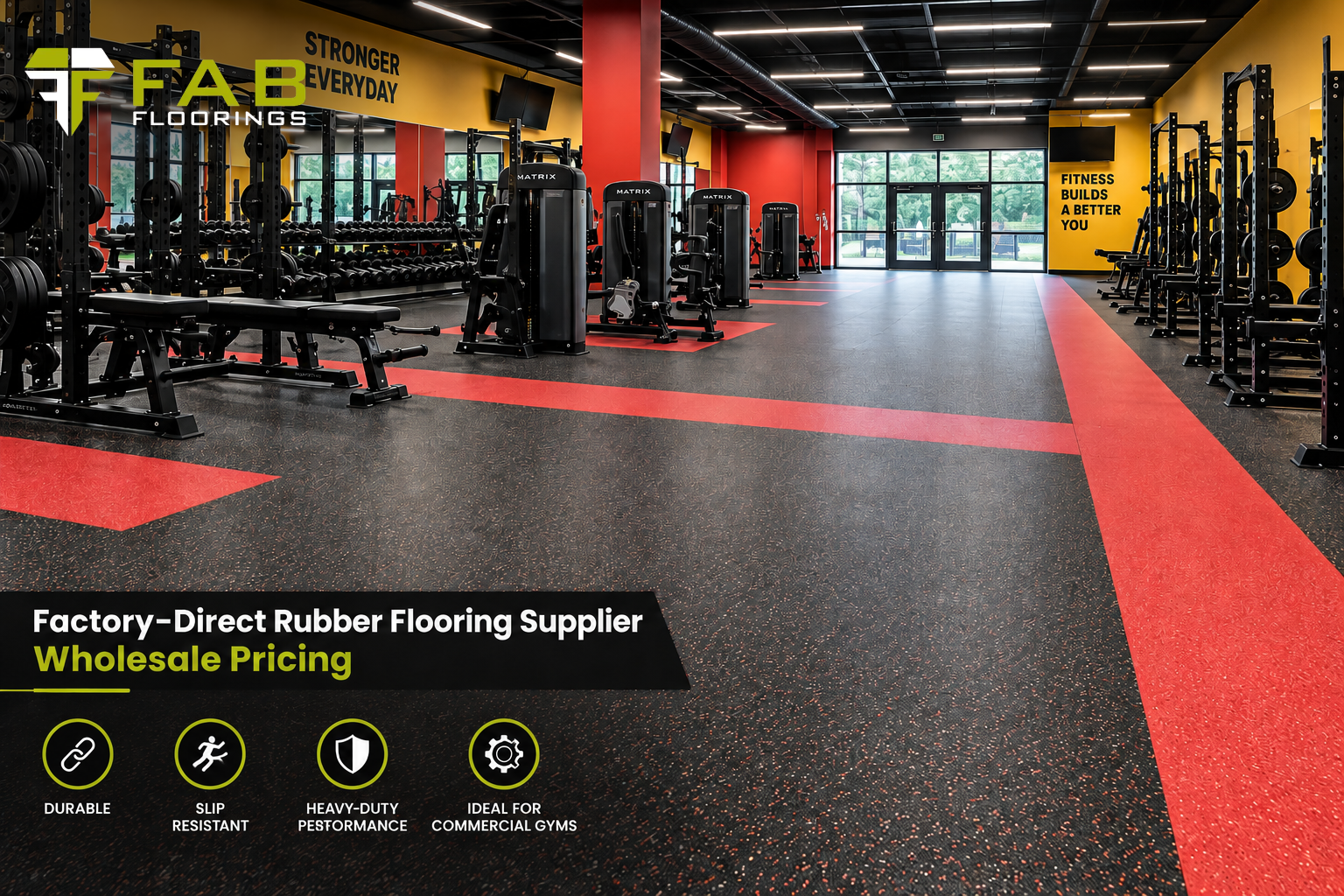
When setting up a gym, weight room, or professional strength-training facility, flooring is more than a finishing material. It has to withstand heavy equipment, repeated foot traffic, and the impact created when dumbbells, barbells, or weight plates are placed or dropped.
One of the most overlooked factors when selecting rubber gym flooring is density. Many buyers focus only on thickness, but thickness and density serve different purposes. A thicker floor is not automatically the best choice if its material construction is unsuitable for the application.
For heavy-weight areas, the right combination of density, thickness, rubber composition, impact performance, and subfloor protection can make a significant difference to the floor's long-term performance. Industry flooring guides similarly emphasize matching flooring specifications to the activity and using different flooring zones where impact levels vary.
In this guide, we explain what rubber flooring density means, why it matters, how it differs from thickness, and how to choose the right flooring for different gym areas.
What Is Rubber Flooring Density?
Rubber flooring density describes the amount of rubber material contained within a specific volume of flooring. It is commonly expressed in kilograms per cubic metre (kg/m³).
Density gives an indication of how compact the rubber is and can influence characteristics such as:
- Firmness
- Stability
- Resistance to compression
- Durability
- Equipment support
- Response to repeated loads
However, density should never be considered in isolation. The flooring's thickness, rubber composition, manufacturing process, surface finish, backing, and intended application also affect performance.
Why Does Density Matter for Heavy Weights?
Heavy weights create concentrated loads and, when dropped, significant impact forces.
A suitable rubber flooring system can help provide:
- Better support beneath heavy equipment
- Resistance to excessive compression
- Protection for the subfloor
- Improved stability during workouts
- Better durability in high-use areas
- Impact management
- Reduced transmission of some impact-related noise and vibration
High-density rubber is generally more resistant to crushing and indentation under equipment loads, but the correct density still depends on the application.
Density vs Thickness: What's the Difference?
These two terms are often confused.
Density
Density describes how much material is contained within a given volume.
Thickness
Thickness describes the physical depth of the flooring.
A flooring product can be thick without necessarily having the material characteristics required for a demanding weightlifting application.
That's why selecting gym flooring based only on thickness can lead to the wrong specification.
For heavy-weight areas, evaluate:
Density + Thickness + Construction + Impact Level + Subfloor
rather than looking at just one specification.
Does Higher Density Always Mean Better Flooring?
No.
Higher density can provide a firmer and more stable material, but the "best" density depends on how the flooring will be used.
For example, a cardio area may not need the same flooring specification as a deadlift zone. Similarly, a home gym with moderate dumbbell use has different requirements from a commercial Olympic weightlifting facility.
The goal is to select a flooring specification that provides the right balance of:
- Impact management
- Stability
- Durability
- Comfort
- Subfloor protection
- Cost
How Heavy Are the Weights Being Used?
Before selecting rubber flooring, consider what will actually happen on the floor.
Ask:
- Will the gym use light dumbbells?
- Will barbells be used?
- Are power racks being installed?
- Will kettlebells be dropped?
- Will deadlifts be performed?
- Will loaded barbells regularly be dropped?
- Is Olympic lifting part of the training program?
The more demanding the application, the more important it becomes to select flooring specifically designed for high-impact use.
Recommended Density by Gym Application
Density requirements vary by manufacturer and product construction, so there is no universal density specification for every gym.
As a general specification framework, buyers may encounter ranges such as:
| Application | General Density Consideration |
|---|---|
| Light fitness / cardio | Lower to medium density |
| General gym areas | Medium density |
| Strength training | Medium to high density |
| Free-weight areas | High-density rubber |
| Heavy weightlifting | High-density, impact-oriented rubber |
| High-impact drop zones | High-density rubber with additional protection where required |
The actual product specification should always be checked with the manufacturer or supplier before final selection.
Choosing Rubber Flooring for Different Gym Zones
1. Cardio Areas
Cardio zones typically contain:
- Treadmills
- Exercise bikes
- Cross trainers
- Rowing machines
These areas generally experience equipment loads and foot traffic rather than repeated heavy weight drops.
A suitable rubber roll or tile can provide a stable, durable surface while helping manage equipment vibration.
2. General Fitness Areas
General fitness zones may include:
- Stretching
- Bodyweight exercises
- Light resistance training
- Personal training
- Mobility exercises
These areas usually do not require the same impact specification as a dedicated weightlifting zone.
3. Strength Training Areas
Strength areas may contain:
- Dumbbells
- Benches
- Cable machines
- Smith machines
- Squat racks
- Weight machines
Here, flooring should be selected to handle both equipment loads and repeated daily traffic.
Medium-to-high-density rubber flooring can be considered depending on the equipment and expected use.
4. Free-Weight Areas
Free-weight areas require greater attention because weights may be repeatedly placed on the floor and can occasionally be dropped.
Consider:
- Higher-density rubber
- Appropriate thickness
- Impact resistance
- Stable equipment support
- Subfloor protection
For many commercial facilities, thicker rubber tiles are used in free-weight zones rather than relying on the same flooring specification used in cardio areas.
5. Heavy Weightlifting Areas
Deadlift and Olympic lifting areas experience some of the highest flooring demands.
These areas may benefit from:
- Heavy-duty rubber tiles
- High-density construction
- Greater thickness
- Dedicated lifting platforms
- Additional impact protection
Some current flooring guides place heavy lifting and drop zones around the 20–40 mm+ range depending on the activity and product, but this should be treated as a starting point rather than a universal specification.
How Thick Should Rubber Flooring Be for Heavy Weights?
Density and thickness should be evaluated together.
A practical starting framework is:
| Gym Area | General Thickness Range |
|---|---|
| Light fitness / stretching | 6–10 mm |
| Cardio areas | 8–15 mm |
| General gym training | 10–15 mm |
| Strength training | 15–20 mm |
| Free-weight areas | 20–30 mm |
| Heavy lifting / drop zones | 25–40 mm+ |
These ranges are general planning guidelines, not guaranteed requirements. The correct specification depends on the product, equipment, impact level, subfloor, and installation system. Current industry guides show substantial variation, which is another reason to specify flooring by application rather than thickness alone.
Why You Shouldn't Use the Same Flooring Throughout the Gym
A common mistake is installing one rubber flooring specification throughout the entire facility.
A better approach is to divide the gym into zones.
Example:
Cardio Zone
Use a suitable commercial rubber flooring for machines and regular traffic.
General Training Zone
Use medium-duty rubber flooring for everyday fitness activities.
Strength Zone
Use a more robust rubber specification for racks, benches, and weights.
Heavy Lifting Zone
Use heavy-duty rubber tiles and, where appropriate, a dedicated lifting platform.
This approach can provide the required protection where it matters most without unnecessarily specifying heavy-duty flooring for every square metre.
Zoning is also recommended by current flooring guidance because different activities place different demands on the floor.
Rubber Tiles vs Rubber Rolls for Heavy Weights
The flooring format is another important consideration.
Rubber Tiles
Rubber tiles are particularly useful when you want:
- Modular installation
- Easy replacement of individual sections
- Dedicated heavy-duty zones
- Flexible gym layouts
- Different flooring specifications in different areas
They can be particularly practical around free-weight and strength-training areas.
Rubber Rolls
Rubber rolls can be useful for:
- Large gym areas
- Cardio zones
- General fitness spaces
- Commercial training facilities
They provide a more continuous appearance with fewer joints.
For larger gyms, it may make sense to use rubber rolls in general areas and heavier rubber tiles in high-impact zones.
How Rubber Flooring Protects the Subfloor
The subfloor is often overlooked when planning a gym.
Repeated impact from weights can place stress on concrete and other underlying surfaces. Rubber flooring provides a protective layer between the equipment and subfloor.
It can help reduce the effects of:
- Weight impact
- Equipment movement
- Scratches
- Surface wear
- Repeated contact
However, rubber flooring should not be treated as a guarantee against structural damage. For particularly high-impact lifting, a dedicated lifting platform and appropriate subfloor assessment may also be necessary.
Density and Equipment Stability
Flooring should not simply be soft.
If rubber compresses excessively beneath heavy equipment, machines and racks may feel less stable.
A suitable high-density rubber product can provide a firmer base for equipment while still offering impact management.
This is especially important around:
- Squat racks
- Power racks
- Smith machines
- Weight benches
- Cable machines
- Heavy storage racks
The right balance between firmness and impact protection depends on the equipment and flooring system.
Rubber Flooring for Commercial Gyms in Dubai
Commercial gyms in Dubai can experience substantial daily foot traffic and equipment use.
When selecting flooring, consider:
- Number of users
- Training type
- Equipment loads
- Weight-drop frequency
- Cleaning routine
- Indoor environment
- Subfloor condition
- Expected service life
- Installation method
For a large facility, zoning the flooring according to usage can be a more practical approach than installing the same specification everywhere.
Common Mistakes When Choosing Rubber Flooring Density
1. Choosing Only by Thickness
A thicker tile isn't automatically the right tile. Density and construction also matter.
2. Choosing Only by Density
Density alone doesn't tell you whether a product is suitable for a specific weightlifting application.
3. Ignoring Weight-Drop Impact
A floor used for machines and dumbbells may not be suitable for repeated barbell drops.
4. Using One Specification Throughout the Gym
Different areas have different flooring requirements.
5. Ignoring the Subfloor
A properly prepared subfloor is essential for a successful flooring installation.
6. Focusing Only on Initial Cost
A cheaper flooring solution may not provide the performance required for demanding applications. Consider the total value over the expected service life.
How to Choose the Right Rubber Flooring Density
Before placing an order, work through this checklist:
Step 1: Identify the Workout Type
Determine whether the area is for cardio, general fitness, strength training, CrossFit, powerlifting, or Olympic lifting.
Step 2: Identify Equipment Loads
List the equipment that will remain on the floor and the weights being used.
Step 3: Determine Impact Level
Consider whether weights will simply be placed down or regularly dropped.
Step 4: Evaluate the Subfloor
Check whether the existing floor is concrete, screed, wood, tile, or another surface.
Step 5: Select Density and Thickness Together
Do not specify either characteristic in isolation.
Step 6: Select the Flooring Format
Decide between tiles, rolls, mats, or a dedicated lifting platform.
Step 7: Consider Maintenance
Choose a flooring surface that fits the facility's cleaning and maintenance routine.
Why Choose Fab Floorings for Rubber Flooring?
Selecting the right rubber flooring requires more than choosing a thickness from a product list.
Fab Floorings provides rubber flooring solutions for different gym and fitness applications, allowing flooring specifications to be considered according to the intended use.
When planning a heavy-weight area, factors such as:
- Density
- Thickness
- Rubber construction
- Equipment
- Impact level
- Traffic
- Subfloor
- Installation
- Maintenance
should all be evaluated together.
Whether you're developing a commercial gym, home gym, weight room, CrossFit facility, or professional training centre, the right flooring specification can help create a more durable and functional training environment.
Final Thoughts
Choosing rubber flooring density for heavy weights is not simply about selecting the highest density or thickest flooring available.
The right solution depends on what will happen on the floor.
A cardio zone, general fitness area, strength-training section, and Olympic lifting platform all have different requirements. Density, thickness, construction, impact level, and subfloor conditions should therefore be considered together.
For demanding weightlifting areas, high-density and appropriately thick rubber flooring can provide a strong foundation for heavy equipment and repeated training. Where extremely high-impact lifting is expected, dedicated lifting platforms or additional protection may be appropriate.
If you're planning a gym flooring project in Dubai or across the UAE, Fab Floorings can help you evaluate the flooring requirements for each area and select a suitable rubber flooring solution.