How Much Does Gym Flooring Cost in Dubai? Complete Price Guide
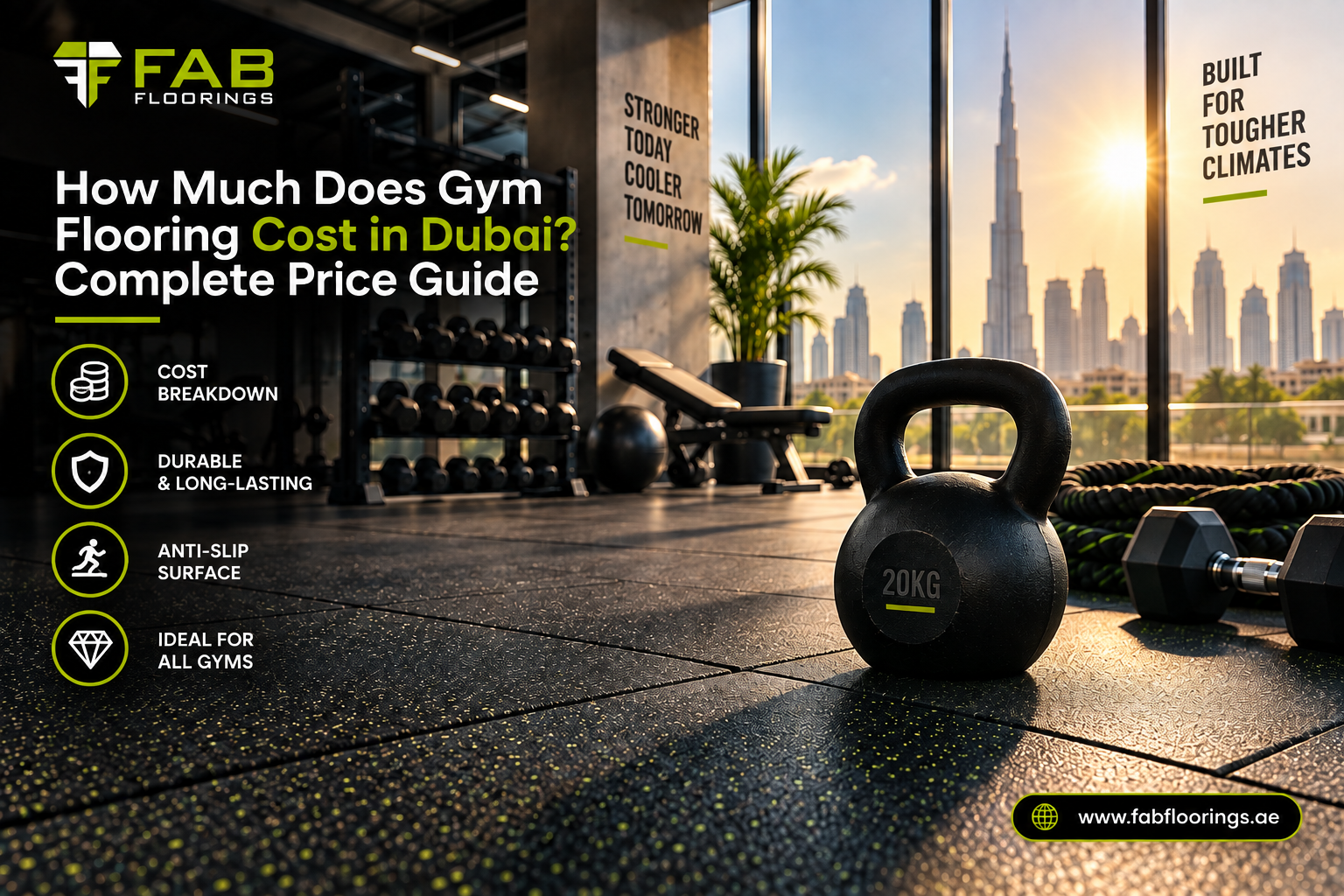
Gym flooring is an important investment when setting up a fitness center, home gym, hotel gym, CrossFit facility, or commercial training space in Dubai. The right flooring protects the subfloor, reduces impact from equipment, improves traction, and creates a safer workout environment.
The gym flooring cost in Dubai depends on several factors, including material, thickness, density, surface finish, installation method, project size, and the type of training performed.
As an indicative range, gym flooring can cost approximately AED 40 to AED 200+ per square meter. Heavy-duty rubber and specialized EPDM systems generally sit at the higher end of the range. Actual project pricing can vary according to specifications and quantity.
Gym Flooring Price in Dubai by Material
| Flooring Type | Indicative Price Range |
|---|---|
| EVA Foam Mats | AED 40–80/m² |
| Rubber Flooring 6–8 mm | AED 70–110/m² |
| Rubber Flooring 10–15 mm | AED 90–140/m² |
| Heavy-Duty Rubber 20 mm+ | AED 120–180/m² |
| EPDM Flooring | AED 130–200+/m² |
These are indicative ranges rather than fixed quotations. Supplier, density, thickness, finish, order quantity, installation requirements, and project location can all change the final price.
What Factors Affect Gym Flooring Cost in Dubai?
1. Flooring Material
Material is one of the biggest factors affecting price.
EVA foam is generally suitable for lighter activities such as yoga, stretching, mobility exercises, and home workouts.
Rubber flooring is widely used for commercial gyms because it provides impact resistance, durability, traction, and protection for the underlying floor.
EPDM flooring can be a premium option where appearance, durability, and demanding indoor or outdoor applications are important.
2. Flooring Thickness
Thickness has a direct effect on both performance and price.
- 6–8 mm: Cardio and light-use areas
- 10–15 mm: General commercial gym areas
- 15–20 mm: Free-weight and strength-training zones
- 20 mm+: Heavy lifting and high-impact applications
The thickest flooring does not necessarily need to be installed throughout the entire gym. A zoned flooring strategy can provide better performance while controlling the overall project budget.
3. Gym Size
The total floor area has a major impact on the project cost.
For example, flooring a 50 m² home gym will require considerably less material than flooring a 500 m² commercial fitness center.
Large projects may also receive better material pricing because of bulk quantities.
4. Installation
Installation can be an additional cost depending on the flooring system.
Installation requirements can include:
- Subfloor preparation
- Level correction
- Adhesive application
- Cutting and fitting
- Seam alignment
- Edge finishing
- Final inspection
Loose-laid or interlocking tiles can have different installation requirements compared with fully adhered rubber rolls.
5. Subfloor Condition
A level and properly prepared subfloor can make installation easier.
If the existing concrete or floor surface requires extensive preparation, repair, moisture treatment, or levelling, the overall project cost can increase.
6. Gym Usage
A home gym, commercial fitness center, CrossFit facility, and professional weightlifting area do not have the same flooring requirements.
For example, a cardio zone may not need the same thickness as a deadlift area where heavy weights are regularly dropped.
Gym Flooring Cost by Application
Home Gym
A home gym generally requires less flooring and may use thinner rubber or EVA mats depending on the equipment and workout style.
Typical consideration: 6–10 mm flooring for light to moderate use.
Commercial Gym
Commercial gyms experience high foot traffic, equipment loads, and frequent workouts. Higher-density rubber flooring is generally a more suitable investment.
Typical consideration: 10–20 mm depending on the area.
Weightlifting Area
Free-weight and lifting zones require additional impact protection.
Typical consideration: 15–25 mm+ heavy-duty rubber flooring, depending on equipment and lifting intensity.
Cardio Area
Treadmills, bikes, ellipticals, and similar equipment generally require durable flooring with good resistance to wear and vibration.
Typical consideration: 6–10 mm rubber flooring.
Functional Training Area
Functional training areas may require flooring that can handle repeated movement, sled work, kettlebells, and general impact.
Typical consideration: 10–20 mm rubber flooring.
Example: Gym Flooring Cost for a 100 m² Gym
Suppose a 100 m² gym is divided into different zones:
- 40 m² cardio area × AED 90 = AED 3,600
- 40 m² strength area × AED 120 = AED 4,800
- 20 m² heavy lifting area × AED 160 = AED 3,200
Estimated flooring material cost: AED 11,600
This is only an example for understanding the calculation. The actual cost can change according to product specification, quantity, installation, subfloor condition, and supplier quotation.
How to Reduce Gym Flooring Cost Without Sacrificing Quality
You don't necessarily need the most expensive flooring throughout the entire gym.
Use Different Thicknesses for Different Zones
Use thinner flooring in low-impact areas and thicker rubber flooring where heavy equipment or weights are used.
Compare Tiles and Rolls
Rubber tiles and rolls can have different material and installation costs. Tiles can be useful when individual sections may need replacement, while rolls can provide a more continuous surface for larger areas.
Buy According to Actual Requirements
Avoid paying for heavy-duty flooring where it is not required. First divide the gym according to activity and equipment.
Consider Long-Term Value
A cheaper floor may have a lower initial cost but can require earlier replacement if it is not designed for the application.
The better approach is to compare initial cost + installation + expected service life + maintenance.
Is Expensive Gym Flooring Worth It?
Not always—but the cheapest option is not necessarily the best option either.
A commercial gym needs flooring that can withstand regular foot traffic, equipment loads, impacts, cleaning, and repeated workouts. Spending more on the right specification can help reduce maintenance and replacement costs over time.
For heavy lifting areas, investing in appropriate impact protection is particularly important because the flooring also helps protect the underlying floor and equipment.
How to Choose the Right Gym Flooring in Dubai
Before purchasing, consider:
- What type of gym are you building?
- How large is the flooring area?
- What equipment will be placed on it?
- Will weights be dropped regularly?
- What flooring thickness is required?
- Is the area indoors or partially exposed?
- Does the existing subfloor require preparation?
- Do you need professional installation?
- What maintenance will the flooring require?
- What is your total project budget?
The goal should be to select flooring based on performance requirements rather than price alone.
Why Rubber Flooring Is Popular for Dubai Gyms
Rubber flooring is a common choice for fitness environments because it combines durability, impact absorption, traction, and relatively low maintenance.
It can be used for cardio areas, strength zones, free-weight areas, functional training spaces, and other high-traffic gym environments. The appropriate thickness and density should be selected according to the intended application.
Dubai's climate is another consideration. For areas exposed to significant heat or sunlight, the flooring specification should be checked for suitability rather than assuming every rubber product will perform identically.
Final Thoughts
The gym flooring cost in Dubai can vary significantly depending on the material, thickness, gym size, installation requirements, and level of impact expected.
A practical budget can start around AED 40/m² for basic EVA options, while commercial-grade rubber and premium EPDM solutions can reach AED 180–200+ per m² depending on specification.
Instead of choosing one flooring type for the entire gym, consider dividing the facility into zones and selecting the appropriate flooring for each activity. This approach can help balance cost, safety, durability, and long-term performance.