How Flooring Selection Impacts Long-Term Gym Maintenance Costs
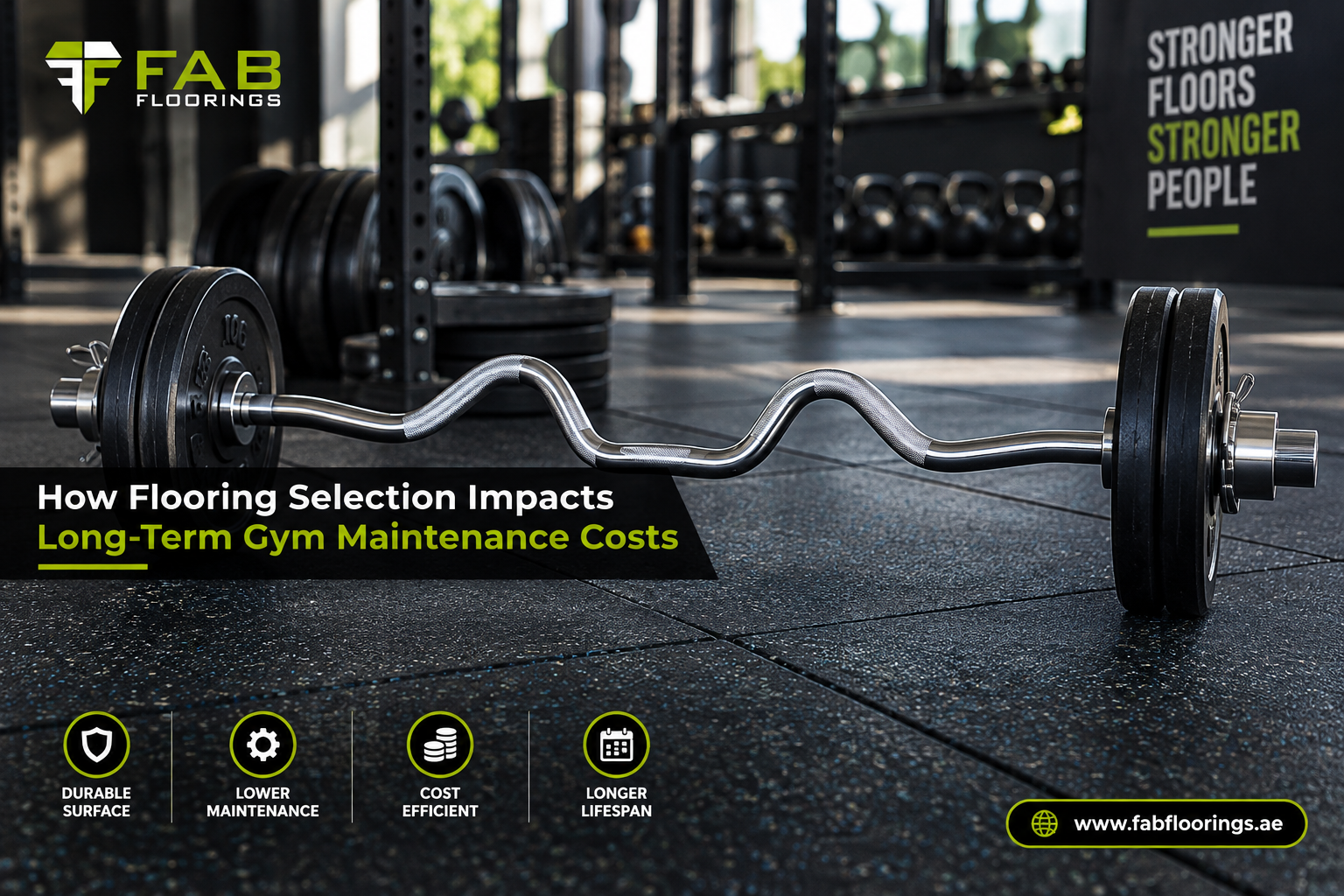
When planning a new gym in Dubai, flooring is often evaluated based on its initial purchase price, appearance and thickness. But the real cost of gym flooring goes beyond the amount paid at installation.
A flooring system that is difficult to clean, unsuitable for heavy equipment or prone to damage can create recurring expenses through repairs, replacements, additional maintenance and premature wear. On the other hand, choosing flooring according to the gym's actual usage can help control maintenance requirements and improve long-term value.
For gyms in Dubai, where facilities may experience high foot traffic, heavy equipment, dust, humidity and intensive daily workouts, flooring selection deserves careful attention. Fab Floorings offers several gym flooring formats, including rubber rolls, interlocking tiles, high-density mats and EPDM surfaces, allowing flooring to be matched to different gym zones.
Why Does Gym Flooring Affect Maintenance Costs?
Gym flooring is exposed to much more stress than flooring in a typical commercial space.
Consider what happens every day:
- Dumbbells and weights are repeatedly placed or dropped.
- Treadmills and machines operate for long periods.
- Hundreds of people walk across the surface.
- Sweat and moisture need to be cleaned regularly.
- Dust and debris can accumulate in high-traffic areas.
- Heavy equipment can create concentrated loads.
If the flooring is not suitable for these conditions, maintenance requirements can increase significantly.
The right flooring can help protect the subfloor, equipment and playing surface, while also making routine cleaning easier.
Initial Cost vs Long-Term Flooring Cost
A common mistake is to compare gym flooring products only by their price per square metre.
Instead, consider the total cost of ownership.
Initial Cost
This may include:
- Flooring material
- Delivery
- Subfloor preparation
- Installation
- Adhesives or installation accessories
- Edge and transition finishing
Long-Term Cost
Over the years, you may also spend money on:
- Cleaning
- Repairs
- Replacement tiles or sections
- Reinstallation
- Maintenance labour
- Subfloor repairs
- Damage caused by unsuitable flooring
A slightly higher-quality flooring system may therefore offer better long-term value if it reduces frequent repairs and replacement.
Choose Flooring According to the Gym Zone
One of the most effective ways to control long-term maintenance costs is to avoid using the same flooring specification everywhere.
Different areas experience different levels of impact and traffic.
Heavy Weightlifting Areas
Free-weight zones experience some of the highest impact in a gym.
Suitable flooring may include:
- Heavy-duty rubber mats
- High-density rubber tiles
- Heavy-duty rubber rolls
These surfaces can help protect the underlying floor from equipment and weight impact.
Using appropriate flooring in these areas can help avoid unnecessary damage to the subfloor.
Cardio Areas
Treadmills, bikes and elliptical machines create continuous foot traffic and equipment vibration.
Rubber rolls can be a practical choice for large cardio areas because they provide broad coverage with fewer seams and are relatively easy to maintain.
Functional Training Areas
Functional training can involve:
- Jumping
- Sled work
- Agility exercises
- Kettlebells
- Bodyweight training
- Dynamic movements
The flooring should provide suitable traction and durability while allowing the area to withstand repeated movement.
Yoga & Stretching Areas
These zones generally experience less impact than weightlifting areas.
A softer or more comfortable flooring system may be more appropriate, depending on the activities performed.
This is another reason why zoned flooring can be more cost-effective than installing the same heavy-duty specification throughout the entire gym.
Rubber Rolls and Maintenance Costs
Rubber rolls are often useful for larger gym areas because they provide continuous coverage with fewer seams.
They can be suitable for:
- Large commercial gyms
- Cardio areas
- Machine zones
- General fitness areas
Fewer seams can also make routine cleaning more straightforward in large open spaces. Fab Floorings describes rubber rolls as a solution for large areas requiring continuous coverage.
However, permanent roll installation should be properly planned and installed so that the flooring remains stable and the seams and edges are properly finished.
Interlocking Tiles and Replacement Costs
Interlocking rubber tiles offer a different long-term advantage: modularity.
If one section becomes damaged, individual tiles may be replaceable without removing the entire floor.
This can be particularly useful in:
- Home gyms
- Boutique studios
- Functional training areas
- CrossFit facilities
- Smaller commercial gyms
Fab Floorings highlights the replaceability and modular nature of interlocking tile systems.
This can help reduce replacement costs when damage is limited to a specific area.
Why Flooring Density Matters
Density is another factor that can influence long-term performance.
A gym floor needs to support the equipment and activities taking place above it. Heavy equipment and free weights can create concentrated loads, so the flooring should be selected according to the expected application.
For heavy-use commercial gyms, high-density rubber flooring can provide a suitable balance of durability, impact protection and stability.
However, higher density does not automatically mean better for every area. The flooring specification should match the actual application.
The Importance of Correct Thickness
Thickness also affects how a flooring system performs.
For example:
- General fitness areas may require a moderate specification.
- Cardio areas may need flooring suited to equipment and foot traffic.
- Functional training areas may require greater impact resistance.
- Heavy lifting zones may require a more robust system.
Installing an unnecessarily heavy-duty product throughout the gym can increase the initial investment without providing meaningful benefits in lower-impact areas.
A better approach is to match thickness and construction to each zone.
Easy-to-Clean Flooring Can Reduce Maintenance Work
Gym flooring needs regular cleaning because of sweat, dust, chalk, dirt and everyday foot traffic.
A flooring material that is easy to sweep and mop can help reduce routine maintenance effort.
For rubber gym flooring, Fab Floorings recommends regular sweeping or vacuuming, periodic mopping with a mild or pH-neutral cleaning solution, and prompt cleaning of spills. Harsh chemicals should be avoided where they are unsuitable for the flooring.
Dubai's Environment and Gym Maintenance
Dubai gyms may have to deal with:
- Dust
- Sand
- High temperatures
- Humidity
- Heavy indoor usage
- Frequent cleaning
For indoor gyms, the focus should be on selecting flooring that can handle the expected traffic and cleaning routine.
For outdoor or semi-outdoor fitness areas, additional consideration should be given to UV exposure, heat, moisture and weather conditions.
The product should always be selected according to the actual installation environment.
How Proper Installation Reduces Future Costs
Even high-quality flooring can develop problems when installed over an unsuitable or poorly prepared subfloor.
Before installation, the subfloor should generally be:
- Clean
- Dry
- Stable
- Properly levelled
- Free from unsuitable debris
- Suitable for the selected installation method
Fab Floorings notes that proper installation can contribute to flooring lifespan, safety and performance.
Poor installation can lead to:
- Movement
- Gaps
- Curling edges
- Uneven surfaces
- Adhesion problems
- Premature wear
Spending more time on preparation can therefore help avoid future maintenance issues.
A Simple Gym Flooring Maintenance Schedule
A consistent maintenance routine can help extend the useful life of gym flooring.
Daily
- Sweep or vacuum dust and debris.
- Remove sweat and liquid spills.
- Check high-traffic areas.
- Remove loose objects that could damage the surface.
Weekly
- Mop using a suitable cleaning solution.
- Clean around gym equipment.
- Pay additional attention to high-use areas.
Monthly
- Inspect seams and edges.
- Check interlocking tiles for movement.
- Inspect areas beneath heavy equipment.
- Look for signs of excessive wear.
Periodically
- Review the overall condition of the flooring.
- Replace damaged modular tiles where necessary.
- Check areas experiencing unusually high loads.
- Review whether the current flooring specification still matches the gym's usage.
Regular inspections and prompt maintenance can help prevent small issues from becoming larger repair requirements.
Common Flooring Decisions That Increase Long-Term Costs
1. Choosing Only on Initial Price
A low-cost product may not be suitable for heavy commercial use.
2. Using the Same Flooring Everywhere
A heavy-duty flooring system may be unnecessary in low-impact zones, while a basic floor may be inadequate for free-weight areas.
3. Ignoring the Subfloor
A poor base can affect even a high-quality flooring system.
4. Choosing the Wrong Thickness
Too little protection can increase damage, while excessive specification can unnecessarily increase the initial investment.
5. Using Unsuitable Cleaning Chemicals
Aggressive chemicals can affect certain flooring materials over time.
6. Delaying Small Repairs
A damaged tile or loose edge is easier to address before the problem spreads or creates a safety concern.
Hybrid Gym Flooring Can Be More Cost-Effective
A modern gym does not have to use one flooring product throughout the entire facility.
A hybrid flooring strategy could include:
| Gym Zone | Possible Flooring |
|---|---|
| Heavy lifting | Heavy-duty rubber |
| Free weights | High-density rubber tiles or mats |
| Cardio | Rubber rolls |
| Functional training | Rubber tiles or suitable sports flooring |
| Yoga / stretching | Comfortable sports flooring or mats |
| Premium design zones | EPDM or decorative rubber flooring |
Fab Floorings also describes hybrid flooring as a way to combine different materials according to the requirements of individual gym zones.
This approach can help balance performance, appearance, initial investment and long-term maintenance.
How to Calculate the Real Value of Gym Flooring
Before selecting a flooring product, ask:
What is the expected daily traffic?
A commercial gym with hundreds of users needs a different specification from a small home gym.
What equipment will be installed?
Heavy machines and free weights create different demands from yoga equipment.
How much impact will the floor receive?
Weight drops and high-impact workouts require greater protection.
How frequently will the floor be cleaned?
Choose a material that fits the facility's cleaning routine.
Can damaged sections be replaced?
Modular flooring can offer an advantage when localised replacement is important.
How long is the facility expected to operate?
For a long-term commercial facility, durability and maintenance should be considered alongside the initial purchase price.
Why Choose Fab Floorings for Gym Flooring in Dubai?
Fab Floorings offers multiple gym flooring solutions, including rubber rolls, interlocking tiles, high-density mats and EPDM surfaces, allowing flooring to be selected according to different training environments.
The right flooring solution can be planned according to:
- Gym size
- Workout type
- Equipment loads
- Traffic levels
- Impact requirements
- Maintenance expectations
- Indoor or outdoor installation
- Design preferences
The goal should not simply be to find the cheapest floor. It should be to select a flooring system that provides the right performance for the application while keeping maintenance practical over time.
Final Thoughts
Gym flooring is a long-term investment. Looking only at the initial purchase price can overlook the costs associated with cleaning, repairs, replacements and premature wear.
The smarter approach is to consider the total lifecycle of the flooring.
Choose the right material for each gym zone, match thickness and density to the activity, prepare the subfloor correctly, install the flooring professionally and follow a consistent maintenance routine.
For gyms in Dubai, this approach can help create a floor that is not only durable and attractive but also easier to maintain and more cost-effective over its service life.
Fab Floorings can help you select gym flooring based on your facility's actual usage, from heavy-weight areas and commercial fitness centres to cardio zones, studios and home gyms.