How Gym Flooring Performs in Dubai’s Extreme Heat and Indoor Conditions
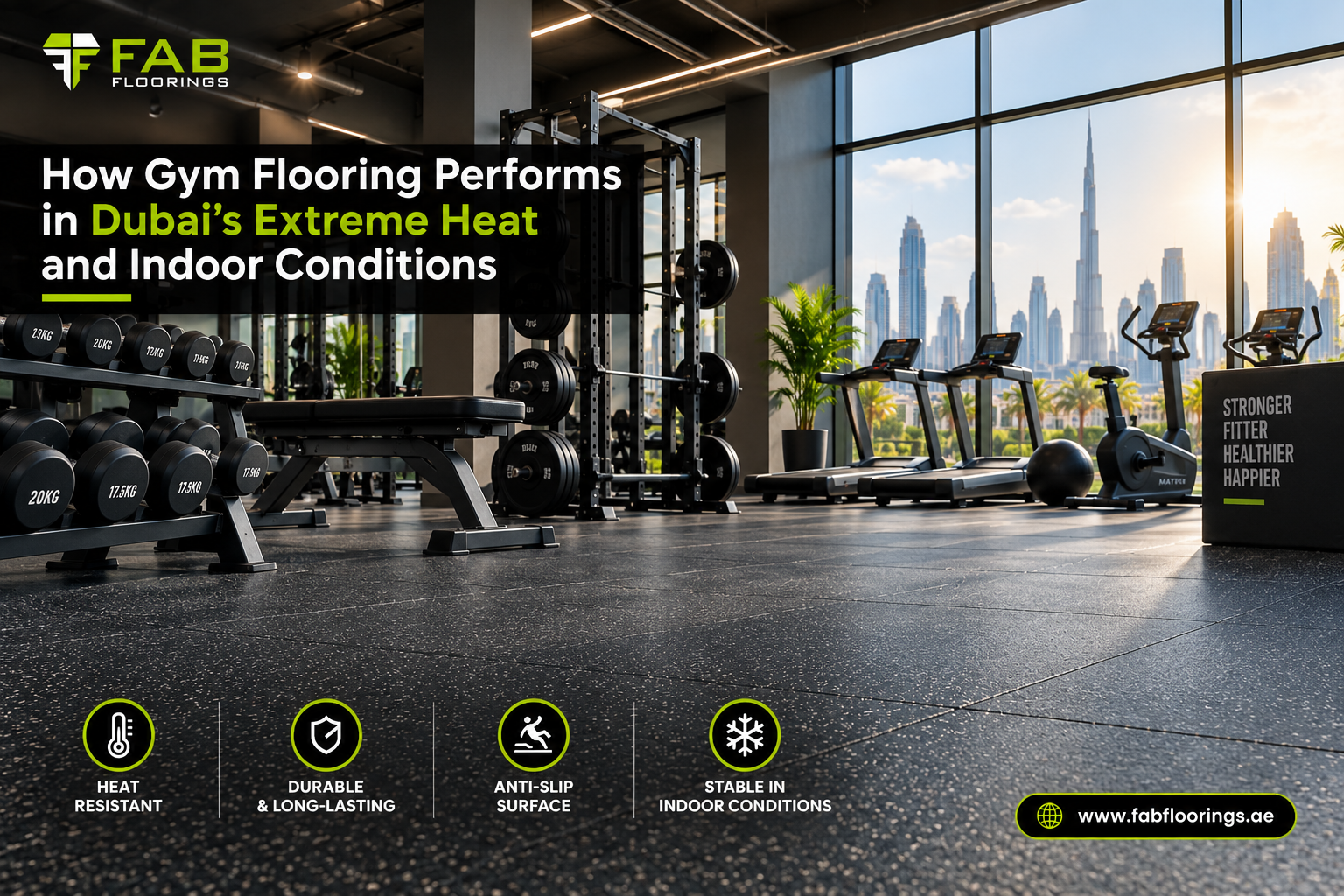
Dubai’s climate creates a unique environment for gyms and fitness facilities. High outdoor temperatures, humidity, strong sunlight, dust and continuous air conditioning can all influence how flooring performs over time.
For gym owners, flooring needs to do more than look good. It must provide reliable grip, withstand heavy equipment, absorb impact and maintain its performance despite demanding indoor and environmental conditions.
Choosing the right gym flooring in Dubai therefore requires consideration of both the workout environment and the local climate.
How Dubai’s Climate Affects Gym Flooring
Extreme Heat
Dubai can experience very high temperatures during summer. Although most commercial gyms operate indoors, heat can still affect flooring near entrances, windows, exterior walls and partially open areas.
Some flooring materials may experience dimensional changes, surface deterioration or accelerated ageing when exposed to excessive heat.
Indoor Air Conditioning
Most gyms maintain a controlled indoor temperature through air conditioning. The significant difference between outdoor heat and indoor cooling means flooring can experience repeated temperature changes.
Properly selected and installed flooring should accommodate normal environmental movement without creating problems such as excessive gaps, lifting or instability.
Humidity and Moisture
Humidity is another consideration for fitness facilities. Sweat, cleaning water and moisture from the surrounding environment can also place demands on the flooring system.
The flooring, adhesive and subfloor should therefore be compatible with the intended indoor conditions.
Dust and Sand
Dust and fine sand can enter gyms through doors, footwear and ventilation. If they remain on the surface, they can contribute to abrasion and affect traction.
Regular cleaning is particularly important for maintaining the appearance and performance of gym flooring in Dubai.
Why Rubber Flooring Performs Well in Dubai Gyms
Rubber flooring is widely used in fitness environments because it combines resilience, impact absorption and durability. It is particularly useful in areas where flooring is exposed to heavy foot traffic, strength equipment and dropped weights.
A well-specified rubber floor can provide:
- Good impact absorption
- Reliable traction
- Protection for the subfloor
- Resistance to everyday wear
- Reduced noise from equipment
- Easier maintenance
However, not every rubber flooring product has identical performance. Density, thickness, construction, binder quality and intended application should all be considered before purchasing.
Choosing Flooring for Different Gym Areas
The best flooring specification depends on how each area is used.
Cardio areas: A durable rubber surface can provide comfortable support and traction for treadmills, bikes and other equipment.
Functional training areas: Resilient rubber flooring is suitable for exercises involving frequent movement and repeated impact.
Free-weight zones: These areas generally require stronger impact protection because of dropped dumbbells, kettlebells and other equipment.
Heavy lifting areas: Thicker, high-performance rubber flooring can provide additional protection for both the subfloor and equipment.
Outdoor or exposed areas: Flooring exposed directly to sunlight requires appropriate UV and weather resistance. EPDM-based solutions may be considered for suitable outdoor applications.
Installation Is Critical
Even high-quality flooring can perform poorly when installation is incorrect.
Before installing gym flooring, the subfloor should be properly prepared, clean, dry and sufficiently level. The installation method should match the flooring format and site conditions.
For tiles and rolls, particular attention should be given to seams, edges, adhesive requirements and expected material movement.
Professional installation can help reduce problems such as shifting, lifting edges and uneven surfaces.
How to Maintain Gym Flooring in Dubai
Regular maintenance can help preserve flooring performance.
Remove Dust Regularly
Sweep or vacuum frequently to prevent sand and dust from accumulating on the surface.
Clean With Suitable Products
Use cleaning products recommended for the specific flooring. Avoid aggressive chemicals that may affect the rubber surface or finish.
Inspect High-Traffic Areas
Check weight-training zones, entrances and equipment areas regularly for signs of excessive wear.
Control Indoor Conditions
Maintaining reasonably stable indoor conditions can help reduce unnecessary environmental stress on flooring.
Signs Your Gym Flooring Needs Attention
Gym owners should look for:
- Raised or curling edges
- Gaps between tiles
- Loose sections
- Damaged seams
- Cracks or surface deterioration
- Excessive compression
- Changes in traction
- Unusual movement under equipment
Addressing minor problems early can help prevent more extensive flooring repairs.
How to Choose Gym Flooring for Dubai
Before purchasing, consider these factors:
- Gym usage – home gym, studio or commercial fitness center
- Equipment load – cardio machines or heavy strength equipment
- Impact level – general exercise versus heavy lifting
- Indoor or outdoor application
- Flooring thickness and density
- Subfloor condition
- Installation method
- Expected traffic and maintenance requirements
Instead of selecting flooring solely according to price, compare the material's specifications with the actual demands of your facility.
Final Takeaway
Dubai’s heat does not automatically make gym flooring unsuitable or unreliable. The key is choosing a flooring system that matches the environment, workout intensity and installation conditions.
Rubber gym flooring in Dubai can be an effective choice for commercial gyms, fitness studios and training facilities because of its durability, impact resistance and practical maintenance requirements. Proper installation and regular care are equally important for achieving long-term performance.