From Heavy Lifts to HIIT: The Best Gym Rubber Flooring Dubai Has to Offer
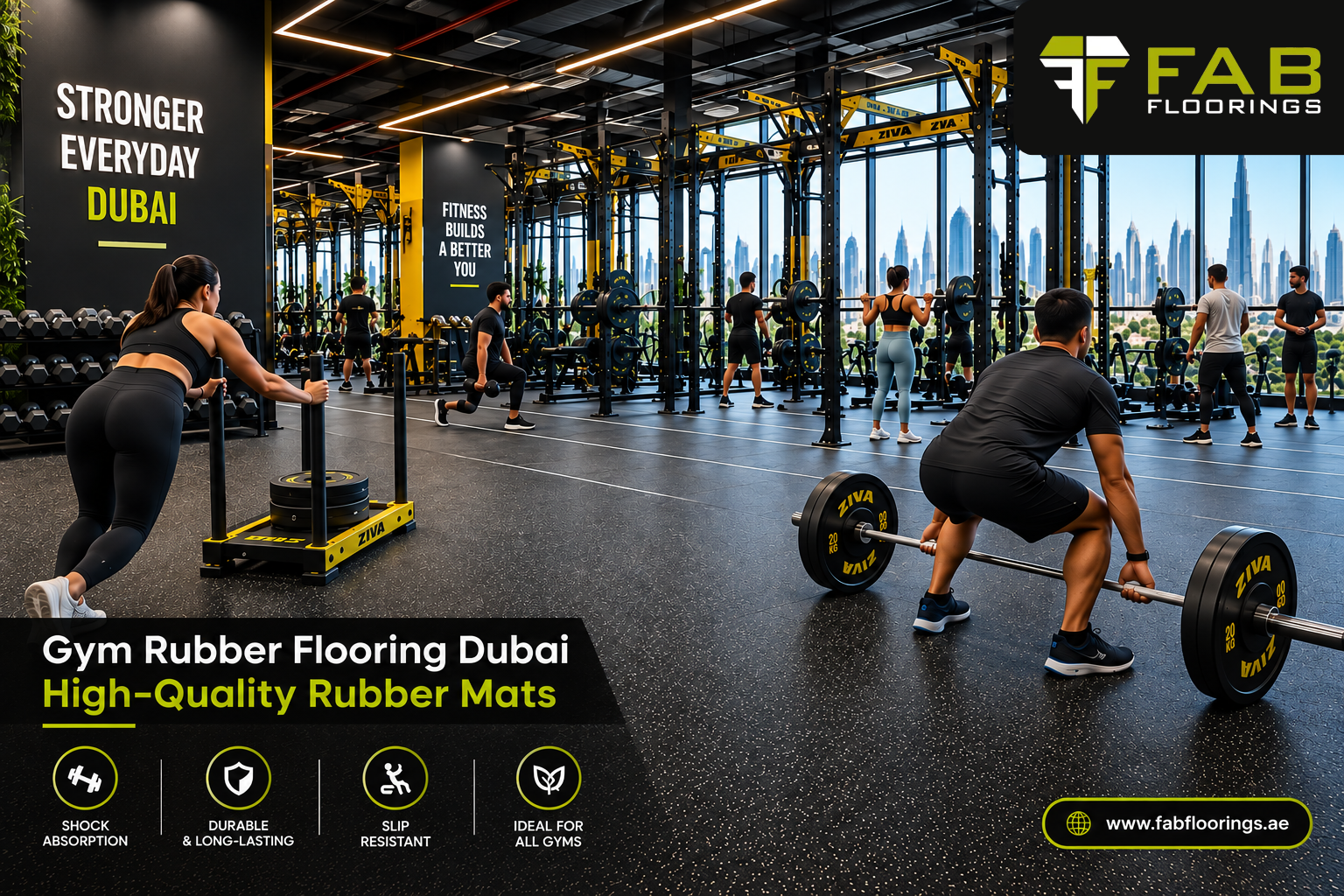
A gym floor has to do much more than simply look good. It needs to handle heavy equipment, repeated impacts, constant foot traffic, intense workouts, and daily cleaning while providing a stable and comfortable surface for users.
From heavy weightlifting and functional training to HIIT, cardio, and general fitness, rubber flooring has become a popular choice for modern gyms in Dubai and across the UAE.
The right gym rubber flooring can help protect the underlying floor, reduce the impact of dropped equipment, improve traction, and create a more comfortable workout environment. However, not every rubber floor is suitable for every gym area.
In this guide, we explore the different types of gym rubber flooring, how to choose the right thickness and format, and which flooring solution works best for different training zones.
Why Is Rubber Flooring Important for a Gym?
Gym environments experience stresses that ordinary residential flooring may not be designed to handle.
Weights can be dropped, machines can move, and users may perform hundreds of repetitive movements every day. Rubber flooring provides a durable surface designed for demanding fitness environments.
Key benefits include:
- Impact protection
- Good surface grip
- Protection for the subfloor
- Noise and vibration reduction
- Resistance to everyday wear
- Easy cleaning and maintenance
- Comfortable surface for workouts
- Flexible options for different gym zones
Choosing the right flooring can therefore improve both the functionality and appearance of a fitness facility.
Different Types of Gym Rubber Flooring
There are several rubber flooring formats available for gyms. The best choice depends on the type of training, available space, equipment, and expected level of impact.
1. Interlocking Rubber Tiles
Interlocking rubber tiles are individual pieces that connect together to create a continuous floor.
They are particularly useful when:
- Individual sections may need replacement
- The gym layout may change
- Installation flexibility is important
- Different workout zones need modular flooring
Interlocking tiles can work well in strength training areas, functional training zones, and general fitness spaces when the appropriate specification is selected.
2. Rubber Flooring Rolls
Rubber rolls provide a more continuous flooring surface with fewer visible joints than individual tiles.
They can be a practical choice for larger areas such as:
- Commercial gyms
- Fitness studios
- Training centres
- Functional training areas
- Cardio zones
Roll flooring can create a clean, uniform appearance across large spaces.
3. Heavy-Duty Rubber Mats
Heavy-duty rubber mats are designed for areas where equipment and impact levels are particularly demanding.
They can be considered for:
- Free-weight areas
- Strength training zones
- Weightlifting areas
- Power racks
- Heavy gym equipment
For these applications, flooring should be selected based on the expected impact, equipment load, mat construction, and subfloor.
4. EPDM Rubber Flooring
EPDM rubber can be used where colour and design flexibility are important.
It is available in different colour combinations and can be used to create distinctive gym interiors, logos, borders, zones, or decorative patterns.
This makes EPDM-containing flooring an option for gyms that want performance along with a more customised appearance.
Choosing the Right Rubber Flooring for Different Gym Areas
One of the most important decisions is matching the flooring to the activity.
Heavy Weightlifting Areas
Heavy lifting areas experience repeated impact from weights and equipment.
For these zones, consider a thicker and more impact-oriented rubber flooring solution designed for the intended level of use.
Important factors include:
- Flooring thickness
- Rubber density
- Impact resistance
- Equipment weight
- Subfloor construction
- Frequency of dropped weights
Heavy-duty flooring can provide an additional protective layer between equipment and the underlying floor.
HIIT and Functional Training Areas
HIIT workouts often involve rapid movement, jumping, burpees, lunges, kettlebells, and other dynamic exercises.
The flooring should provide:
- Stable footing
- Suitable grip
- Comfortable movement
- Impact management
- Durability under repetitive use
A medium-to-heavy-duty rubber flooring solution may be suitable depending on the workout intensity and equipment involved.
Cardio Areas
Treadmills, cross trainers, exercise bikes, rowing machines, and other cardio equipment create a different type of flooring requirement.
Here, the flooring should be durable and stable while helping manage everyday vibration and equipment movement.
Rubber rolls or tiles can be suitable options depending on the layout and equipment.
Free-Weight Areas
Free-weight zones require flooring that can withstand repeated equipment contact and occasional dropped weights.
Heavy-duty rubber tiles or mats are often considered for these areas.
The flooring specification should be selected according to the type of weights being used and the expected frequency of impact.
General Fitness Areas
For stretching, bodyweight exercises, mobility training, and general workouts, the flooring does not necessarily need the same specification as a heavy lifting zone.
A suitable rubber tile or roll can provide a durable and stable surface while maintaining a consistent appearance throughout the gym.
How Thick Should Gym Rubber Flooring Be?
There is no single thickness that is best for every gym.
The appropriate thickness depends on the type of exercise, equipment, impact level, and subfloor.
As a general planning guide:
| Gym Application | Typical Consideration |
|---|---|
| Light fitness & cardio | Lower thickness options may be suitable |
| General gym training | Medium-duty rubber flooring |
| Strength training | Thicker, impact-oriented flooring |
| Free weights | Heavy-duty rubber flooring |
| Heavy lifting | High-impact flooring selected for the application |
Thickness should not be considered alone. Density, rubber construction, installation, subfloor condition, and expected impact are also important.
Why Density Matters in Gym Rubber Flooring
Two rubber floors can have the same thickness but perform differently.
Density and material construction influence how a floor responds to:
- Foot traffic
- Equipment loads
- Dropped weights
- Repeated movement
- Vibration
For commercial gyms, selecting flooring based only on thickness can therefore be a mistake.
A flooring professional can help determine the appropriate specification for each training zone.
Rubber Flooring Helps Protect the Subfloor
Gym equipment can place significant stress on the underlying floor.
Rubber flooring creates a protective layer between the equipment and the subfloor and can help reduce the effects of:
- Equipment movement
- Impact
- Scratches
- Minor surface damage
- Repeated contact
This is particularly valuable in gyms installed over concrete or other hard flooring surfaces.
Grip and Stability Matter
A gym floor needs to provide users with a stable surface during movement.
Exercises such as squats, lunges, deadlifts, kettlebell movements, and HIIT workouts require users to maintain their footing.
A rubber surface can provide useful traction, although the exact grip characteristics depend on the flooring's texture, finish, cleanliness, and application.
The flooring should provide an appropriate balance between grip and ease of movement for the intended activity.
Noise and Vibration Reduction
Gyms can generate considerable noise, especially in free-weight and functional training areas.
Rubber flooring can help reduce some impact-related noise and vibration compared with hard flooring surfaces.
This can be useful for:
- Multi-floor fitness facilities
- Commercial gyms
- Apartment gyms
- Hotels
- Residential fitness rooms
However, flooring alone cannot eliminate all noise. The building structure, equipment, installation method, and other acoustic measures also influence overall sound transmission.
Gym Rubber Flooring for Dubai's Climate
Dubai's environment presents its own considerations when planning flooring projects.
Gyms need flooring that can cope with intensive indoor use, regular cleaning, dust, and high levels of foot traffic.
For air-conditioned indoor facilities, the key focus should be on selecting flooring according to:
- Gym usage
- Traffic levels
- Equipment
- Cleaning routine
- Installation conditions
- Expected impact
Proper installation and maintenance are just as important as the flooring material itself.
Rubber Flooring Maintenance
One of the practical advantages of rubber gym flooring is its relatively straightforward maintenance.
A regular maintenance routine can include:
Daily Cleaning
Remove loose dust, dirt, and debris from the floor.
Regular Mopping
Use a suitable cleaning solution recommended for rubber flooring.
Spill Management
Clean spills promptly to maintain a safe and clean surface.
Equipment Inspection
Check areas around heavy equipment for excessive wear or movement.
Periodic Inspection
Look for damaged tiles, lifted edges, gaps, or areas requiring attention.
Avoid unsuitable harsh chemicals and abrasive cleaning methods that may affect the rubber surface.
Common Mistakes When Choosing Gym Rubber Flooring
1. Choosing Flooring Only by Price
The cheapest flooring is not necessarily the most suitable for a commercial gym.
Consider the expected service conditions and long-term requirements.
2. Using the Same Thickness Everywhere
Different gym zones experience different levels of impact. A cardio area and a heavy lifting area may require different flooring specifications.
3. Ignoring the Subfloor
The existing floor should be clean, dry, stable, and properly prepared before installation.
4. Choosing the Wrong Flooring Format
Tiles, rolls, and heavy-duty mats each have different practical advantages. Select the format based on the size and intended use of the space.
5. Neglecting Maintenance
Even durable gym flooring needs regular cleaning and inspection to maintain its appearance and performance.
How to Select the Best Gym Rubber Flooring in Dubai
Before purchasing flooring, consider these questions:
What type of gym is it?
Home gym, commercial fitness centre, CrossFit facility, hotel gym, or specialised training facility?
What activities will take place?
Cardio, HIIT, functional training, strength training, or heavy lifting?
What equipment will be installed?
Treadmills and bikes require different considerations from power racks and free weights.
How much traffic is expected?
A busy commercial gym generally requires a more robust flooring specification than a private home gym.
What is the existing subfloor?
Concrete, screed, tiles, or another surface may require different preparation.
What appearance do you want?
Black rubber provides a classic gym appearance, while EPDM colour options can help create distinctive zones and designs.
Why Choose Fab Floorings for Gym Rubber Flooring in Dubai?
The right gym flooring should be selected according to the way the space will actually be used.
Fab Floorings provides rubber flooring solutions for different gym, fitness, and training environments. Flooring can be considered based on factors such as:
- Gym type
- Workout intensity
- Equipment
- Impact level
- Traffic
- Flooring thickness
- Installation requirements
- Design preferences
Whether you are setting up a home gym, commercial fitness centre, strength training facility, or HIIT studio, selecting the appropriate rubber flooring can help create a safer, more durable, and functional workout environment.
Final Thoughts
From heavy lifts to high-intensity HIIT sessions, gym flooring needs to be designed around the demands of the space.
Rubber flooring offers a combination of durability, traction, impact management, subfloor protection, and easy maintenance, making it a practical option for many fitness environments.
The best flooring solution depends on the activity, equipment, impact level, traffic, thickness, density, and installation conditions. Instead of choosing one flooring type for the entire facility, consider the requirements of each workout zone.
If you're planning a new gym or upgrading an existing fitness facility in Dubai or across the UAE, Fab Floorings can help you explore rubber flooring solutions suited to your project's requirements.
Looking for gym rubber flooring in Dubai? Contact Fab Floorings to discuss the right flooring solution for your fitness facility.