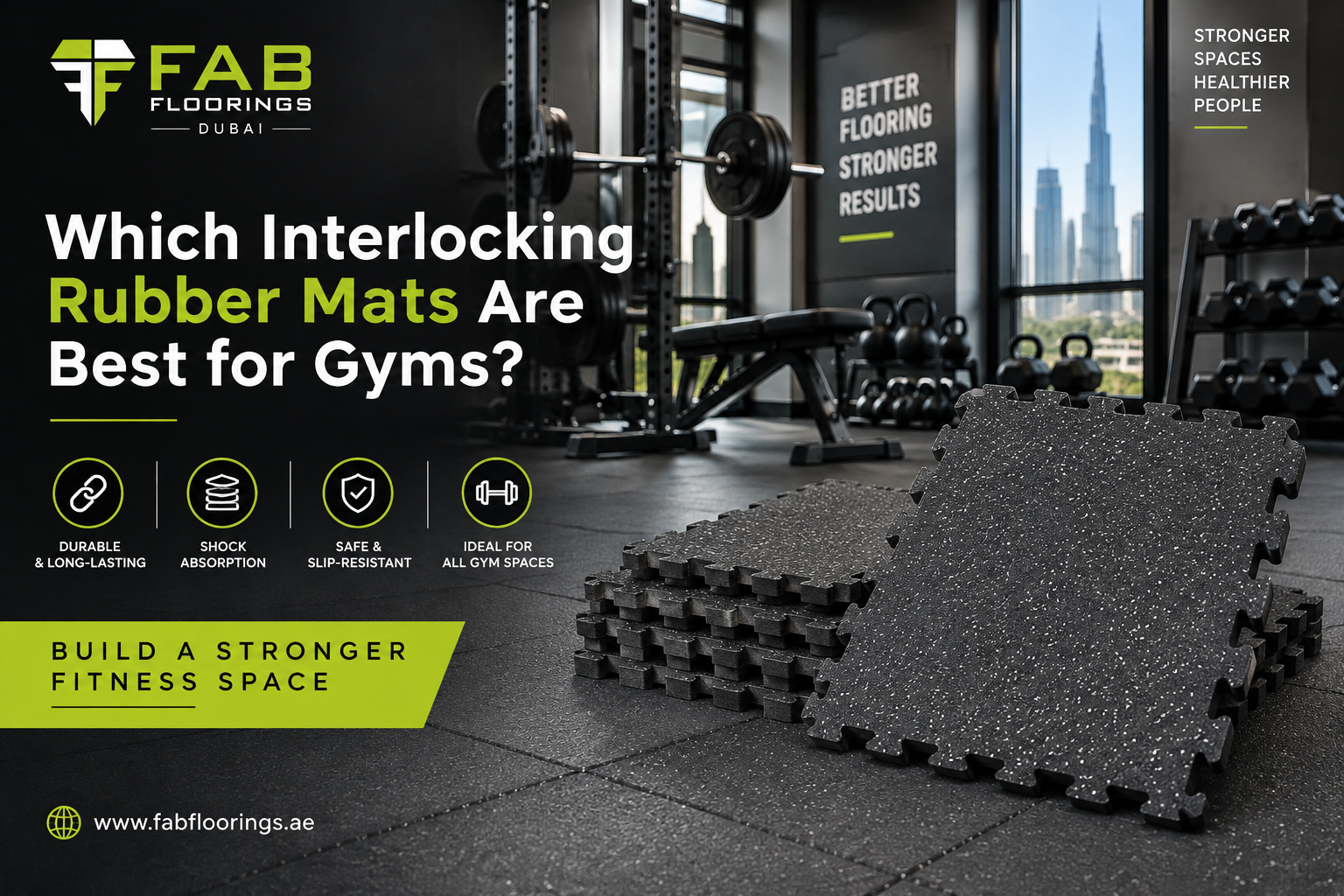
Choosing the right flooring is an important part of designing a safe, durable, and professional gym. Whether you are setting up a home gym, commercial fitness center, CrossFit facility, personal training studio, or dedicated weightlifting area, the floor needs to withstand constant movement, heavy equipment, and repeated impact.
Among the different gym flooring options available today, interlocking rubber mats are particularly popular because they combine durability, easy installation, impact protection, and flexible design.
But not every interlocking rubber mat is suitable for every gym.
The right choice depends on the type of exercise, equipment weight, expected foot traffic, subfloor, required thickness, and installation environment. For example, a mat suitable for a cardio area may not provide enough protection for a heavy deadlift zone.
This guide explains how to choose the best interlocking rubber mats for gyms, what thickness you should consider, where they work best, and what to look for before making a purchase.
What Are Interlocking Rubber Mats?
Interlocking rubber mats are modular flooring pieces designed with connecting edges that fit together like puzzle pieces. Once assembled, the mats create a stable and continuous workout surface.
Unlike conventional loose mats, interlocking systems help keep individual pieces connected during normal gym use.
They are available in different:
- Thicknesses
- Sizes
- Densities
- Surface textures
- Colours
- Rubber compositions
This flexibility makes them suitable for everything from home workout rooms to commercial fitness facilities.
Why Are Interlocking Rubber Mats Popular for Gyms?
Interlocking rubber mats offer several practical advantages for fitness environments.
Key benefits include:
- Easy installation
- Excellent impact resistance
- Protection for the subfloor
- Good traction
- Noise and vibration reduction
- Comfortable workout surface
- Easy replacement of individual sections
- Flexible installation
- Low maintenance
- Suitable for heavy equipment
The modular design is especially useful when a gym layout may change in the future.
1. Excellent Impact Protection
Gym flooring has to deal with repeated impact from equipment and workouts.
Dumbbells can be dropped, weights can be repositioned, and equipment can place significant pressure on the floor.
Rubber helps absorb and distribute some of this impact, providing a protective layer between gym equipment and the underlying surface.
This is particularly important in:
- Free-weight areas
- Strength-training zones
- CrossFit spaces
- Functional training areas
- Weightlifting facilities
The thicker and more suitable the flooring is for the application, the greater the level of protection it can provide.
2. Easy Installation
One of the biggest advantages of interlocking mats is their relatively simple installation.
The individual pieces connect together through their interlocking edges, allowing the flooring to be assembled without necessarily requiring permanent adhesive for every application.
This can make installation faster and more flexible than some permanently bonded flooring systems.
Interlocking mats can be particularly useful for:
- Home gyms
- Temporary fitness spaces
- Rental properties
- Small studios
- Garage gyms
- Areas that may need future modification
However, the installation method should always be selected according to the product specification and project requirements.
3. Individual Mats Can Be Replaced
Gym flooring experiences wear over time, especially in high-impact areas.
One benefit of a modular interlocking system is that a damaged section can often be removed and replaced individually rather than replacing the complete floor.
This can be useful when damage occurs around:
- Weight racks
- Dumbbell areas
- Equipment bases
- High-traffic walkways
- Training stations
It can also make long-term maintenance more manageable.
4. Good Grip and Stability
A gym floor needs to provide stable footing during exercise.
Rubber naturally offers a relatively high-friction surface, making it suitable for activities such as:
- Squats
- Lunges
- Kettlebell training
- Functional workouts
- Strength training
- Bodyweight exercises
Surface texture also matters. A suitable textured finish can improve traction and help create a more stable workout environment.
5. Helps Reduce Noise and Vibration
Gym equipment can generate significant noise and vibration.
Dropped weights, moving machines, jumping exercises, and heavy equipment can transmit sound through the floor structure.
Rubber flooring helps absorb some of this impact and vibration, which can make it particularly useful in:
- Apartment gyms
- Hotel fitness centers
- Multi-storey buildings
- Residential gyms
- Commercial fitness facilities
However, flooring alone cannot eliminate all impact noise. For heavy weightlifting, the complete floor assembly, subfloor, equipment, and dedicated impact zones should be considered.
Choosing the Right Thickness
Thickness is one of the most important factors when selecting an interlocking rubber mat.
There is no single thickness that is best for every gym.
The appropriate thickness depends on:
- Type of workout
- Equipment weight
- Impact level
- Foot traffic
- Subfloor
- Noise requirements
- Installation environment
For example, lighter cardio areas generally need less impact protection than areas where heavy weights are repeatedly dropped.
General guide
| Gym Area |
Typical Thickness Consideration |
| Yoga & stretching |
6–10 mm |
| Light home workouts |
8–10 mm |
| Cardio areas |
8–12 mm |
| General gym training |
10–15 mm |
| Strength training |
15–20 mm |
| Free-weight areas |
15–25 mm |
| Heavy lifting / drop zones |
20 mm+ |
These are general guidelines. The final specification should be based on the actual equipment and activities in the space.
6–10 mm Interlocking Mats
Thinner rubber mats can be suitable for lower-impact applications.
They can work well for:
- Yoga
- Stretching
- Light workouts
- Mobility exercises
- Light cardio equipment
- Home fitness areas
They provide basic floor protection and traction but are generally not the first choice for repeated heavy weight drops.
10–15 mm Interlocking Mats
This range can provide a good balance between durability, comfort, and floor protection for general fitness applications.
Suitable areas may include:
- Home gyms
- Personal training studios
- Cardio areas
- General fitness zones
- Moderate strength training
For many mixed-use spaces, this thickness range can be a practical starting point, depending on the flooring density and equipment loads.
15–20 mm Interlocking Mats
Thicker mats provide greater impact protection and are better suited to more demanding gym environments.
They can be considered for:
- Commercial gyms
- Strength-training zones
- Free-weight areas
- Functional training
- Heavy equipment areas
The correct product should still be selected based on the expected impact rather than thickness alone.
20 mm+ Heavy-Duty Interlocking Mats
For high-impact environments, thicker rubber flooring may be required.
These applications can include:
- CrossFit
- Olympic lifting
- Heavy deadlifts
- Barbell training
- High-impact training zones
For repeated barbell drops, a dedicated heavy-duty lifting or impact zone may be more appropriate than simply installing the thickest mat throughout the entire gym.
Why Density Matters
Thickness is important, but it is not the only specification you should consider.
Density also affects flooring performance.
A dense rubber mat can provide:
- Better resistance to compression
- Improved equipment stability
- Longer service life
- Better load distribution
- More consistent performance
Two mats with the same thickness may perform differently if their density, composition, and manufacturing quality are different.
Therefore, when comparing suppliers, ask for product specifications rather than comparing thickness alone.
Interlocking Mats for Different Gym Areas
A professional gym does not necessarily need the same flooring specification everywhere.
Different areas can have different requirements.
Cardio Area
Treadmills, bikes, ellipticals, and rowing machines require stable flooring that can help reduce vibration.
A medium-thickness rubber mat can often be suitable.
Strength Training Area
Areas with dumbbells, benches, and resistance machines require greater protection.
Medium to heavy-duty rubber flooring is generally more appropriate.
Free-Weight Area
Dropped dumbbells and plates create higher impact.
Thicker, high-density rubber flooring should be considered.
Deadlift Zone
This is one of the highest-impact areas in a gym.
A dedicated heavy-duty impact surface can provide additional protection for the subfloor and surrounding flooring.
Interlocking Rubber Mats vs Rubber Rolls
Both systems can be excellent gym flooring solutions, but they serve different purposes.
| Feature |
Interlocking Rubber Mats |
Rubber Rolls |
| Installation |
Simple and modular |
Requires more planning |
| Individual Replacement |
Easy |
More difficult |
| Large Areas |
Good |
Excellent |
| Custom Layouts |
Excellent |
Moderate |
| Permanent Installation |
Optional depending on application |
Common |
| Home Gyms |
Excellent |
Good |
| Commercial Gyms |
Excellent |
Excellent |
| High-Impact Zones |
Suitable with correct specification |
Suitable with correct specification |
Interlocking mats are particularly attractive when flexibility and individual replacement are important.
Rubber rolls can be advantageous for large areas where a more continuous surface with fewer joints is preferred.
Are Interlocking Rubber Mats Suitable for Commercial Gyms?
Yes, provided the product is correctly specified for the application.
Commercial gyms typically experience:
- High foot traffic
- Heavy equipment
- Frequent workouts
- Repeated impact
- Regular cleaning
Therefore, commercial installations should prioritize:
- Appropriate thickness
- High density
- Durability
- Surface traction
- Correct installation
- Long-term maintenance
For very large commercial areas, rubber rolls may also be considered depending on the gym layout.
Are Interlocking Rubber Mats Good for Home Gyms?
Yes. Interlocking rubber mats are particularly popular for home gyms because they are modular and relatively easy to install.
They can protect:
- Concrete floors
- Tile floors
- Wooden floors
- Garage floors
They can also be removed or reconfigured more easily than some permanently bonded flooring systems.
For a home gym, the ideal thickness depends on whether the space is mainly used for cardio, general fitness, strength training, or heavy lifting.
How to Choose the Best Interlocking Rubber Mats
Before buying, consider these important factors.
1. Workout Type
Identify the activities that will take place on the floor.
A yoga area and a weightlifting area have very different flooring requirements.
2. Equipment Weight
Consider the total load of:
- Racks
- Benches
- Machines
- Dumbbells
- Weight plates
- Treadmills
3. Impact Level
If weights will regularly be dropped, select a product designed for higher impact.
4. Thickness
Choose thickness according to application rather than simply choosing the thickest available product.
5. Density
Check the product's density and construction to understand its expected performance.
6. Surface Texture
Look for a surface that provides suitable traction without making cleaning unnecessarily difficult.
7. Subfloor
The existing floor should be:
- Clean
- Dry
- Stable
- Relatively level
- Free from significant defects
Any major moisture or structural issue should be addressed before installing the mats.
Maintenance of Interlocking Rubber Mats
Interlocking rubber mats are relatively easy to maintain.
Daily or Regular Cleaning
- Sweep or vacuum loose dust.
- Remove sand and debris.
- Clean spills promptly.
Periodic Cleaning
- Mop using an appropriate cleaning solution.
- Clean around gym equipment.
- Inspect high-traffic areas.
Regular Inspection
Check for:
- Damaged edges
- Gaps between mats
- Surface wear
- Excessive compression
- Movement
- Moisture beneath the flooring
If a section becomes damaged, replace the affected mat where appropriate rather than allowing the damage to spread.
Common Mistakes When Buying Interlocking Rubber Mats
Choosing Only by Price
The cheapest mat may not provide the durability required for a commercial gym.
Selecting the Wrong Thickness
Using thin flooring in a heavy lifting area can result in inadequate impact protection.
Ignoring Density
Thickness alone does not determine flooring performance.
Using the Same Flooring Everywhere
A gym with different training zones may benefit from different flooring specifications.
Ignoring the Subfloor
Rubber flooring cannot compensate for major problems in the underlying floor.
Poor Installation
Incorrectly aligned or poorly fitted interlocking mats can create gaps or movement.
Why Choose Fab Floorings for Interlocking Rubber Mats?
Fab Floorings provides rubber flooring solutions for fitness and sports environments, including interlocking rubber mats for gyms and workout areas.
Our flooring solutions can be selected according to:
- Gym type
- Area size
- Workout intensity
- Equipment load
- Required thickness
- Surface requirements
- Installation conditions
Whether you are creating a home gym, commercial fitness center, CrossFit facility, personal training studio, or dedicated weightlifting area, selecting the correct interlocking rubber mat can help protect your floor while creating a durable and comfortable training environment.
Final Thoughts
The best interlocking rubber mat for a gym is not necessarily the thickest or most expensive option. The right choice depends on how the space will be used.
For light workouts and cardio, thinner mats may provide sufficient protection. General training may benefit from medium-thickness flooring, while free-weight and high-impact areas require heavier-duty solutions.
Before purchasing, consider the workout type, equipment load, impact level, mat density, thickness, surface texture, and subfloor condition.
With the right specification and regular maintenance, interlocking rubber mats can provide a durable, stable, and practical flooring solution for gyms in Dubai and across the UAE.
Planning a gym flooring project? Fab Floorings can help you select an interlocking rubber flooring solution based on your gym's layout, equipment, and training requirements.