What is Load Distribution in Gym Flooring and Why It Matters for Dubai Gyms
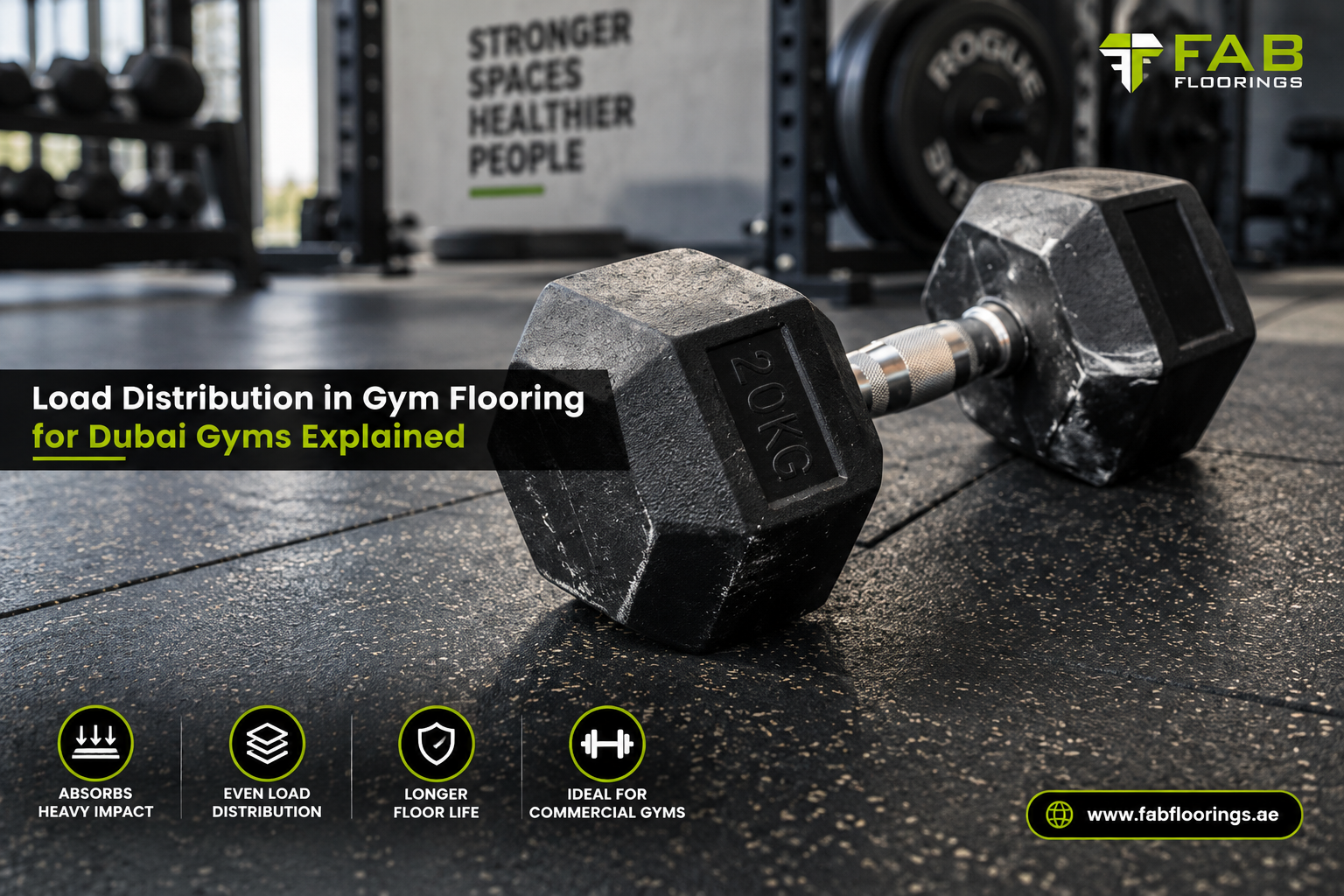
Gym flooring does more than provide a comfortable surface for workouts. It must support heavy equipment, absorb impact, handle continuous foot traffic, and protect the underlying floor. One important factor that determines how well flooring performs is load distribution in gym flooring.
Load distribution refers to how weight or pressure is spread across the flooring instead of being concentrated in a small area. For gyms in Dubai, selecting flooring with the right density, thickness, and construction can help improve stability, reduce surface damage, and extend flooring life.
What Is Load Distribution in Gym Flooring?
When gym equipment or a person places weight on the floor, pressure is transferred through the flooring to the subfloor.
Good load distribution spreads this pressure across a wider area. Poor distribution can create concentrated pressure points that may cause dents, compression, movement, or premature wear.
For example, a heavy weight machine with small contact points places more concentrated pressure on the floor than equipment with a larger base.
Why Load Distribution Matters for Dubai Gyms
1. Protects the Subfloor
Many Dubai gyms operate in commercial buildings, hotels, residential developments, and fitness centers where the underlying floor may be concrete, tiles, marble, or another finished surface.
Suitable gym flooring can act as a protective layer between heavy equipment and the subfloor, helping reduce the risk of surface damage.
2. Supports Heavy Equipment
Commercial gyms commonly contain treadmills, strength machines, benches, racks, and free-weight equipment. These create continuous static loads.
A properly specified rubber floor can provide stability while distributing pressure across the supporting surface.
3. Handles Impact from Weights
Weightlifting creates a different type of load. Dropped dumbbells, barbells, and repeated deadlifts generate short-duration impact forces.
Heavy-duty rubber flooring and dedicated lifting mats can help absorb and distribute these impacts while providing additional protection for the subfloor.
4. Improves Floor Stability
Uneven compression can create unstable areas around equipment. Properly selected flooring helps maintain a more consistent surface under normal gym use.
A stable floor is particularly important around racks, benches, machines, and functional training equipment.
5. Helps Reduce Maintenance
Flooring that is correctly matched to the application is less likely to experience premature compression and damage. This can reduce the frequency of replacing individual mats or repairing affected areas.
Different Types of Loads in a Gym
Not every gym activity puts the same type of pressure on flooring.
Static Load
Static load comes from equipment that remains in one position, such as:
- Weight machines
- Benches
- Power racks
- Treadmills
- Exercise bikes
The flooring needs sufficient density and compression resistance to support these loads.
Dynamic Load
Dynamic loads are created when people move, jump, run, or exercise.
Functional training and cardio areas require flooring that combines stability with suitable shock absorption.
Impact Load
Impact loads occur when weights are dropped or repeatedly strike the floor.
Weightlifting zones typically need thicker, heavy-duty rubber flooring or specialized lifting mats designed for high-impact applications.
How Flooring Thickness Affects Load Distribution
Thickness is an important consideration, but thicker does not automatically mean better. The correct specification depends on the flooring material, density, equipment, activity, subfloor, and expected impact.
A general planning approach is:
| Gym Area | Typical Flooring Consideration |
|---|---|
| Cardio Area | Standard commercial rubber flooring |
| General Training | Medium-duty rubber tiles or rolls |
| Functional Training | Durable rubber flooring with impact absorption |
| Strength Training | Thicker, high-density rubber |
| Free-Weight Area | Heavy-duty rubber mats |
| Heavy Lifting Zone | Specialized thick rubber/drop mats |
The final thickness should be selected according to the actual application rather than using one specification throughout the entire gym.
Why Rubber Flooring Is Commonly Used
Rubber gym flooring in Dubai is widely used for fitness environments because it combines durability, resilience, traction, and impact protection.
Rubber tiles, rolls, and heavy-duty mats can be used for different gym zones. Interlocking tiles can also make localized replacement easier when a particular section becomes damaged.
For outdoor or highly exposed applications, the flooring specification should additionally consider UV exposure, weather conditions, and temperature.
Load Distribution and Dubai's Climate
Dubai's hot climate adds another consideration when selecting flooring. Indoor gyms may also experience temperature differences between air-conditioned spaces and areas near entrances, windows, or exterior walls.
Flooring should therefore be selected and installed according to the manufacturer's requirements for the intended environment. Proper subfloor preparation and installation are just as important as the flooring material itself.
Common Mistakes When Choosing Gym Flooring
Avoid these common mistakes:
- Selecting flooring only according to price
- Using thin mats in heavy lifting areas
- Ignoring flooring density
- Using the same flooring specification throughout every gym zone
- Installing flooring over an unsuitable subfloor
- Dragging heavy equipment across the surface
- Choosing indoor flooring for exposed outdoor applications
How to Improve Load Distribution in a Dubai Gym
Gym owners can improve flooring performance by:
- Selecting flooring according to the equipment and activity.
- Using heavy-duty mats in weightlifting areas.
- Choosing appropriate density and thickness.
- Using lifting platforms where required.
- Preparing and leveling the subfloor properly.
- Distributing large equipment sensibly throughout the space.
- Following the manufacturer's installation and maintenance instructions.
Final Takeaway
Load distribution is an important part of gym flooring design. The right flooring helps manage pressure from equipment, foot traffic, workouts, and weightlifting while protecting the surface underneath.
For Dubai gyms, the best solution is not simply the thickest or most expensive floor. The flooring should be matched to each gym zone, load type, equipment, subfloor, and operating environment.