How to Create a Noise-Free Gym Setup in Dubai Residential Buildings
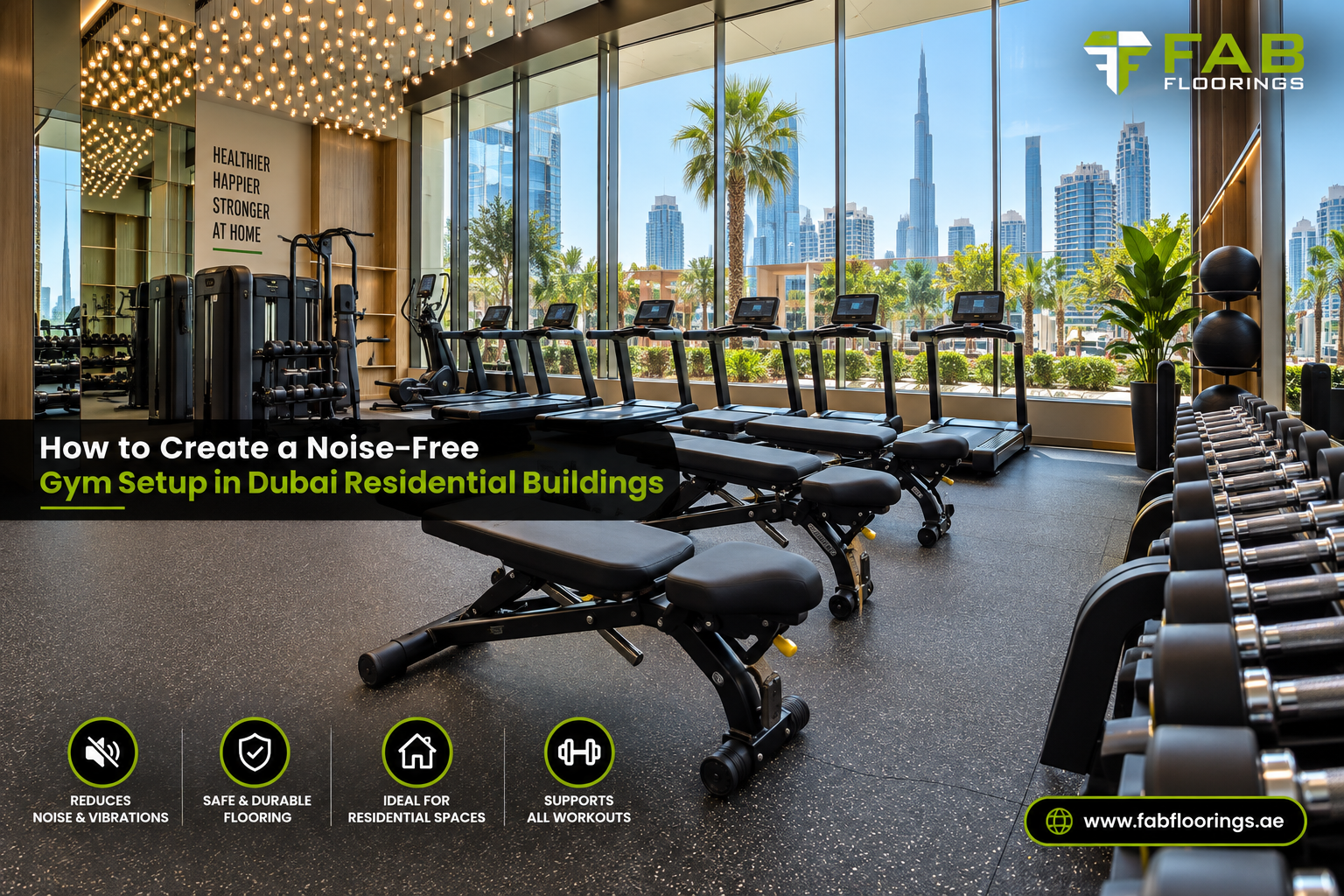
Creating a home or fitness gym inside a Dubai apartment, villa, or residential building requires more than selecting the right exercise equipment. Noise and vibration control are equally important, especially when the gym is located above another apartment or next to shared walls.
Weight drops, treadmill vibrations, jumping exercises, and equipment movement can travel through floors and walls. A combination of rubber gym flooring, anti-vibration solutions, proper equipment placement, and sound-absorbing materials can help create a quieter workout environment.
Why Noise Control Matters in Residential Gyms
Residential buildings have shared floors, ceilings, and walls. Sound produced in one apartment can therefore travel to neighboring rooms or units.
Gym activities can generate three main types of noise:
Impact Noise
Impact noise is created when weights hit the floor, people jump, or equipment makes contact with the surface. Strength-training and functional-training areas can generate particularly high impact.
Vibration Noise
Treadmills, exercise bikes, rowing machines, and other equipment can produce continuous vibration. These vibrations may travel through the floor structure.
Airborne Noise
Music, conversations, television sounds, and equipment operation create airborne noise. Walls, doors, and acoustic treatments can help reduce this type of sound.
How Gym Flooring Helps Reduce Noise
Flooring is one of the first things to consider when designing a quieter residential gym.
Hard surfaces such as ceramic tiles, marble, or concrete can reflect impact sounds rather than absorbing them. Rubber flooring provides a more resilient surface that can absorb part of the impact and reduce vibration compared with a hard floor alone.
For this reason, rubber gym flooring in Dubai can be particularly useful for home gyms, fitness rooms, and strength-training areas.
Choose Flooring According to Gym Activity
Not every area requires the same flooring specification.
| Gym Area | Flooring Consideration |
|---|---|
| Yoga & stretching | Comfortable, resilient surface |
| Cardio area | Durable rubber flooring with vibration control |
| General workout area | Shock-absorbing rubber flooring |
| Free-weight area | Higher-impact rubber flooring |
| Deadlift zone | Heavy-duty impact protection |
| Equipment area | Anti-vibration mats beneath machines |
The appropriate thickness should be selected based on equipment weight, workout intensity, subfloor construction, and the manufacturer's recommendations.
Use Anti-Vibration Mats Under Equipment
Rubber flooring can be combined with dedicated anti-vibration mats underneath treadmills, exercise bikes, benches, racks, and other equipment.
These additional layers can help reduce equipment movement and limit vibration transferred directly into the floor.
For a residential gym, treating the equipment contact points can be particularly useful because continuous machine vibration may be more noticeable than occasional workout noise.
Create a Dedicated Weight-Training Zone
If your gym includes free weights, create a dedicated area for high-impact exercises.
A heavier-duty flooring system or specialized lifting platform can provide additional protection in this zone. Encourage controlled weight placement rather than repeatedly dropping weights, even when impact-resistant flooring is installed.
Position Equipment Carefully
Gym layout can also influence noise transmission.
Where possible:
- Keep vibrating equipment away from shared walls.
- Avoid positioning heavy equipment directly above bedrooms.
- Place machines on stable, level flooring.
- Leave suitable clearance around equipment.
- Keep heavy lifting activities in a designated area.
- Consider a ground-floor location when available.
Good layout planning can complement your flooring system rather than relying on flooring alone.
Add Acoustic Treatments
Flooring addresses impact and vibration, but a quiet gym may require additional acoustic measures.
Depending on the room, you can consider:
- Acoustic wall panels
- Sound-absorbing ceiling materials
- Door seals
- Heavy curtains
- Suitable rugs in low-impact areas
- Wall and ceiling treatments
These solutions can help control reflected and airborne sound within the room.
Common Mistakes to Avoid
A few common mistakes can make residential gym noise worse:
Using Only Thin Exercise Mats
Thin mats may provide basic floor protection but may not offer enough impact or vibration control for heavy equipment or weight training.
Placing Equipment Against Shared Walls
Vibration-producing equipment positioned directly against walls can make transmitted noise more noticeable.
Dropping Weights Repeatedly
Even heavy-duty flooring has limits. Controlled lifting and weight placement remain important.
Ignoring the Subfloor
An uneven, damaged, or unsuitable subfloor can affect the performance and stability of the flooring system.
Treating Every Gym Area the Same
Cardio, yoga, functional training, and heavy lifting have different flooring requirements. Zoned flooring can provide a more practical solution.
How to Maintain a Quiet Gym Environment
Noise control is not only an installation issue. Regular maintenance also matters.
Inspect the flooring periodically for:
- Gaps
- Loose sections
- Damaged edges
- Surface deterioration
- Movement around equipment
Keep the flooring clean according to the manufacturer's recommendations and replace damaged sections when necessary.
Final Takeaway
A noise-free gym setup in Dubai residential buildings requires a combination of flooring, equipment management, room layout, and acoustic control.
High-quality rubber flooring can provide a resilient foundation for workouts, while anti-vibration mats, dedicated lifting zones, careful equipment placement, and acoustic treatments can further improve noise management.
For apartment and villa gyms, the goal should not simply be to make the floor softer. The entire gym should be planned to reduce impact, control vibration, and limit sound transmission while maintaining a safe and comfortable workout environment.