Smash Your Way In: The Ultimate Guide to the Best Padel Courts in UAE
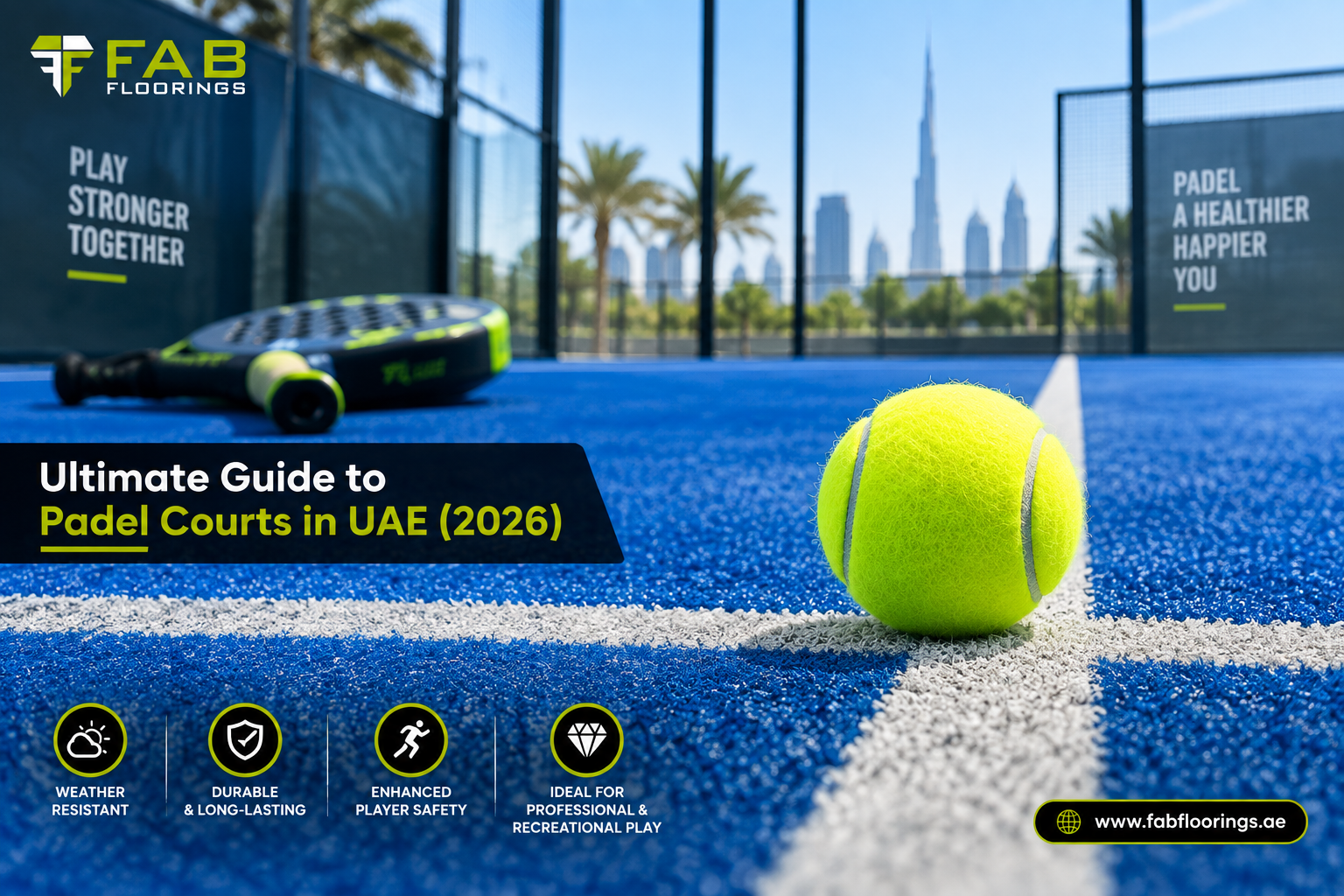
Padel has quickly become one of the most exciting racket sports in the UAE. From sports clubs and fitness centres to hotels, residential communities, private villas and premium leisure developments, demand for professionally designed padel courts continues to grow.
But a great padel court is more than a steel frame, glass walls and artificial turf. The quality of the foundation, structure, glass, fencing, playing surface, drainage, lighting and installation all contribute to the safety, durability and playing experience.
If you are planning to build a padel court in Dubai or anywhere in the UAE, this guide explains what to look for when choosing the right court, materials and manufacturer.
What Is a Padel Court?
Padel is a racket sport played on an enclosed court where the walls form an important part of the game. A regulation padel court has an internal playing area of 20 metres long by 10 metres wide. The court is divided by a net, with glass and mesh forming the enclosure around the playing area.
Unlike traditional tennis, players can use the surrounding walls during rallies, making the quality and alignment of the enclosure particularly important.
A complete padel court generally consists of:
- Structural steel frame
- Tempered safety glass
- Metal mesh fencing
- Artificial turf or another suitable sports surface
- Court lines
- Net and posts
- Lighting
- Foundation and anchoring system
- Drainage where required
Why Are Padel Courts Becoming Popular in the UAE?
The UAE provides an ideal environment for developing premium sports and leisure facilities. Padel's social format and relatively compact court footprint make it attractive for a wide range of properties.
Padel courts can be developed for:
Sports Clubs & Academies
Dedicated courts can support coaching, recreational play, leagues and tournaments.
Hotels & Resorts
A professionally designed padel court can add another recreational activity for guests.
Residential Communities
Community padel facilities can provide residents with an active and social fitness option.
Private Villas
A customised court can transform available outdoor space into a premium recreational facility.
Gyms & Fitness Centres
Padel can complement existing fitness and wellness offerings.
Schools & Educational Facilities
The sport can be incorporated into recreational and physical-activity programmes.
What Makes a Premium Padel Court?
Not all padel courts are constructed to the same standard. A premium court should be planned as a complete system rather than selecting individual components separately.
1. Strong Structural Framework
The steel structure supports the glass, mesh and other components of the court. For outdoor UAE installations, the structural system should be selected with consideration for heat, humidity, wind and corrosion exposure.
Proper anchoring and accurate alignment are equally important.
2. High-Quality Safety Glass
Glass walls are a fundamental part of padel because they are involved directly in gameplay.
Safety glass should be selected according to the court's application, structural design and relevant standards. Correct installation, support points and protective components are important for safe and reliable performance.
3. Professional Artificial Turf
The playing surface directly affects player movement, traction and ball behaviour.
Artificial turf with suitable texture and infill can provide a consistent playing surface while helping manage wear from regular play. The appropriate turf specification should be selected according to the expected usage and installation environment.
4. Accurate Court Layout
Precision matters in padel. The playing area, service lines, net position, enclosure and other components need to be installed accurately.
The FIP specifications place the service lines 6.95 metres from the net, while the net is 0.88 metres high at the centre and up to 0.92 metres at the posts.
Choosing the Right Padel Court Flooring
The playing surface is one of the most important decisions when building a padel court.
Artificial Turf
Synthetic turf is widely used for padel courts and can provide:
- Suitable player traction
- Consistent ball response
- Comfortable movement
- A professional appearance
- Practical maintenance
For outdoor UAE courts, the turf should be selected with consideration for UV exposure, heat, drainage and expected playing frequency.
Acrylic or Resin-Based Surfaces
Depending on the project, alternative sports surfaces may also be considered. These can be suitable for specific indoor or specialised applications.
The best choice depends on the facility, playing requirements, location and maintenance plan rather than simply selecting the most expensive material.
Indoor vs Outdoor Padel Courts
Outdoor Padel Courts
Outdoor courts need to be designed around the UAE environment.
Important considerations include:
- UV exposure
- High temperatures
- Wind
- Dust and sand
- Humidity
- Rainwater management
- Corrosion protection
- Appropriate turf selection
For outdoor courts, the foundation and drainage strategy should be considered from the beginning of the project.
Indoor Padel Courts
Indoor courts provide a more controlled environment and can reduce direct exposure to outdoor weather.
They are commonly considered for:
- Indoor sports clubs
- Fitness centres
- Sports halls
- Padel academies
- Commercial leisure facilities
For indoor facilities, adequate ceiling clearance, ventilation and lighting should be considered during planning. Current FIP-related court guidance specifies a minimum clear height of 6 metres, with higher clearance recommended for new facilities in some applications.
Why the Foundation Matters
A premium court requires a stable and accurately prepared base.
Before installing the court structure, the site may require:
- Site inspection
- Ground preparation
- Levelling and grading
- Foundation or slab preparation
- Drainage planning
- Structural anchoring
- Surface installation
An uneven or unstable foundation can affect the alignment of the entire court. It can also create problems with glass installation, turf performance and drainage.
This is why professional site assessment should be completed before ordering the court structure.
Padel Court Drainage in the UAE
Although Dubai and other UAE locations have a predominantly dry climate, outdoor sports facilities should still have an appropriate strategy for managing rainwater.
Poor drainage can result in:
- Standing water
- Surface deterioration
- Moisture-related issues
- Slippery playing conditions
- Faster wear of surrounding areas
The drainage design should therefore be integrated with the foundation and surrounding site rather than treated as an afterthought.
Padel Court Lighting
For facilities that operate after sunset, lighting is an essential part of the overall design.
A professional lighting system should aim to provide:
- Consistent illumination
- Minimal glare
- Good visibility of the ball
- Reduced shadows
- Suitable coverage across the court
Lighting poles and fixtures should also be positioned so that they do not interfere with gameplay or create unnecessary visual distractions.
Padel Court Fencing & Glass Walls
The enclosure is one of the defining characteristics of a padel court.
A typical court combines glass panels with metal mesh, creating the enclosed environment required for gameplay.
The structure should be designed so that:
- Glass panels are securely supported
- Mesh sections are properly tensioned
- Access gates operate smoothly
- Structural connections remain stable
- Player safety is prioritised
Correct alignment is particularly important because the walls are part of the playing experience.
How to Choose the Best Padel Court Manufacturer in UAE
Choosing a manufacturer based only on price can create problems later. Before selecting a supplier, consider the complete project.
Check the Court Design
Ask whether the proposed court follows the required dimensions and specifications.
Review Material Quality
Understand what type of steel, glass, turf, mesh and protective coatings are being used.
Consider UAE Conditions
For outdoor courts, materials should be appropriate for the local climate and exposure conditions.
Ask About Installation
A manufacturer should be able to explain how the foundation, structure, glass, turf and accessories will be installed.
Review Customisation Options
Premium projects may require customised colours, branding, panoramic designs or specific architectural requirements.
Consider After-Sales Support
Maintenance guidance and technical support can be valuable after the court is completed.
Custom Padel Courts for UAE Projects
Every project has different requirements.
Fab Floorings can provide custom solutions for:
- Private villas
- Sports clubs
- Hotels
- Resorts
- Residential communities
- Fitness centres
- Schools
- Commercial padel facilities
Court design can be adapted according to the available space, intended use, aesthetics and project requirements. Customisation may include court colours, structural finishes, branding, lighting and other accessories.
Can an Existing Tennis Court Be Converted Into Padel Courts?
Potentially, yes.
Existing tennis facilities can sometimes be considered for conversion into padel courts, provided the available footprint, foundation, access, drainage and layout are suitable.
A professional site assessment should determine:
- Available dimensions
- Existing surface condition
- Foundation suitability
- Drainage
- Access for installation
- Number of courts possible
- Required structural modifications
Rather than assuming a tennis court can automatically accommodate a particular number of padel courts, the final layout should be designed according to the actual site.
Maintenance of Padel Courts
Regular maintenance helps preserve the playing quality and appearance of the court.
A basic maintenance programme can include:
Regular Cleaning
Remove dust, leaves, sand and other debris from the playing surface.
Turf Maintenance
Inspect the turf and infill periodically, particularly in high-traffic areas.
Glass Inspection
Check glass panels, fixings and protective components for damage.
Structural Inspection
Inspect steel connections, mesh, gates and other structural elements.
Lighting Checks
Inspect lighting fixtures and electrical components where applicable.
Drainage Checks
Keep drainage channels and surrounding areas clear of debris.
Why Choose Fab Floorings for Padel Courts in Dubai?
Fab Floorings provides padel court manufacturing, supply, flooring and installation solutions for projects across Dubai and the UAE.
The company's padel court solutions can include:
- Court structure
- Tempered glass
- Mesh fencing
- Artificial turf
- Court line marking
- Foundation and base requirements
- Drainage planning
- Lighting
- Custom designs
- Branding
- Installation
The existing Fab Floorings padel-court range is positioned for both indoor and outdoor applications, including villas, clubs, hotels, resorts and other sports facilities.
Final Thoughts
Building a premium padel court in the UAE requires much more than selecting an attractive design.
The foundation, structural frame, safety glass, artificial turf, drainage, lighting and installation quality all contribute to the finished court.
Whether you are developing a single court for a private villa or multiple courts for a commercial sports facility, choosing the right manufacturer and planning the project correctly can make a significant difference.
Fab Floorings can help you plan a customised padel court solution in Dubai and across the UAE—from court structure and flooring to installation and finishing.