Gym Flooring in Dubai: How to Choose the Perfect Fitness Floor
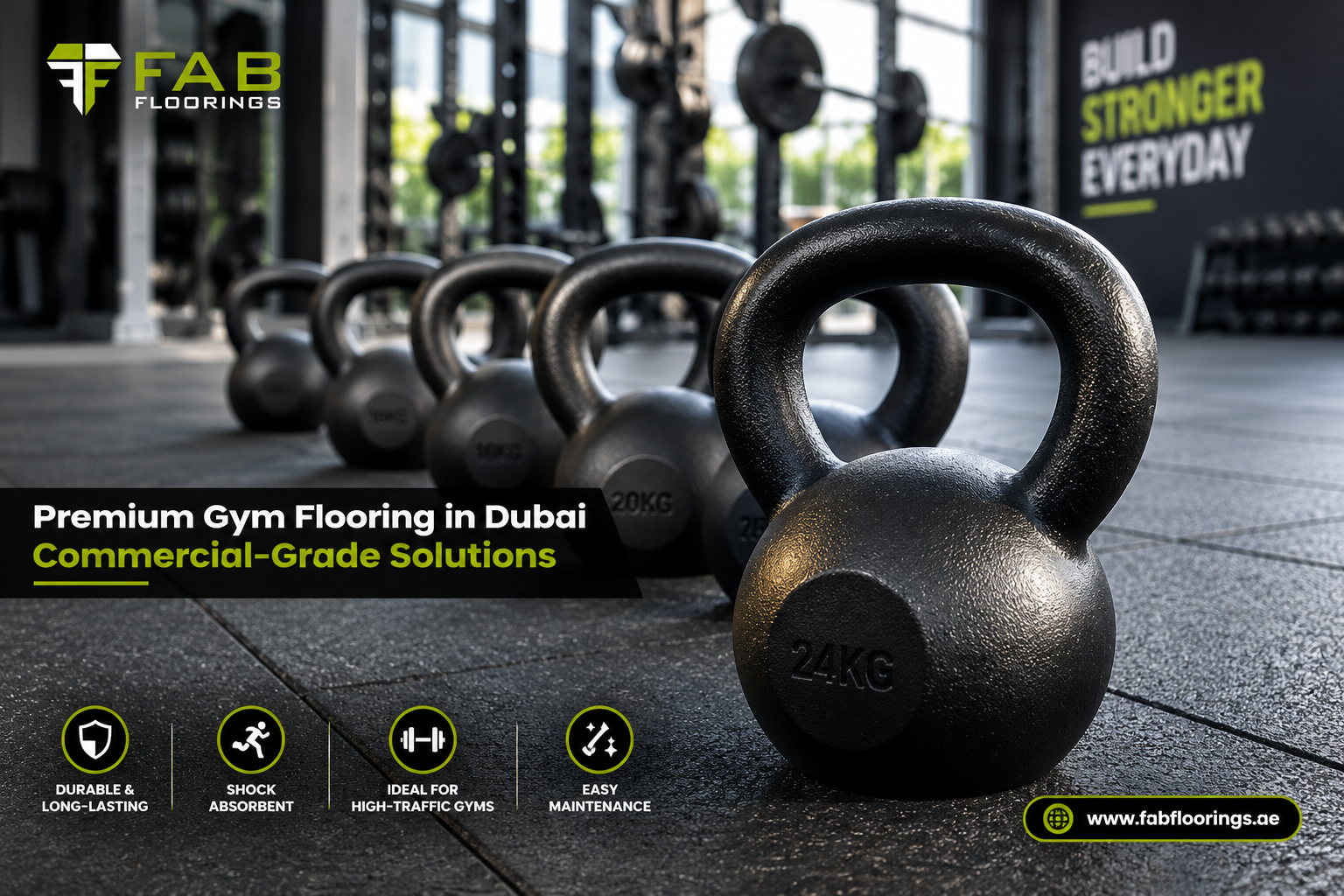
A gym floor has to do much more than look good. It needs to handle heavy equipment, repeated impact, intense workouts, constant foot traffic and daily cleaning while providing a stable and comfortable surface for users.
Whether you are developing a commercial gym in Dubai, a boutique fitness studio, a hotel fitness centre, a CrossFit facility or a home gym, choosing the right flooring can make a major difference to the safety, performance and appearance of the space.
The best gym flooring depends on how the area will be used. A cardio zone does not necessarily need the same flooring as a heavy weightlifting area. By understanding the available options, thickness, installation requirements and maintenance needs, you can select a flooring solution that is built around your facility.
Why Is the Right Gym Flooring Important?
Gym equipment and workouts place considerably more stress on a floor than normal residential or commercial activity.
Weights can be dropped, equipment can vibrate, and athletes may perform jumping, running and high-impact exercises repeatedly throughout the day.
A properly selected gym floor can help with:
- Impact absorption
- Subfloor protection
- Traction and stability
- Noise and vibration management
- User comfort
- Equipment stability
- Easy cleaning
- Long-term durability
For Dubai gyms, flooring should also be selected according to the installation environment, expected usage and maintenance requirements.
What Are the Best Types of Gym Flooring in Dubai?
There is no single flooring product that is perfect for every gym. Different flooring systems work better for different activities.
1. Rubber Gym Flooring Tiles
Rubber tiles are one of the most versatile choices for fitness facilities.
They are available in different designs, thicknesses and formats and can be used in areas such as:
- Free-weight zones
- Strength-training areas
- Functional training spaces
- Commercial gyms
- Home gyms
- Cross-training areas
Interlocking versions can also make individual sections easier to replace when required.
2. Rubber Flooring Rolls
Rubber rolls are particularly useful when covering large areas.
Their continuous layout can create a clean and consistent appearance while reducing the number of seams across the floor.
They can be suitable for:
- Cardio areas
- Treadmill zones
- Fitness machine areas
- Large commercial gyms
- General workout spaces
Professional installation is important, particularly when the flooring is being permanently bonded to the subfloor.
3. EPDM Rubber Flooring
EPDM flooring can combine the performance characteristics of rubber with a wider range of decorative possibilities.
Different colour combinations can be used to create:
- Premium gym designs
- Branded fitness zones
- Training-area layouts
- Decorative flooring patterns
EPDM systems can be considered for both indoor and selected outdoor applications, depending on the product specification and environment.
4. Heavy-Duty Rubber Flooring
Heavy-duty flooring is designed for areas where equipment and weights create higher levels of impact.
It can be considered for:
- Deadlift areas
- Squat racks
- Olympic lifting zones
- Dumbbell areas
- Functional training spaces
- Heavy equipment zones
The right specification should be selected according to the actual equipment and impact level rather than simply choosing the thickest available flooring.
How to Choose Gym Flooring According to the Workout Area
A well-planned gym can use different flooring solutions for different zones.
Cardio Area
Treadmills, bikes and cross-trainers generally require a stable and durable surface that can handle repeated foot traffic and equipment vibration.
Strength Training Area
Strength areas require flooring capable of handling equipment loads and repeated use. Rubber tiles or rolls can be suitable depending on the application.
Free-Weight Area
This area normally experiences greater impact because dumbbells and other weights may be dropped or placed heavily on the floor. A more impact-resistant rubber system may therefore be appropriate.
Functional Training Area
HIIT, agility drills, sled work and dynamic exercises require a surface that provides suitable traction and durability while allowing comfortable movement.
Yoga & Stretching Area
For yoga, mobility and stretching, a more comfortable surface may be preferable. Softer flooring systems can be considered depending on the activities taking place in the space.
What Gym Flooring Thickness Should You Choose?
Thickness should be selected according to activity, equipment, impact level and subfloor requirements.
As a general guide:
| Application | General Flooring Range |
|---|---|
| Light exercise / stretching | 6–10 mm |
| Cardio & fitness equipment | 8–12 mm |
| General strength training | 10–15 mm |
| Functional / HIIT training | 12–20 mm |
| Heavy free weights | 15–25 mm+ |
| High-impact lifting zones | Heavy-duty system based on site requirements |
These are planning guidelines rather than universal specifications. The final thickness should be selected after considering the equipment, workout intensity and condition of the existing floor.
Rubber Tiles vs Rubber Rolls: Which Is Better?
Both options can work well, but they have different advantages.
Rubber Tiles
Advantages:
- Modular installation
- Easier replacement of individual sections
- Suitable for different gym zones
- Flexible design options
- Useful for smaller or segmented spaces
Rubber Rolls
Advantages:
- Suitable for large areas
- Fewer seams
- Consistent appearance
- Efficient coverage for large commercial gyms
- Suitable for cardio and general training areas
The better option depends on the size and layout of the gym, installation method and intended use.
Can Gym Flooring Protect the Subfloor?
Yes, suitable gym flooring can help protect the underlying floor from impact, equipment loads and repeated activity.
This is particularly important when a gym is installed over:
- Concrete
- Commercial flooring
- Residential flooring
- Existing tiles
- Multi-storey building slabs
However, the flooring itself is only one part of the solution. The existing subfloor should be inspected for levelness, cracks, moisture and structural condition before installation.
Gym Flooring for High-Rise Buildings in Dubai
Noise and vibration can be particularly important when a gym is located in a:
- Residential tower
- Hotel
- Office building
- Mixed-use development
- Apartment complex
Activities such as jumping and dropping weights can transmit impact through the building structure.
Rubber flooring can help reduce some impact noise, but standard rubber flooring should not be treated as a complete acoustic solution. Where vibration control is critical, the flooring system and appropriate acoustic underlayment should be considered as part of the overall floor design.
Is Gym Flooring Suitable for Dubai's Climate?
For indoor gyms, the main concerns are generally heavy usage, cleaning, ventilation, equipment loads and indoor conditions.
Outdoor and semi-outdoor fitness spaces require additional consideration of:
- Direct sunlight
- UV exposure
- High temperatures
- Moisture
- Rain
- Dust and sand
For these environments, select a flooring system specifically designed for the expected exposure rather than assuming that every indoor rubber product is suitable outdoors.
How Should Gym Flooring Be Installed?
Correct installation is just as important as product selection.
A typical installation process may include:
Step 1: Site Inspection
Measure the area and identify the type and condition of the subfloor.
Step 2: Select Flooring
Choose the appropriate material, format and thickness for each gym zone.
Step 3: Prepare the Subfloor
The surface should be clean, dry, stable and suitably level.
Step 4: Plan the Layout
Determine tile positioning, roll direction, seams and edges before installation.
Step 5: Install the Flooring
Depending on the product, flooring may be installed using interlocking connections or an appropriate adhesive system.
Step 6: Complete the Finishing
Edges, transitions and seams should be checked to create a clean and safe finish.
Professional installation can help achieve better alignment, stability and long-term performance.
How to Maintain Gym Flooring
Regular maintenance helps keep the floor clean and attractive.
Daily Maintenance
- Remove dust and loose dirt.
- Clean sweat and liquid spills.
- Keep equipment areas free from debris.
Regular Cleaning
Use a cleaning method and solution appropriate for the specific flooring material. Avoid harsh chemicals unless the manufacturer confirms that they are suitable.
Periodic Inspection
Check:
- Seams
- Edges
- Interlocking connections
- High-traffic zones
- Areas beneath heavy equipment
- Damaged sections
Promptly addressing small issues can help prevent them from becoming larger flooring problems.
Common Gym Flooring Mistakes to Avoid
Choosing Flooring Only by Price
The cheapest option may not be suitable for intensive commercial use.
Using One Thickness Everywhere
Different gym zones experience different levels of impact, so flooring requirements can vary throughout the facility.
Ignoring the Subfloor
An uneven or damaged base can affect the performance and appearance of the finished flooring.
Using Indoor Flooring Outdoors
Outdoor areas need products specifically suitable for environmental exposure.
Forgetting Installation
Even a quality flooring product can perform poorly when installed over an unsuitable or improperly prepared surface.
How to Choose the Perfect Gym Flooring in Dubai
Before selecting your flooring, consider these questions:
- What type of workouts will take place?
- Will heavy weights be dropped?
- What equipment will be installed?
- How much daily foot traffic is expected?
- Is the gym indoors or outdoors?
- Does the building require additional vibration control?
- What is the condition of the existing subfloor?
- Do you need tiles, rolls or another flooring format?
- What maintenance routine will be followed?
- Does the design require specific colours or branding?
Answering these questions before purchasing flooring can help you avoid selecting a product that is unsuitable for the actual application.
Why Choose Fab Floorings for Gym Flooring in Dubai?
Fab Floorings provides different flooring solutions for commercial gyms, fitness studios, home gyms, sports facilities and other training environments.
Available solutions can include:
- Rubber flooring tiles
- Interlocking rubber tiles
- Rubber flooring rolls
- EPDM flooring
- Heavy-duty rubber flooring
- Fitness turf
- EVA mats
- Other sports and fitness flooring solutions
The existing Fab Floorings range includes multiple rubber tile and roll formats, including EPDM and interlocking options.
The right product can be selected according to the gym zone, workout type, equipment, impact level, design requirements and installation environment.
Final Thoughts
Choosing gym flooring should not be an afterthought. The right floor can contribute to a safer, more comfortable and more professional fitness environment while helping protect the underlying surface.
From rubber tiles and rolls to EPDM flooring and heavy-duty solutions, there are different options for different training requirements.
If you are planning a new gym or upgrading an existing fitness facility in Dubai, start by evaluating your workout zones, equipment, subfloor, impact requirements and maintenance needs.
Fab Floorings can help you choose a gym flooring solution designed around the way your facility is actually used.