Choosing the Right Rubber Flooring for Gyms
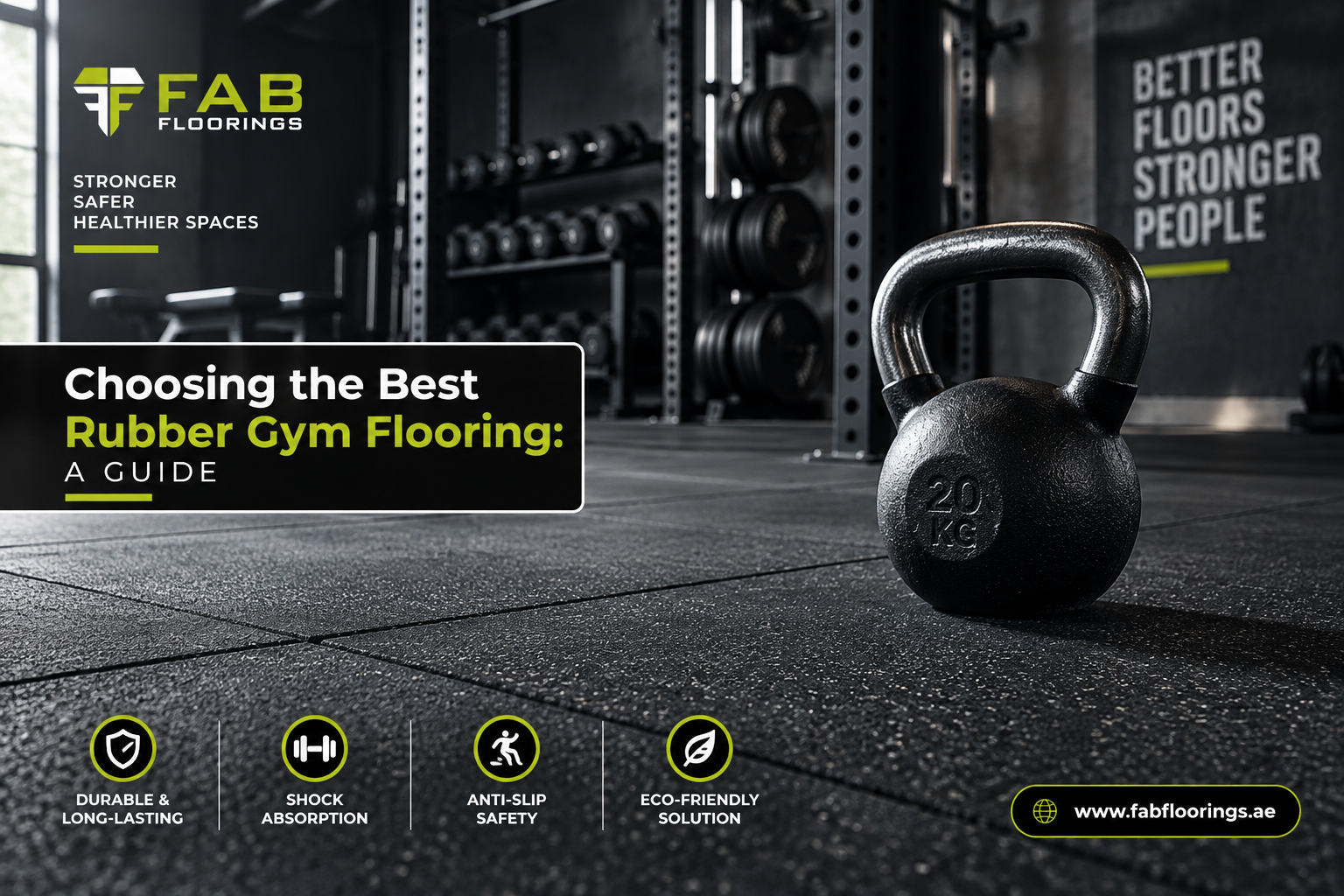
The right flooring is one of the most important decisions when setting up a gym. A gym floor needs to handle heavy equipment, repeated foot traffic, dropped weights, intense workouts, sweat, and daily cleaning while providing a stable and comfortable surface for users.
Rubber flooring for gyms is a popular choice because it combines durability, impact resistance, traction, and relatively easy maintenance. However, not every rubber floor is suitable for every gym area. The correct choice depends on the type of workout, equipment load, traffic level, flooring format, thickness, density, and installation requirements.
For gyms in Dubai and across the UAE, environmental conditions should also be considered when selecting a flooring system.
Why Choose Rubber Flooring for a Gym?
Rubber flooring is designed to withstand demanding environments. It can help protect the subfloor from equipment and impact while providing a more comfortable surface for workouts.
Key benefits include:
- Good impact resistance
- Durable performance in high-traffic areas
- Slip-resistant surface options
- Noise and vibration reduction
- Protection for the underlying floor
- Easy routine cleaning
- Multiple thickness and design options
These benefits make rubber flooring suitable for commercial gyms, fitness studios, hotel gyms, home gyms, CrossFit spaces, and functional training areas.
Types of Rubber Gym Flooring
The three common formats are rubber tiles, rubber rolls, and rubber mats. Each works better for particular applications.
1. Rubber Flooring Tiles
Rubber tiles are a practical option for gyms that need flexible installation and easy maintenance.
Interlocking tiles can be installed without extensive permanent fixing, while damaged sections can often be replaced individually. They are particularly useful in weight-training, functional-training, and high-impact zones.
Best suited for:
- Weightlifting areas
- CrossFit gyms
- Functional training
- Free-weight zones
- Boutique fitness studios
2. Rubber Flooring Rolls
Rubber rolls are useful for covering large areas with fewer joints. They create a relatively continuous surface and can provide a clean, professional appearance.
Best suited for:
- Cardio areas
- Commercial gyms
- Machine zones
- Large fitness studios
- General workout areas
Roll flooring can require more careful installation, particularly when adhesive fixing is involved.
3. Heavy-Duty Rubber Mats
Rubber mats are useful when additional impact protection is needed in specific locations.
They can be placed beneath squat racks, weight machines, dumbbell areas, and other equipment where heavy loads or dropped weights are expected.
Best suited for:
- Deadlift areas
- Squat racks
- Free-weight zones
- Home gyms
- Equipment protection
How to Choose the Right Thickness
Thickness should be selected according to how the gym will be used rather than simply choosing the thickest available product.
| Gym Area | Flooring Consideration |
|---|---|
| Cardio | Moderate thickness for comfort and durability |
| General fitness | Medium-duty rubber flooring |
| Functional training | Durable flooring with good impact resistance |
| Free weights | Thicker, heavy-duty rubber |
| Olympic lifting | High-impact flooring designed for heavy loads |
Heavy equipment and repeated weight drops generally require greater impact protection than areas used primarily for cardio or light exercise.
The actual specification should also consider the subfloor, equipment type, traffic, and manufacturer's recommendations.
Density Matters Too
Thickness is only one part of flooring performance. Rubber density also affects stability, compression, durability, and how the flooring responds to heavy equipment.
For areas containing weight machines and free weights, a suitable high-density rubber product can provide better support and resistance to indentation.
For lighter workout areas, a different specification may provide sufficient performance without unnecessary cost.
Consider the Type of Workout
Before buying gym flooring, identify what activities will take place in each zone.
For example:
Weight training: Prioritize impact protection and resistance to heavy loads.
Cardio: Focus on durability, traction, comfort, and noise reduction.
Functional training: Choose flooring that can handle dynamic movements and equipment.
Yoga and stretching: Comfort and surface feel may be more important than extreme impact resistance.
MMA or combat training: Consider impact absorption and appropriate thickness for the activity.
A large commercial gym may therefore benefit from using different flooring specifications across different zones rather than installing one product everywhere.
Rubber Flooring for Dubai Gyms
Dubai gyms need flooring that can perform under demanding indoor conditions. Temperature variation, air conditioning, humidity, dust, heavy usage, and frequent cleaning should all be considered during product selection and installation.
For this reason, gym owners should evaluate more than just the appearance and price of a flooring product.
When choosing rubber gym flooring in Dubai, ask about:
- Product composition
- Thickness
- Density
- Intended application
- Temperature suitability
- Slip resistance
- Maintenance requirements
- Installation method
- Warranty and product support
The flooring should be matched to the actual environment rather than selected solely on price.
How to Choose Between Tiles and Rolls
The choice between tiles and rolls usually comes down to the gym layout, installation requirements, and maintenance preferences.
Choose tiles when:
- You need easy section-by-section replacement.
- The gym contains multiple training zones.
- You want flexible installation.
- You are flooring a weight-training area.
Choose rolls when:
- You are covering a large open space.
- You prefer fewer visible joints.
- You want a continuous appearance.
- The area has consistent flooring requirements.
Neither format is universally better. The right choice depends on the application.
Maintenance Requirements
Rubber gym flooring is relatively straightforward to maintain, but regular cleaning is still important in busy fitness environments.
A basic maintenance routine can include:
- Remove loose dust and debris regularly.
- Clean sweat and spills promptly.
- Use cleaning products recommended for the flooring.
- Avoid harsh chemicals that may affect the surface.
- Inspect high-traffic areas periodically.
- Avoid dragging heavy equipment directly across the floor.
Proper maintenance helps preserve appearance and flooring performance over time.
Common Mistakes When Buying Gym Rubber Flooring
Gym owners can avoid unnecessary costs by considering the following mistakes before purchasing:
Choosing Only by Price
A cheaper product may not provide the required durability or impact protection for a commercial gym.
Selecting the Wrong Thickness
A flooring specification suitable for cardio may not be appropriate for heavy weightlifting.
Ignoring Density
Two products with the same thickness can perform differently because their density and construction may differ.
Using One Product Everywhere
Different gym zones have different requirements. A weightlifting area and yoga studio do not necessarily need identical flooring.
Neglecting the Subfloor
A suitable rubber floor cannot compensate for a damaged, uneven, or improperly prepared subfloor.
Poor Installation
Incorrect installation can affect the appearance, stability, and long-term performance of the flooring system.
Professional Installation vs DIY
Small home gyms may be suitable for simpler mat or interlocking-tile installations. Large commercial gyms, however, often require more detailed planning and professional installation.
Professional installation can help with:
- Subfloor preparation
- Accurate measurements
- Tile alignment
- Roll installation
- Adhesive application
- Expansion considerations
- Finishing and transitions
For a large commercial project, proper installation is an important part of the overall flooring investment.
Final Takeaway
Choosing the right rubber flooring for gyms starts with understanding how the space will actually be used. Consider the workout type, equipment load, traffic, thickness, density, flooring format, maintenance, and installation requirements before making a decision.
For Dubai gyms, also consider the local environmental conditions and select flooring designed for the intended application.
Whether you need rubber tiles for a weightlifting area, rolls for a large commercial gym, or heavy-duty mats beneath equipment, the best flooring is the one that matches the demands of your specific space.