Rubber Gym Flooring in Dubai – Thickness, Price & Benefits
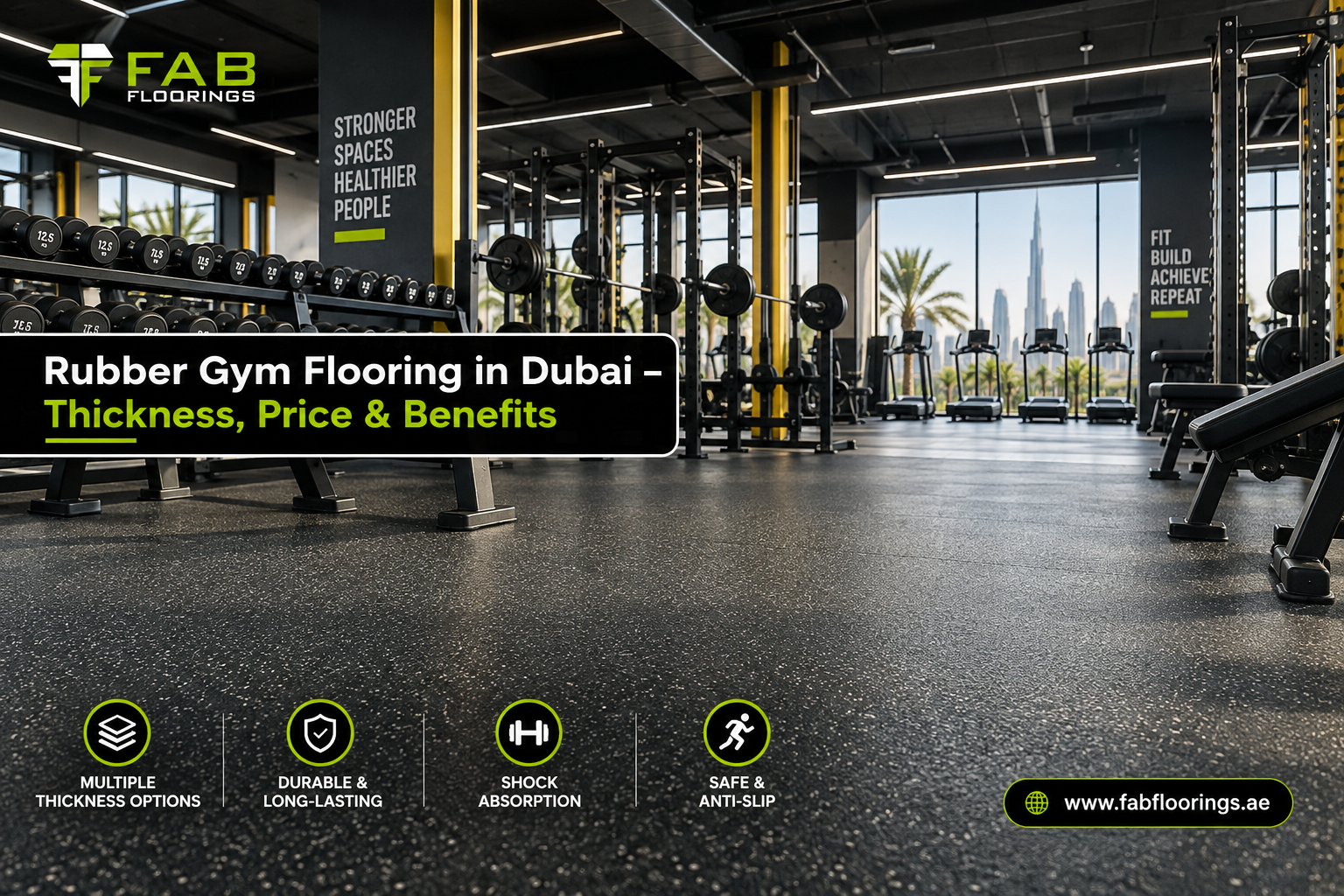
Choosing the right flooring is an important part of building a safe and durable gym. Rubber gym flooring in Dubai is widely used because it can handle heavy equipment, repeated foot traffic, dropped weights, and demanding workout routines.
However, not every gym needs the same flooring thickness or format. Cardio areas, strength-training zones, CrossFit spaces, and heavy-lifting areas all place different demands on the floor.
The right choice depends on workout intensity, equipment weight, impact level, installation method, and budget.
Why Choose Rubber Gym Flooring in Dubai?
Gym floors experience considerably more impact than ordinary commercial floors. Dumbbells and barbells can be dropped, machines can create vibration, and members may train continuously throughout the day.
Rubber flooring provides a resilient surface that helps absorb impact and protects the underlying subfloor.
Key benefits include:
- Excellent impact absorption
- Protection against dropped weights
- Good traction during workouts
- Noise and vibration reduction
- Resistance to heavy foot traffic
- Easy routine maintenance
- Long-term durability
- Suitable options for different gym zones
For Dubai facilities, flooring selection should also consider indoor temperature changes, humidity, cleaning routines, and the overall operating environment.
What Thickness of Rubber Gym Flooring Do You Need?
Thickness should be selected according to how the area will be used. Installing the thickest flooring everywhere is not always the most cost-effective approach.
| Gym Area | Suggested Thickness |
|---|---|
| Yoga / Stretching | 4–6 mm |
| Cardio / Machines | 6–10 mm |
| General Fitness | 8–12 mm |
| Strength Training | 10–15 mm |
| CrossFit / HIIT | 12–20 mm |
| Heavy Weightlifting | 15–25 mm+ |
For commercial gyms, using different thicknesses in different zones can provide better performance while controlling the overall project cost. Current Fab Floorings UAE guidance similarly recommends thicker flooring for free-weight, CrossFit, and heavy-lifting areas.
Rubber Gym Flooring Options in Dubai
1. Rubber Tiles
Rubber tiles are a practical option for gyms that need modular flooring. Individual tiles can be replaced if a specific area becomes damaged.
They are suitable for:
- Weightlifting areas
- Strength-training zones
- CrossFit gyms
- Functional training areas
- Home gyms
Interlocking and adhesive installation systems are available depending on the project requirements.
2. Rubber Flooring Rolls
Rubber rolls provide a more continuous appearance with fewer joints. They are particularly useful for larger areas where a consistent surface is preferred.
They can work well in:
- Cardio areas
- Commercial fitness centers
- Functional training zones
- Group exercise studios
Roll flooring is also useful when covering large spaces efficiently.
3. Heavy-Duty Rubber Mats
Heavy-duty mats are designed for areas where equipment and weights create substantial impact.
They are commonly used below:
- Squat racks
- Dumbbell areas
- Weightlifting platforms
- Deadlift zones
- Heavy gym equipment
For these areas, thicker rubber flooring can provide additional protection for the subfloor.
How Much Does Rubber Gym Flooring Cost in Dubai?
The price of rubber gym flooring varies depending on several factors rather than having one fixed rate.
Important pricing factors include:
Thickness: Thicker rubber flooring generally costs more because it uses more material.
Product type: Tiles, rolls, and specialized heavy-duty mats can have different price points.
Surface finish: Standard black flooring may cost less than premium colored or EPDM-speckled options.
Project size: Larger commercial projects may receive different rates based on quantity.
Installation: Subfloor preparation, cutting, adhesive application, and installation can affect the total project cost.
Current Fab Floorings UAE pricing guidance places rubber flooring broadly around AED 70–180 per m², depending on thickness and quality, while installation can add to the project cost. Treat these as indicative ranges rather than fixed quotations because project specifications can change the final price.
Benefits of Rubber Gym Flooring
Impact Protection
Rubber flooring absorbs part of the impact generated by weights and equipment. This helps protect the subfloor from damage caused by repeated drops and heavy loads.
Improved Workout Safety
A suitable rubber surface provides traction during different exercises. This can be particularly useful in strength and functional training areas where stability is important.
Noise and Vibration Reduction
Rubber flooring helps dampen some impact noise and vibration produced by equipment and dropped weights. This can be especially useful for gyms located in commercial buildings, hotels, apartments, or mixed-use properties.
Easy Maintenance
Most rubber gym flooring can be maintained with routine sweeping, mopping, and suitable cleaning products. Following the manufacturer's cleaning recommendations helps maintain the surface over time.
Long-Term Durability
High-quality rubber flooring is designed for demanding environments. When the correct thickness and product specification are selected, it can withstand heavy traffic and regular gym activity.
How to Choose the Right Rubber Gym Flooring
Before buying flooring, consider these five factors:
1. Type of Workout
Light cardio requires less impact protection than Olympic lifting or CrossFit.
2. Equipment Weight
Heavy machines and free weights require a stronger flooring specification.
3. Drop Impact
If users regularly drop barbells or dumbbells, consider thicker heavy-duty rubber flooring.
4. Installation Method
Interlocking tiles can be useful when individual sections may need replacement. Rolls can provide a cleaner continuous appearance across larger spaces.
5. Budget
Instead of installing one thickness throughout the entire gym, divide the facility into zones and select flooring according to actual usage.
Rubber Flooring for Different Gym Zones
A commercial gym can benefit from a zone-based flooring strategy.
Cardio zone: 6–10 mm rubber flooring can be suitable for many applications.
Strength zone: 10–15 mm provides greater impact protection.
Free-weight zone: 15–20 mm or thicker can be considered depending on the equipment and workout intensity.
Heavy lifting zone: 20 mm+ or specialized impact flooring may be appropriate where loaded weights are regularly dropped.
The exact specification should be based on the equipment, subfloor, installation system, and manufacturer's recommendations.
Is Rubber Gym Flooring Worth the Investment?
For most commercial gyms, rubber flooring offers a strong balance between durability, safety, maintenance, and long-term value.
The cheapest flooring is not necessarily the most economical choice. Replacing damaged flooring or repairing a subfloor can cost more than selecting an appropriate product at the beginning.
A better approach is to choose the right rubber flooring for each gym zone instead of simply choosing the cheapest or thickest option.
Final Thoughts
Rubber gym flooring in Dubai is a practical solution for commercial fitness centers, home gyms, CrossFit facilities, hotel gyms, and strength-training spaces.
The most important factors are not just price and appearance. Consider thickness, impact level, equipment weight, flooring format, installation requirements, and expected traffic before making a decision.
For a professional gym setup, a zone-based flooring plan can provide the right level of protection while keeping the overall project cost under control.