How Temperature Changes Impact Rubber Flooring in Dubai
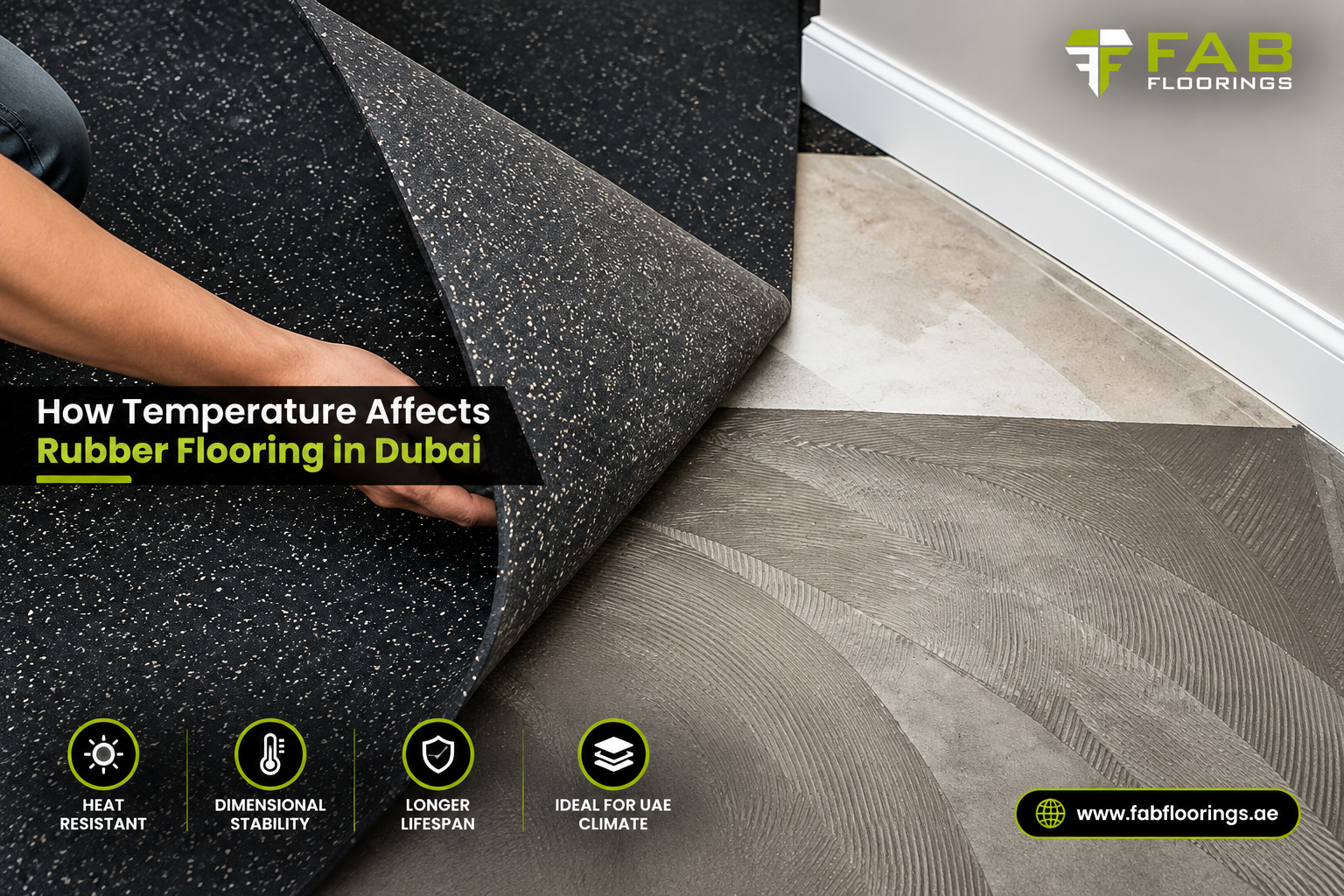
Dubai's climate can be challenging for flooring materials. Extreme outdoor heat, strong sunlight, humidity, and heavily air-conditioned interiors can create repeated temperature changes that affect flooring performance.
Rubber flooring is widely used in gyms, fitness centres, sports facilities, playgrounds, and commercial spaces because of its durability and flexibility. However, choosing the right rubber flooring and installing it correctly is important when the flooring must handle Dubai's changing environmental conditions.
How Temperature Changes Affect Rubber Flooring
Temperature does not affect every rubber flooring product in exactly the same way. Material quality, rubber composition, density, thickness, installation method, sunlight exposure, and the condition of the subfloor all influence performance.
1. Thermal Expansion and Contraction
Rubber can expand slightly when exposed to higher temperatures and contract as it cools. In Dubai, flooring near entrances, windows, exterior walls, or semi-outdoor areas may experience greater temperature variations.
Repeated movement can put stress on joints and installation points. Properly selected flooring and professional installation can help manage this movement.
2. Changes in Surface Feel
Temperature can influence the flexibility of rubber. Under higher temperatures, some rubber products may feel slightly softer, while cooler indoor conditions can make them feel firmer.
For gym applications, the flooring should maintain sufficient resilience and stability for activities such as weight training, cardio, functional training, and equipment use.
3. Temperature and Adhesive Performance
Some rubber flooring systems are installed using adhesives. Extreme temperature changes can place additional stress on the adhesive bond, particularly when unsuitable products or poor installation methods are used.
Loose edges, tile movement, and separation can become more noticeable when the flooring system is not correctly installed.
4. Heat and Direct Sunlight
Heat exposure and direct UV radiation are separate considerations. Flooring installed near large windows, rooftops, outdoor gyms, or partially exposed areas may receive significant sunlight.
For these applications, the flooring specification should include appropriate UV and weather-resistance characteristics. EPDM rubber flooring is often considered for outdoor applications because of its resistance to environmental exposure.
5. Humidity and Temperature
Dubai's humidity can add another environmental challenge. While rubber itself is generally resistant to moisture, the overall flooring system still depends on a dry, stable, and properly prepared subfloor.
Moisture trapped beneath flooring can contribute to installation problems, particularly when adhesives are involved.
Why Rubber Flooring Works Well for Dubai
Rubber flooring is a practical choice for many Dubai applications because it combines flexibility, impact resistance, durability, and traction.
For gyms, rubber flooring can also help absorb impact from dropped weights and reduce wear on the underlying floor. However, the correct product should be selected according to the application rather than assuming that every rubber floor has the same performance characteristics.
Indoor vs Outdoor Rubber Flooring
The flooring requirements can differ considerably depending on where it is installed.
Indoor gyms:
Temperature is usually more controlled, but flooring still needs to withstand heavy equipment, foot traffic, cleaning, and repeated AC operation.
Outdoor gyms:
The flooring receives much greater exposure to direct sunlight, UV radiation, rain, humidity, and temperature changes. A product designed for outdoor conditions should therefore be selected.
Signs of Temperature-Related Flooring Problems
Regular inspection can help identify potential problems before they become expensive repairs.
Look for:
- Raised or curled edges
- Gaps between tiles
- Uneven flooring
- Loose sections
- Adhesive separation
- Surface cracking
- Fading or discoloration
- Unexpected changes in flexibility
These signs do not automatically mean temperature is the cause. Installation quality, moisture, product quality, heavy loads, and normal wear should also be considered.
How to Protect Rubber Flooring in Dubai
Choose the Correct Flooring
Select rubber flooring according to the location, expected traffic, equipment load, and environmental exposure.
Prepare the Subfloor Properly
The subfloor should be clean, stable, level, and suitably dry before installation.
Follow Manufacturer Installation Guidelines
Use compatible adhesives and installation methods recommended for the specific flooring product.
Consider UV Exposure
For outdoor or sun-exposed areas, choose flooring with suitable UV and weather-resistance characteristics.
Maintain the Flooring
Regular cleaning and inspection can help identify movement, damage, or installation problems at an early stage.
How Temperature Affects Different Rubber Flooring Applications
| Application | Main Temperature Consideration |
|---|---|
| Commercial Gym | AC cycles and heavy equipment |
| Home Gym | Indoor temperature variation |
| Outdoor Gym | Heat, UV and weather exposure |
| Playground | Sunlight, heat and moisture |
| Sports Facility | Temperature, impact and high traffic |
| Rooftop Gym | Direct heat and UV exposure |
Final Takeaway
Temperature changes can influence rubber flooring through expansion, contraction, changes in flexibility, adhesive stress, and UV exposure. However, the actual performance depends heavily on the flooring specification, installation quality, environmental exposure, and maintenance.
For Dubai projects, choose rubber flooring based on where it will be installed and how it will be used. A properly specified and professionally installed flooring system can provide reliable performance in demanding indoor and outdoor environments.