Warehouse & Industrial Flooring Solutions in UAE
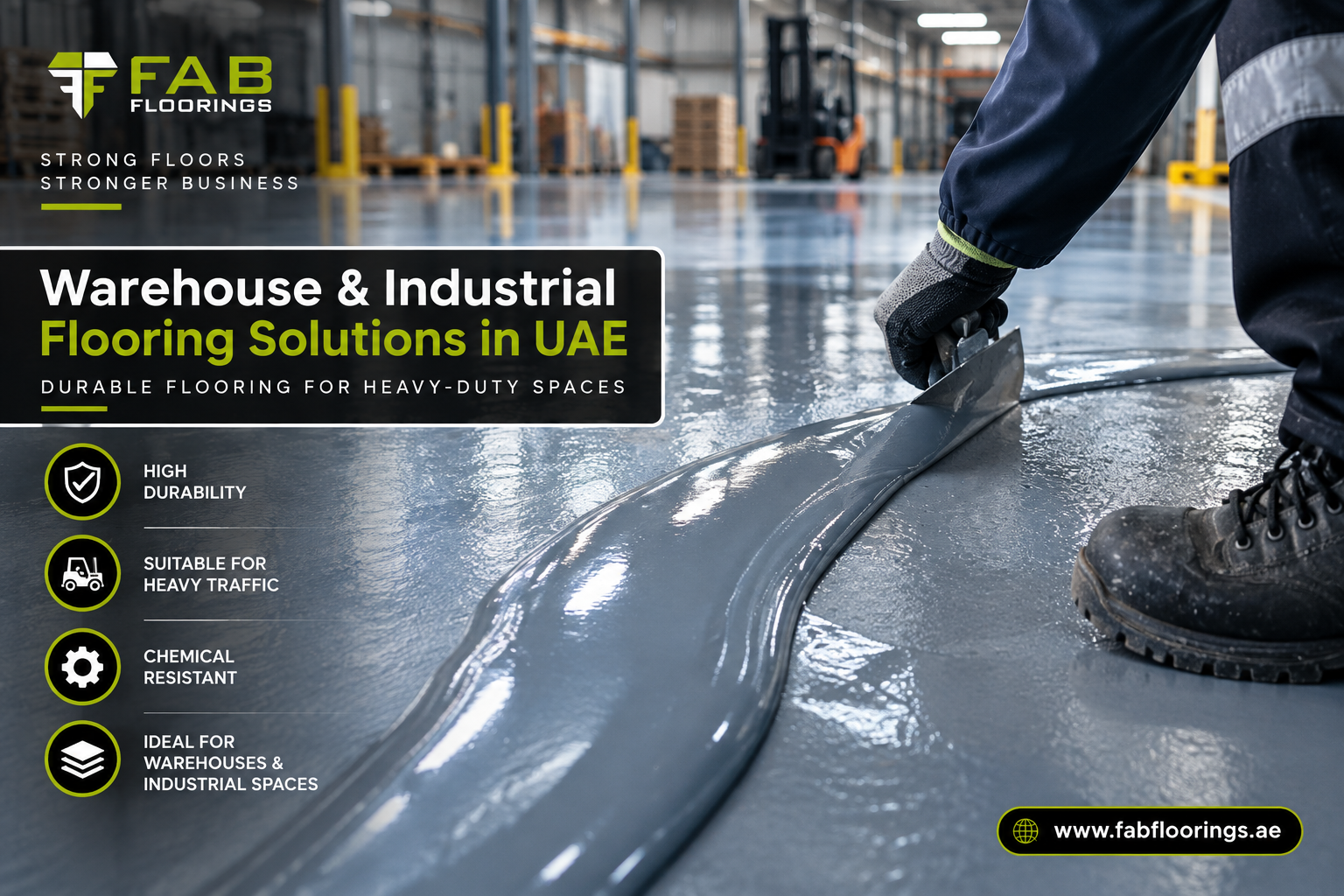
Warehouses, factories, logistics centres, workshops, and commercial facilities need flooring that can handle demanding daily operations. Forklifts, pallet trucks, heavy equipment, storage racks, constant foot traffic, oil, chemicals, moisture, and temperature changes can quickly expose weaknesses in an unsuitable floor.
Choosing the right warehouse and industrial flooring solutions in UAE helps businesses maintain a safer, cleaner, and more efficient working environment. The right system should be selected according to traffic levels, load requirements, operating conditions, and the type of work performed in the facility.
Why Warehouse and Industrial Flooring Matters
Industrial floors do more than provide a walking surface. They support equipment, storage systems, workers, and daily movement throughout the facility.
A suitable flooring system can help:
- Handle heavy static and moving loads
- Resist abrasion from forklifts and pallet movement
- Improve slip resistance
- Reduce dust from exposed concrete
- Make cleaning and maintenance easier
- Protect the underlying floor
- Reduce operational interruptions caused by floor damage
For UAE facilities, flooring should also be evaluated according to local temperature and environmental conditions.
Key Features of Industrial Flooring
High Load Resistance
Warehouses may have heavy storage racks, machinery, pallets, and vehicles moving across the floor. Flooring should be selected according to both static and dynamic loads.
Abrasion Resistance
Forklifts, pallet trucks, and repeated movement can wear down weak surfaces. A durable industrial floor should withstand regular traffic without excessive surface deterioration.
Impact Resistance
Manufacturing and warehouse environments can involve dropped tools, equipment movement, and heavy materials. Impact-resistant flooring helps reduce surface damage in demanding areas.
Slip Resistance
Spills, water, oils, and cleaning chemicals can create slippery surfaces. Anti-slip flooring or suitable surface finishes can improve traction and workplace safety.
Chemical and Oil Resistance
Workshops, manufacturing units, and industrial facilities may encounter oils, fuels, chemicals, and cleaning agents. Flooring should be selected according to the substances likely to come into contact with the surface.
Types of Warehouse & Industrial Flooring Solutions in UAE
Different industrial environments require different flooring systems. There is no single flooring material that is ideal for every facility.
Epoxy Industrial Flooring
Epoxy flooring is widely used in warehouses, workshops, manufacturing areas, storage facilities, and other commercial spaces.
It creates a hard, seamless surface that is easy to clean and can provide resistance against abrasion, oils, and many common chemicals when the correct system is specified.
Suitable for:
- Warehouses
- Manufacturing facilities
- Workshops
- Storage areas
- Automotive facilities
- Commercial industrial spaces
PU Flooring
Polyurethane, or PU flooring, can be suitable for environments where temperature variation, moisture, chemicals, or demanding operating conditions are concerns.
It is often considered for food-processing facilities, cold environments, pharmaceutical spaces, and industrial areas requiring a resilient flooring system.
Treated Concrete Flooring
Concrete provides the structural foundation for many warehouses and industrial buildings. However, untreated concrete can produce dust and may experience surface wear over time.
Depending on the application, concrete can be polished, densified, coated, or otherwise treated to improve surface performance.
Rubber Industrial Flooring
Rubber flooring can be useful in specific industrial zones where impact absorption, vibration reduction, and worker comfort are important.
It can be considered for:
- Loading areas
- Packing zones
- Equipment areas
- Workstations
- Areas exposed to vibration
- High-impact zones
For areas with forklifts and very heavy industrial traffic, the flooring specification should be selected according to the actual load and operating conditions.
Interlocking Industrial Floor Tiles
Heavy-duty interlocking tiles can be useful when businesses need a flooring system that can be installed or replaced in sections.
Individual damaged tiles can generally be replaced without removing the entire floor, which can be useful for facilities where minimizing downtime is important.
Choosing Flooring for Different Industrial Facilities
Warehouses and Logistics Centres
Warehouses need floors capable of handling forklifts, pallet movement, storage racks, and continuous traffic. Epoxy systems, treated concrete, and other heavy-duty flooring options can be considered according to the operating conditions.
Manufacturing Plants
Manufacturing facilities may experience machinery vibration, chemical exposure, heavy equipment, and high traffic. Epoxy or PU systems with appropriate surface finishes can be considered based on the application.
Cold Storage Facilities
Cold-storage environments experience temperature changes and moisture. Flooring should be selected for the specific temperature, hygiene, and operational requirements of the facility.
Automotive Workshops
Automotive environments can involve oil, grease, tools, vehicle movement, and impact. A durable, easy-to-clean flooring system with suitable chemical and slip resistance can be beneficial.
Loading and Packing Areas
These zones experience repeated movement of goods and equipment. Rubber flooring or other impact-resistant solutions may be appropriate in selected areas, while the main warehouse floor may require a different system.
What Should You Consider Before Choosing Industrial Flooring?
Before selecting a flooring solution, assess:
Traffic: How many forklifts, pallet trucks, vehicles, and workers use the floor daily?
Load: What are the maximum equipment, rack, and material loads?
Environment: Will the floor encounter heat, moisture, chemicals, oils, or temperature changes?
Impact: Will heavy objects or tools regularly fall onto the surface?
Maintenance: How frequently does the facility need cleaning?
Downtime: How much time can the facility afford for installation or repairs?
Subfloor: Is the existing concrete level, stable, dry, and suitable for the proposed flooring system?
These factors help determine whether epoxy, PU, rubber, treated concrete, interlocking tiles, or another system is appropriate.
Why Professional Installation Matters
Even a high-quality flooring material can perform poorly when the installation is incorrect.
Proper surface preparation is particularly important for industrial flooring. The existing floor should be assessed for cracks, moisture, contamination, unevenness, and other conditions that could affect the new system.
Installation may involve:
- Surface preparation
- Crack and joint treatment
- Moisture assessment
- Primer application
- Flooring installation
- Curing
- Final inspection
Following the flooring manufacturer's installation requirements can help improve long-term performance.
How to Maintain Industrial Flooring
Regular maintenance helps preserve the appearance and performance of industrial floors.
Businesses should:
- Remove dust and debris regularly
- Clean spills promptly
- Use compatible cleaning products
- Inspect high-traffic areas
- Repair localized damage early
- Avoid dragging heavy equipment unnecessarily
- Follow the manufacturer's maintenance recommendations
A planned maintenance routine can help identify small problems before they become larger operational issues.
Why Fab Floorings for Industrial Flooring Solutions?
Fab Floorings provides flooring solutions for commercial, fitness, sports, and industrial applications. Its product range includes rubber flooring tiles and rolls along with other flooring options that can be considered for different working environments.
For industrial projects, the appropriate flooring should be selected based on the facility's load, traffic, impact, moisture, chemical exposure, and intended use rather than choosing solely by appearance or initial price.