What Makes Rubber Flooring Resistant to Micro-Cracking in Hot Climates
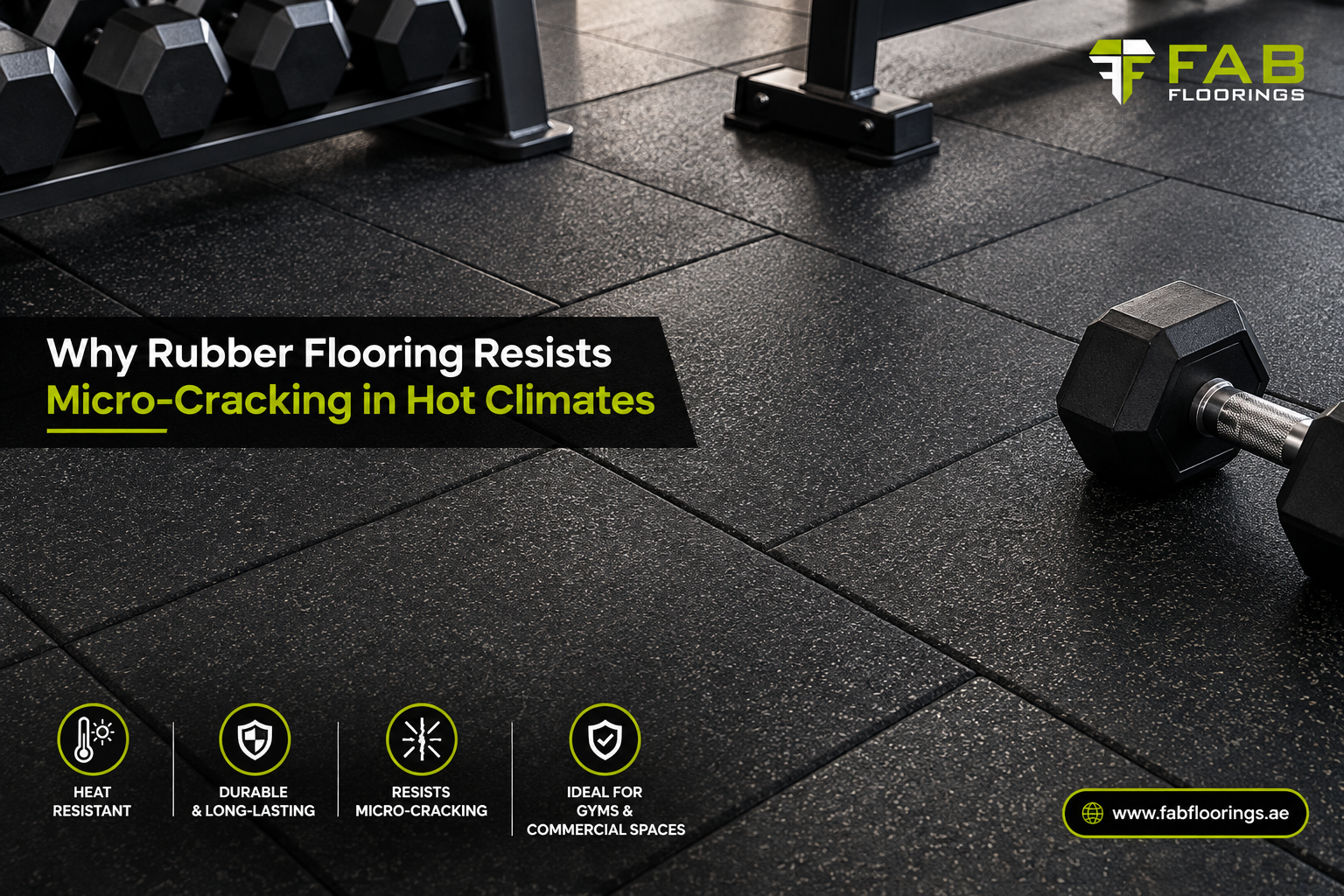
Rubber flooring is designed to handle stress that can cause many other flooring materials to harden, weaken, and develop small surface cracks. In hot climates, resistance to micro-cracking depends on factors such as rubber quality, elasticity, heat stability, UV resistance, manufacturing quality, density, and proper installation. For gyms, outdoor fitness areas, sports facilities, playgrounds, and commercial spaces, choosing the right Rubber Floorings can make a major difference in long-term performance.
What Is Micro-Cracking?
Micro-cracking refers to tiny cracks that gradually form on the surface or within a flooring material. These cracks may be difficult to notice in the beginning, but repeated exposure to heat, pressure, movement, and aging can cause them to grow.
Over time, micro-cracking can lead to:
-
Surface deterioration
-
Reduced flexibility
-
Edge damage
-
Loss of structural strength
-
Faster wear and tear
This makes crack resistance particularly important in regions with high temperatures and intense sunlight.
Why Are Hot Climates Hard on Flooring?
Flooring in hot environments experiences continuous thermal stress. As temperatures rise, materials expand, and as they cool, they contract. Repeated expansion and contraction can gradually create stress within rigid or poor-quality materials.
Other factors that increase the risk of cracking include:
Direct Heat Exposure
High temperatures can cause some flooring materials to lose flexibility. When a surface becomes excessively hard or brittle, it is less able to absorb movement and impact.
UV Radiation
Outdoor flooring is exposed to sunlight for long periods. UV exposure can contribute to surface aging and may reduce the flexibility of materials that are not formulated for outdoor conditions.
Heavy Loads and Impact
Gym equipment, foot traffic, sports activities, and dropped weights create repeated pressure. A flooring material needs enough resilience to absorb this stress without concentrating it in one area.
Why Is Rubber Flooring More Resistant to Micro-Cracking?
High-quality rubber flooring has properties that allow it to manage thermal movement and mechanical stress more effectively.
1. Natural Elasticity Helps Absorb Stress
One of the biggest advantages of rubber is its flexibility. Instead of behaving like a rigid surface, quality rubber can flex under pressure and recover after the load is removed.
This elasticity helps reduce stress concentrations that may otherwise lead to cracks.
Rubber flooring can therefore handle:
-
Repeated foot traffic
-
Equipment pressure
-
Impact from weights
-
Surface movement
-
Daily expansion and contraction
The ability to flex is one of the main reasons properly manufactured rubber flooring performs well in demanding environments.
2. Heat-Stable Rubber Compounds Improve Durability
Not all rubber flooring is made with the same formulation. The quality of the compound has a direct impact on how the flooring reacts to temperature changes.
A well-engineered rubber compound is designed to maintain its physical properties across varying temperatures. Better thermal stability helps the material manage repeated heating and cooling without becoming excessively brittle.
This is especially important for flooring installed in hot regions or areas exposed to strong sunlight.
3. Strong Material Bonding Reduces Weak Points
Rubber flooring made from granules or particles depends heavily on the quality of bonding between those materials.
High-quality binders and controlled manufacturing help create a more uniform structure. Strong bonding reduces internal weak points where stress may begin to cause separation or cracking.
Poor bonding, on the other hand, can make flooring more vulnerable to early deterioration.
4. Proper Density Supports Better Load Distribution
Density plays an important role in how rubber flooring handles pressure.
A properly manufactured, dense flooring product can distribute loads more effectively across its surface. This reduces excessive localized compression and helps lower the stress placed on individual areas.
The goal is not simply to choose the hardest flooring. Good rubber flooring needs the right balance between:
-
Strength
-
Resilience
-
Flexibility
-
Shock absorption
A flooring product that is too rigid may be more susceptible to cracking under repeated stress.
5. Shock Absorption Protects the Flooring Structure
Rubber flooring is widely used because of its ability to absorb impact.
When a heavy object hits a rigid floor, much of the force can be transferred directly through the material. Rubber helps dissipate some of this energy, reducing the intensity of stress on the flooring surface.
This makes rubber flooring suitable for high-impact applications such as:
-
Commercial gyms
-
Fitness centers
-
Weight training areas
-
Sports facilities
-
Play areas
EPDM and SBR: Which Performs Better in Hot Conditions?
The best material depends on where and how the flooring will be used.
EPDM Rubber
EPDM is commonly selected for applications requiring strong resistance to weather and outdoor exposure. Its resistance to UV and environmental conditions makes it a suitable option for outdoor flooring systems.
It is often preferred for:
-
Outdoor gyms
-
Playgrounds
-
Sports surfaces
-
Areas exposed to sunlight
SBR Rubber
SBR rubber is widely used in indoor and commercial flooring applications because of its durability, shock absorption, and cost-effectiveness.
High-quality SBR flooring can perform effectively in warm environments when the product is properly manufactured and installed for the intended application.
Manufacturing Quality Makes a Major Difference
Even when two products are both described as rubber flooring, their long-term performance may differ significantly.
Quality manufacturing involves factors such as:
-
Consistent raw materials
-
Proper particle distribution
-
Strong binders
-
Controlled curing
-
Uniform density
-
Reliable quality checks
A poor manufacturing process can leave weak areas inside the flooring. These areas may become more vulnerable when exposed to heat, repeated loads, and continuous use.
For this reason, flooring should be selected based on more than price alone.
Proper Installation Also Helps Prevent Cracking
The performance of rubber flooring does not depend only on the material. Installation conditions also matter.
Prepare the Subfloor Correctly
An uneven or damaged subfloor can create concentrated pressure points. A clean, stable, and properly prepared surface provides better support for the flooring.
Allow for Natural Movement
Flooring systems may require appropriate allowances for thermal movement depending on the product and installation method. Following the manufacturer's installation recommendations helps prevent unnecessary stress.
Use Suitable Adhesives
Where adhesive installation is required, the adhesive should be compatible with both the rubber flooring and the installation environment.
Using unsuitable materials can create bonding problems, particularly where temperature changes are significant.
Signs That Rubber Flooring May Be Developing Micro-Cracks
Regular inspections can help identify early surface damage. Look for:
-
Fine lines on the surface
-
Cracks near edges or joints
-
Areas becoming unusually hard
-
Loss of flexibility
-
Surface discoloration
-
Localized deterioration under heavy equipment
Early maintenance can help prevent minor issues from becoming larger flooring problems.
How to Choose Rubber Flooring for Hot Climates
Before purchasing, consider these important factors:
Choose the right material: Select EPDM, SBR, or another rubber system based on whether the application is indoor or outdoor.
Check product quality: Ask about the rubber composition, density, binder quality, and intended application.
Consider UV exposure: Outdoor installations require flooring designed to withstand sunlight and weather conditions.
Match the flooring to the load: Gyms, sports areas, and playgrounds all place different demands on a floor.
Prioritize professional installation: Correct subfloor preparation and installation can support better long-term performance.
Final Thoughts
Rubber flooring resists micro-cracking in hot climates because it combines flexibility, elasticity, impact absorption, and structural strength. However, performance depends heavily on the quality of the rubber compound, manufacturing process, environmental suitability, and installation.
For areas exposed to heat, sunlight, heavy traffic, or repeated impact, selecting flooring designed for the specific conditions is essential. A high-quality rubber flooring system can maintain its resilience and performance for longer, helping reduce the risk of premature surface cracking and deterioration.