Why Is Rubber Gym Flooring So Popular? Benefits, Types & Buying Guide
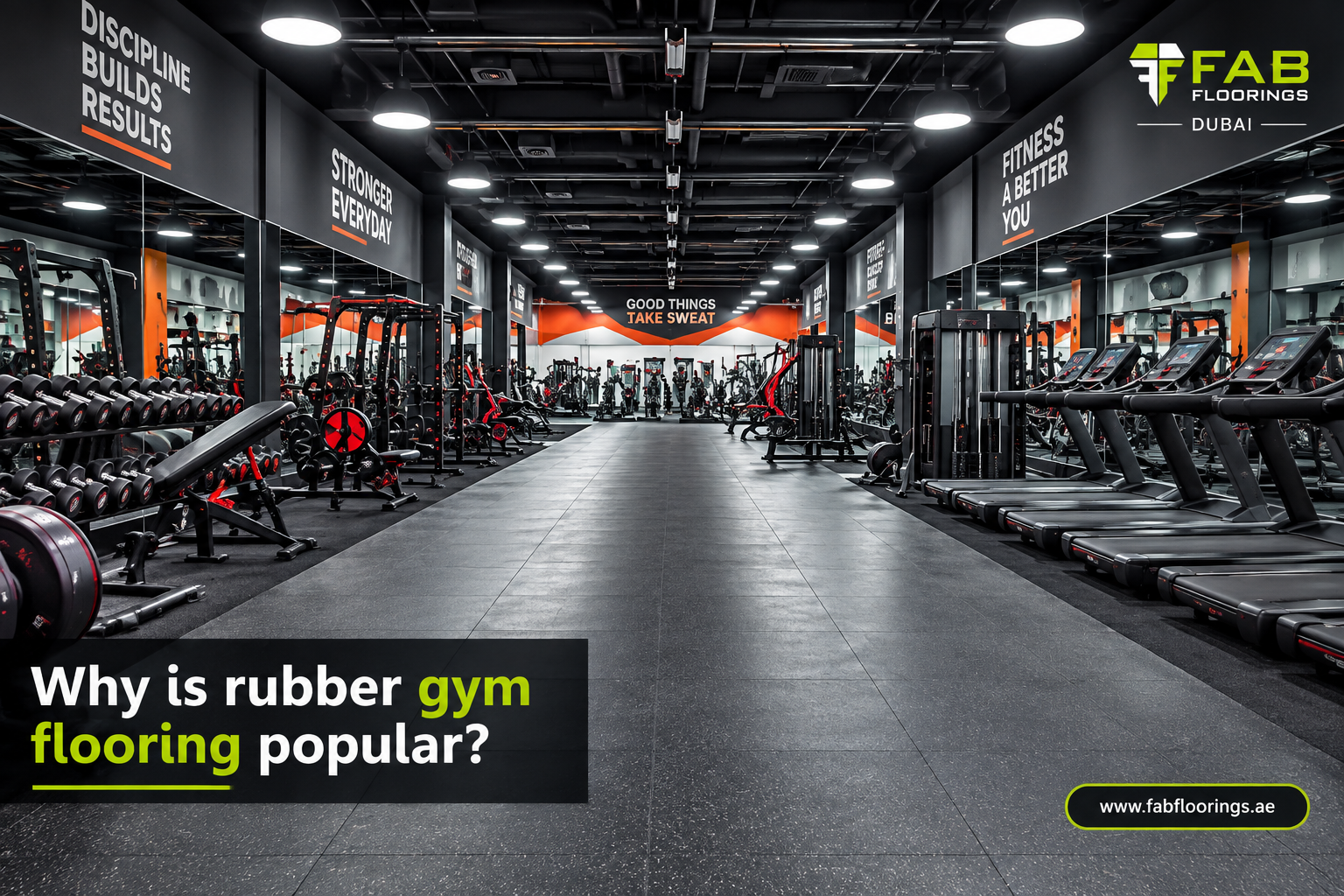
Rubber gym flooring has become one of the most widely used flooring solutions for fitness centers, commercial gyms, CrossFit facilities, sports clubs, hotel gyms, and home workout spaces. Its popularity comes from a simple combination: durability, safety, impact protection, comfort, and easy maintenance.
A gym floor has to deal with much more stress than an ordinary residential or commercial floor. Heavy weight machines, dumbbells, barbells, treadmills, constant foot traffic, jumping exercises, and dropped weights can quickly damage unsuitable flooring.
Rubber flooring is designed to handle these demanding conditions while creating a safer and more comfortable workout environment.
For gyms in Dubai and across the UAE, choosing the right flooring is particularly important. The flooring needs to withstand intensive daily use while also performing reliably in an environment affected by heat, dust, humidity, and frequent indoor air-conditioning.
So, why is rubber gym flooring so popular? Let's look at the key reasons.
What Is Rubber Gym Flooring?
Rubber gym flooring is a durable flooring system manufactured using rubber materials and available in different formats, thicknesses, densities, and surface finishes.
Depending on the application, it can be supplied as:
- Rubber flooring rolls
- Interlocking rubber tiles
- Rubber gym mats
- Heavy-duty rubber tiles
- EPDM rubber flooring
Different products are designed for different areas of a fitness facility. For example, a cardio zone may require a different flooring specification from a free-weight or deadlift area.
10 Reasons Rubber Gym Flooring Is So Popular
1. Excellent Durability
One of the biggest reasons gyms choose rubber flooring is its ability to withstand demanding daily use.
Commercial gyms can have hundreds of members using the facility every day. Flooring must handle continuous foot traffic, heavy equipment, repeated movement, and high-impact exercises.
High-quality rubber flooring can withstand:
- Heavy gym machines
- Dumbbells and barbells
- Weight racks
- Treadmills
- Kettlebells
- Sled training
- HIIT workouts
- Constant foot traffic
This makes rubber flooring a practical long-term choice for busy fitness facilities.
2. Protects the Floor and Gym Equipment
Dropping weights directly onto concrete, tiles, or other hard surfaces can create significant impact.
Rubber flooring helps absorb and distribute this impact, reducing the stress transferred to the underlying floor.
This is particularly important in:
- Weightlifting zones
- CrossFit facilities
- Functional training areas
- Strength-training rooms
- Free-weight areas
It also provides a protective layer between heavy equipment and the subfloor, helping reduce scratches, dents, and surface damage.
3. Improves Gym Safety
Safety is one of the most important considerations when selecting gym flooring.
Rubber flooring provides a stable surface with good traction, helping users maintain their footing during different types of workouts.
This is useful for exercises involving:
- Running
- Jumping
- Squats
- Lunges
- HIIT
- Functional training
- Weightlifting
A suitable rubber surface can also provide cushioning underfoot, making workouts more comfortable.
4. Excellent Shock Absorption
High-impact activities generate considerable force.
Jumping, dropping weights, and moving heavy equipment can transfer vibrations through the floor. Rubber's elastic properties help absorb some of this impact.
This makes rubber flooring particularly suitable for high-intensity training areas.
The required thickness, however, should be selected according to the application. A light cardio area does not necessarily require the same thickness as a heavy weightlifting zone.
5. Helps Reduce Noise and Vibration
Gym environments can become noisy, particularly when weights are dropped or heavy machines are operating continuously.
Rubber flooring helps absorb impact and vibration, reducing the amount of sound transmitted through the floor.
This can be particularly valuable for gyms located in:
- Hotels
- Residential buildings
- Shopping centers
- Office buildings
- Mixed-use developments
A quieter workout environment can also improve the overall experience for gym members.
6. Easy to Clean and Maintain
A gym floor is exposed to sweat, dust, dirt, chalk, and frequent foot traffic.
Fortunately, rubber flooring is relatively simple to maintain.
A basic maintenance routine can include:
Daily
- Sweeping or vacuuming
- Removing dust and debris
- Cleaning visible spills
Regularly
- Mopping with a suitable mild cleaning solution
- Cleaning around gym equipment
- Checking high-traffic areas
Avoid using aggressive chemicals unless they are specifically recommended for the flooring product.
Regular maintenance helps preserve both the appearance and performance of the floor.
7. Suitable for Different Types of Fitness Facilities
Rubber flooring is not limited to traditional gyms.
It can be used in a wide range of fitness environments, including:
Commercial Gyms
Designed for heavy daily traffic and intensive equipment use.
Home Gyms
Rubber tiles and mats can protect residential floors while creating a dedicated workout surface.
CrossFit Facilities
Thicker rubber flooring can provide impact protection for demanding functional workouts and weight training.
Hotel Fitness Centers
Rubber flooring provides durability while maintaining a professional appearance.
School & University Gyms
It can handle regular use by students and sports teams.
Functional Training Areas
Rubber flooring provides traction and impact absorption for dynamic exercises.
8. Multiple Flooring Formats Are Available
Another reason rubber flooring remains popular is the variety of formats available.
Rubber Flooring Rolls
Rubber rolls are particularly suitable for large areas where a continuous and professional appearance is preferred.
They can minimize the number of joints across the floor and are commonly used in larger commercial fitness facilities.
Best suited for:
- Large commercial gyms
- Fitness centers
- Cardio zones
- Training studios
Interlocking Rubber Tiles
Interlocking tiles are modular flooring products that can be installed without creating a permanently fixed floor in some applications.
One of their biggest advantages is easy replacement. If an individual tile becomes damaged, it can potentially be replaced without removing the entire floor.
Best suited for:
- Home gyms
- Weight areas
- Functional training zones
- Small and medium fitness spaces
Heavy-Duty Rubber Mats
Heavy-duty mats are particularly useful in areas exposed to concentrated impact.
They can be positioned under:
- Squat racks
- Weight machines
- Dumbbell areas
- Deadlift zones
- Strength-training equipment
EPDM Rubber Flooring
EPDM flooring can provide additional design flexibility and is available in a variety of colors.
Depending on the specification, EPDM rubber flooring can also be suitable for certain outdoor fitness applications where resistance to UV exposure and weather conditions is important.
9. Different Thicknesses for Different Applications
There is no single thickness that is perfect for every gym.
The right thickness depends on:
- Type of exercise
- Equipment weight
- Impact level
- Foot traffic
- Subfloor
- Installation method
For example:
| Gym Area | Typical Consideration |
|---|---|
| Cardio Area | Light to medium thickness |
| General Training | Medium thickness |
| Functional Training | Medium to heavy thickness |
| Free-Weight Area | Heavy-duty thickness |
| Deadlift Zone | Extra-thick impact protection |
Rather than automatically choosing the thickest flooring available, it is better to select a specification based on how the area will actually be used.
10. Long-Term Value
The cheapest gym flooring is not necessarily the most economical option.
Low-cost flooring may require more frequent repairs or replacement if it is not designed for the intended application.
Quality rubber flooring can provide long-term value through:
- Durability
- Reduced floor damage
- Lower maintenance requirements
- Equipment protection
- Better safety
- Longer service life
This is especially important for commercial gyms where replacing flooring can mean additional labor costs and disruption to daily operations.
Rubber Gym Flooring for Dubai's Climate
Dubai presents some unique environmental conditions that should be considered when selecting flooring.
Gyms and fitness facilities may experience:
- High outdoor temperatures
- Humidity
- Dust and sand
- Strong sunlight
- Significant indoor/outdoor temperature differences
High-quality rubber flooring is widely used in Dubai because of its flexibility, durability, moisture resistance, and ability to withstand demanding gym environments. For areas exposed directly to sunlight or outdoor conditions, the flooring specification should be selected carefully, including appropriate UV resistance where required.
How to Choose the Right Rubber Gym Flooring
Before purchasing rubber flooring, don't look at price alone.
Consider these factors:
1. Gym Usage
Determine whether the floor will be used for cardio, general fitness, functional training, or heavy weightlifting.
2. Thickness
Choose the thickness according to the expected impact and equipment load.
3. Density
Density affects how the flooring responds to pressure and heavy equipment.
4. Installation Method
Decide whether you need loose-lay, interlocking, or adhesive installation.
5. Surface Finish
Consider grip, appearance, cleaning requirements, and the type of activities performed.
6. Maintenance
Choose a flooring system that can be easily cleaned and maintained according to the manufacturer's recommendations.
7. Indoor or Outdoor Use
Outdoor installations require products with appropriate resistance to environmental exposure.
Rubber Flooring vs Other Gym Flooring Options
Rubber is popular, but different flooring materials can serve different purposes.
| Feature | Rubber Flooring | Foam Flooring | PVC Flooring |
|---|---|---|---|
| Heavy Equipment | Excellent | Limited | Good |
| Impact Absorption | Excellent | Excellent | Moderate |
| Durability | Excellent | Moderate | Good |
| Weight Training | Excellent | Limited | Moderate |
| Noise Reduction | Excellent | Good | Moderate |
| Maintenance | Easy | Easy | Easy |
| Commercial Gym Use | Excellent | Limited | Good |
For areas where heavy equipment and impact are major concerns, rubber flooring is generally one of the strongest options.
Common Mistakes When Buying Rubber Gym Flooring
Gym owners often focus heavily on the initial price and overlook other important specifications.
Avoid these mistakes:
Choosing Flooring That Is Too Thin
A thin product may not provide adequate protection for heavy weightlifting.
Ignoring Density
Thickness alone does not tell you everything about flooring performance.
Buying Without Checking the Subfloor
The underlying surface should be clean, level, stable, and suitable for the selected installation method.
Choosing Based Only on Appearance
A visually attractive floor still needs to meet the performance requirements of the gym.
Not Considering Installation
Incorrect installation can affect the performance and appearance of the flooring.
Using the Same Flooring Everywhere
A cardio area and a deadlift zone may require different flooring specifications.
Is Rubber Gym Flooring Worth the Investment?
For most commercial and serious home gyms, rubber flooring is a worthwhile investment.
It combines several important characteristics in one flooring system:
- Durability
- Impact resistance
- Shock absorption
- Slip resistance
- Noise reduction
- Easy maintenance
- Equipment protection
The right product can help create a safer, more professional, and longer-lasting fitness environment.
Why Choose Fab Floorings for Rubber Gym Flooring?
Fab Floorings provides rubber flooring solutions for gyms, fitness centers, sports facilities, and other demanding environments.
Our range can include solutions such as:
- Rubber Gym Tiles
- Rubber Flooring Rolls
- Heavy-Duty Rubber Mats
- EPDM Rubber Flooring
- Interlocking Rubber Tiles
- Fitness Flooring Solutions
The right flooring specification depends on your facility, workout activities, equipment, floor area, and installation requirements.
Whether you are developing a commercial gym in Dubai, a hotel fitness center, a CrossFit facility, or a home gym, selecting the right rubber flooring can make a significant difference to the performance and longevity of your space.
Final Thoughts
Rubber gym flooring is popular because it solves many of the problems that traditional flooring materials struggle with in fitness environments.
It protects floors from heavy equipment, absorbs impact, improves traction, reduces vibration and noise, and provides a durable surface capable of handling demanding workouts.
However, not all rubber flooring products are the same. Thickness, density, format, surface finish, installation method, and intended application should all be considered before making a purchase.
For a commercial gym, the best solution may be different from a home gym or a dedicated weightlifting area.
The key is to choose flooring based on how the space will actually be used, rather than simply choosing the cheapest or thickest option available.
If you are planning a gym flooring project in Dubai or elsewhere in the UAE, Fab Floorings can help you identify a suitable rubber flooring solution based on your space, equipment, usage, and performance requirements.